

Winemaker Notes
Professional Ratings
-
Vinous
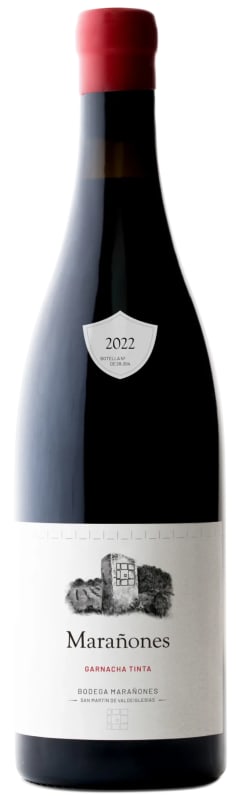
The 2022 Garnacha Tinta Marañones blends grapes from seven estate parcels from the Paraje Marañones in San Martín de Valdeiglesias. Aromas of rose, sour cherry, wild herbs, pomegranate, watermelon and rosehip mingle with a note of dry leaves. The 2022 is expressive, energetic and long with a saline lift and fine-grained tannins.


Grenache thrives in any warm, Mediterranean climate where ample sunlight allows its clusters to achieve full phenolic ripeness. While Grenache's birthplace is Spain (there called Garnacha), today it is more recognized as the key player in the red blends of the Southern Rhône, namely Châteauneuf-du-Pape, Côtes du Rhône and its villages. Somm Secret—The Italian island of Sardinia produces bold, rustic, single varietal Grenache (there called Cannonau). California, Washington and Australia have achieved found success with Grenache, both flying solo and in blends.

Sitting just north of La Mancha, Spain’s (and Europe’s, for that matter) largest classified wine region, this region is much smaller than the vast La Mancha. However, Vinos de Madrid DO is a relatively large region in and of itself, with four subregions that start about 9 miles from the city center. Three of the subregions form a semicircle around the southern suburbs, Arganda, Navalcarnero and San Martín, where styles vary from one to another. El Molar, situated directly north of the city, is the newly created 4th subregion.
Since Vinos de Madrid was granted DO status in 1990, it has immersed itself in local wine production. Since then, substantial efforts have been made to raise quality and knowledge of the wines produced here. Millions of tourists who visit Spain’s capital city each year help the wines gain recognition and popularity across the globe. The growing investment through the years has paid off and export markets are increasingly interested in Vinos de Madrid wines.
While Tempranillo is the most planted grape variety in the Arganda subregion in the southeast, Garnacha is the dominant grape in all other subregions, including El Molar in the north, Navalcarnero in the south, and especially San Martín de Valdeiglesias in the west.