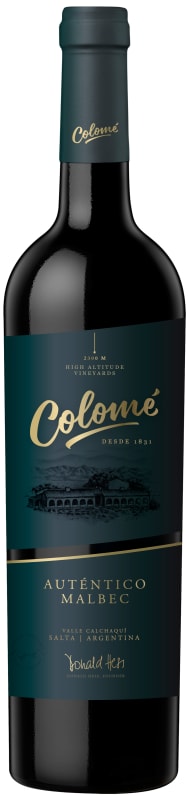


Winemaker Notes
Deep and vibrant in color, this wine reveals layered aromas of red cherries and blackberries, framed by delicate herbal notes, refined spice and a subtle mineral edge. The palate is fresh and silky, with ripe, rounded tannins that lead to a long, elegant finish.
Professional Ratings
-
Vinous
The 2024 Malbec Auténtico from Colomé, Salta, is currently in a reductive phase, showing restrained aromas of dark fruit, fresh plum, balsamic notes and a herbal edge. Broad and slightly indulgent on the palate, with moderate, juicy freshness and a touch of grip, its tannins are somewhere between plush and smooth. Despite its reductive start, the 2024 delivers expressive fruit. An authentic, idiosyncratic Malbec—true to its name.
-
James Suckling
Ripe black fruit, dark plums with chopped herbs and underbrush. Medium- to full-bodied, with fine dusty tannins and a long flavorful finish.
-
Jeb Dunnuck
Full-bodied yet soft and supple in tart herbaceous character, the 2024 Malbec Colome Autentico is from high-elevation vines and was aged in stainless and concrete, seeing no time in oak. Ripe blackberry and cherry fruit accent a well-integrated, complex, lengthy experience of rounded tannins and lasting acidity.






Celebrated for its bold flavors and supple texture, Malbec has enjoyed runaway success in Argentina since the late 20th century. The grape originated in Bordeaux, France, where it historically contributed color and tannin to blends. A French agronomist, who saw great potential for the variety in Mendoza’s hot, high-altitude landscape, brought Malbec to Argentina in 1868. Somm Secret—If you’re trying to please a crowd, Malbec is generally a safe bet with its combination of dense fruit and soft tannins.

The Salta region in northern Argentina is home to world’s highest vineyards. Near the town of Payogasta, the Colomé Altura Máxima vineyard is planted at 10,206 feet in elevation.
Salta is part of the Calchaquí Valley, which benefits from more than 300 days of sun per year, subjecting its vines to considerable ultraviolet radiation. The valley experiences strong high altitude winds, even in the “lower” vineyards, which are planted at 5,413 feet. Because of these elevations and resulting extreme conditions, vines produce lower yields and thicker-skinned grapes, resulting in concentrated, aromatic and well-structured wines.
In a truly unique region, the highly aromatic variety, Torrontes, thrives; intense sun exposure allows full ripening, while cooling winds maintain the grapes’ acidity levels and phenolic balance.
Malbec, Cabernet Sauvignon, Bonarda, Syrah, and, particularly, Tannat have the most potential among reds.
Upscale hotels, beautiful colonial architecture, a majestic Andean backdrop and impressive food and wine make the area attractive among tourists as well.
Salta is the fourth most important Argentine wine-producing region after Mendoza, San Juan, and La Rioja. Its oldest vineyards were planted in 1862.