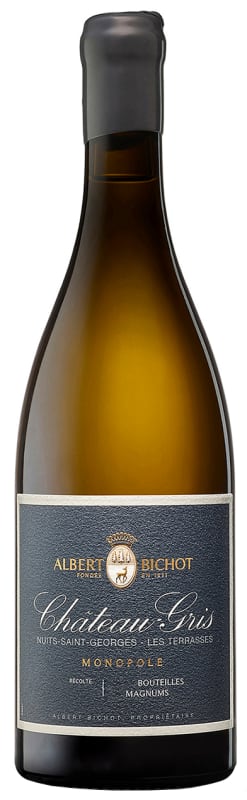


Winemaker Notes
Sophisticated nose featuring floral and mineral notes, which are enhanced by a touch of oak. On the palate, this flavourful wine, both bold and round, offers a pronounced minerality along with elegant, discrete oak. Exceptionally long on the palate.
Taste this wine with finely prepared fish and seafood, or with roasted or stewed white meats meat and poultry.
Professional Ratings
-
Vinous
A fetish wine for Matthieu Mangenot. Les Terrasses can be found above the Chateau Gris, in a little coombe. The site is difficult to work but gives a great result. Pale lemon colour, a really attractive racy limestone nose, airy rather than too sunny. Really a significant amount of stuffing, with the fruit well supported by some wood tannins. Long and interesting.
Barrel Sample: 92-93 -
Robert Parker's Wine Advocate
The 2023 Nuits-Saint-Georges Blanc Les Terrasses is trained on échalas, as this terraced vineyard's contours render conventional trellising impractical. Offering up aromas of sweet orchard fruit, white flowers and marzipan, it's medium to full-bodied, satiny and layered, with a rich attack but a chalky finish.
Barrel Sample: 90-92 -
Wine Spectator
Ripe and balanced, with a beam of lively acidity, this white evokes flavors of white flowers, lemon, apple and baking spices. Elegant, offering a lingering finish of pastry and spice notes.



Since 1350, the Bichot family has called Burgundy home. But, it was in 1831 that Bernard Bichot founded a merchant house bearing his name in Monthélie, a couple of kilometers south of Beaune. At the end of the 19th century, his grandson Albert Bichot took the family business into a new direction and created the winery, Maison Albert Bichot as we know it. The family heritage has been perpetuated from father to son since then. The family crest, consisting of a deer and antlers, has been synonymous with the winery since its inception.
Since 1996, Albéric Bichot has represented the 6th generation managing the winery. The winery’s mission is to utilize the best fruit possible to create the best wine and best expression of terroir. In the constant pursuit of accomplishing this mission, Albert Bichot has acquired 250 acres of vineyards in the most reputed growing areas throughout Burgundy. In addition to this expertise as a wine-grower, Albert Bichot carefully sources grapes with an extremely hands-on approach, in order to vinify many of its regional and village wines, enabling them to supply high quality wines with continuity. For these grapes sourced from our partner growers, quality, and a close partnership, are of the utmost importance.
Albert Bichot owns 6 Domaines set at the heart of 5 great vinicultural regions that make up Burgundy: Chablis, Cote de Nuits, Cote de Beaune, Cote Chalonnaise, and Beaujolais. Each estate consists of vineyards cultivated with sustainable practices, as well as facilities, cellars and dedicated winemaking teams devoted to wines of that Domaine and region.
The 6 estates include:
- Domaine Long-Depaquit in Chablis
- Chateau Gris in the Cote de Nuits (Nuits-St.-Georges)
- Domaine du Clos-Frantin in the Cote de Nuits (Nuits-St.-Georges)
- Domaine du Pavillon in the Cote de Beaune (Pommard)
- Domaine Adelie in the Cote Chalonnaise (Mercurey)
- Domaine du Rochegres in Beaujolais (Moulin-à-Vent)

One of the most popular and versatile white wine grapes, Chardonnay offers a wide range of flavors and styles depending on where it is grown and how it is made. While it tends to flourish in most environments, Chardonnay from its Burgundian homeland produces some of the most remarkable and longest lived examples. California produces both oaky, buttery styles and leaner, European-inspired wines. Somm Secret—The Burgundian subregion of Chablis, while typically using older oak barrels, produces a bright style similar to the unoaked style. Anyone who doesn't like oaky Chardonnay would likely enjoy Chablis.

Inhabiting the bottom end of the northern half of the Côte d’Or, Nuits-St-Georges is a busy, market-driven town and home to many of Burgundy’s negociants. It is also the largest town in the Côte d’Or after Beaune and contributes "nuits" to the name of Côte de Nuits (i.e., the northern half of the Côte d’Or).
The appellation itself is divided into two parts, where in the north it directly borders Vosne-Romanée, the southerly end is the commune of Prémeaux. There are no Grands Crus in this village, though it does have a large number of Premiers Crus.
The best Nuits-St-Georges Pinot Noir are layered with cherry, plum, underbrush and sandalwood. The fruit is sweet, the wine energetic, and the finish long and lush.