

Winemaker Notes
Professional Ratings
-
Wilfred Wong of Wine.com
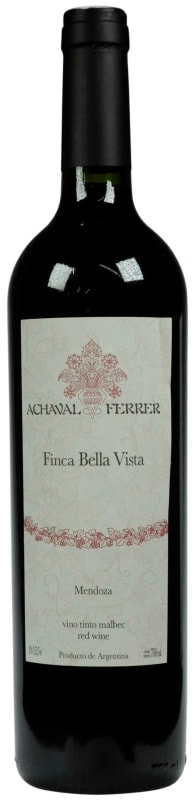
94 POINTS, WILFRED WONG. (Tasted: May 9, 2016, San Francisco, CA USA) The 2012 Achaval-Ferrer Bella Vista Malbec shows tremendous elegance without sacrificing power and strength. The wine exhibits red and blue fruits, with a light touch of sweet oak. Its comforting palate presence makes it an excellent companion with roast pork. Drinking quite well now. (Tasted: May 9, 2016, San Francisco, CA)
-
Robert Parker's Wine Advocate
2012 was a warmer, riper vintage than 2013 in Mendoza, but it shows little in the 2012 Malbec Finca Bella Vista. Perhaps the only hint could be that the fruit from riper vintages takes the oak in a different way and curiously enough the 2012 shows more oak influence than the 2013. There is a great combination of floral and fresh characters and the Mediterranean profile with some aromas of dried herbs. The palate reveals a serious wine with grainy tannins that add an elegant rusticity. Again, the only problem here is having the 2013 next to this great 2012.
-
Wine Enthusiast
Dusty cherry, wild berry and minerally aromas comprise a compact, deep nose that’s entirely inviting. Juicy, bold and bright on the palate, with sturdy tannins, this offers exotic notes of cumin and baking spices along with wild berry flavors. It’s elegant, complete and thorough on the finish; drink through 2020.
-
James Suckling
Shows plenty of sliced lemon and citrus rind character. Hints of minerals too. Full to medium body. Bright finish.
-
Wine Spectator
Unctuous, intensely fruity and pure, with red currant, dried raspberry, boysenberry and spiced cherry flavors, supported by lip-smacking acidity. The lively finish echoes with brambly notes.


Celebrated for its bold flavors and supple texture, Malbec has enjoyed runaway success in Argentina since the late 20th century. The grape originated in Bordeaux, France, where it historically contributed color and tannin to blends. A French agronomist, who saw great potential for the variety in Mendoza’s hot, high-altitude landscape, brought Malbec to Argentina in 1868. Somm Secret—If you’re trying to please a crowd, Malbec is generally a safe bet with its combination of dense fruit and soft tannins.

By far the largest and best-known winemaking province in Argentina, Mendoza is responsible for over 70% of the country’s enological output. Set in the eastern foothills of the Andes Mountains, the climate is dry and continental, presenting relatively few challenges for viticulturists during the growing season. Mendoza, divided into several distinctive sub-regions, including Luján de Cuyo and the Uco Valley, is the source of some of the country’s finest wines.
For many wine lovers, Mendoza is practically synonymous with Malbec. Originally a Bordelaise variety brought to Argentina by the French in the mid-1800s, here it found success and renown that it never knew in its homeland where a finicky climate gives mixed results. Cabernet Sauvignon, Syrah, Merlot and Pinot Noir are all widely planted here as well (and sometimes even blended with each other or Malbec). Mendoza's main white varieties include Chardonnay, Torrontés, Sauvignon Blanc and Sémillon.