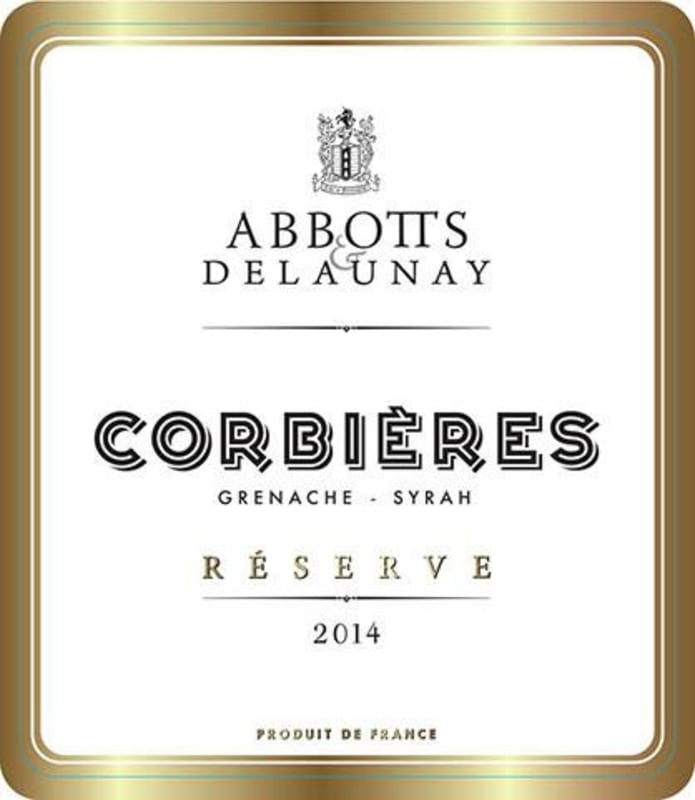

Winemaker Notes


Founded in 1996 in the small village of Marseillette, east of Carcassonne, Abbotts & Delaunay began as the vision of Nerida Abbott. In 2005, Laurent Delaunay acquired the estate, bringing with him five generations of Burgundian négociant heritage. A long-time advocate for the Languedoc’s potential, Laurent has led several notable projects across the region. The vineyards benefit from a unique landscape stretching from the Pyrenees to the Mediterranean, with diverse soils—sandstone, marl, limestone, and schist—that contribute to the wines’ distinctive character and strong sense of place.
Today, winemaking is led by Laurent’s daughter, Jeanne Delaunay, whose experience includes Domaine de la Romanée-Conti, Thibault Liger-Belair, and Coldstream Hills in Australia. Under her direction, the winery focuses on estate-grown fruit while partnering with growers throughout the region, always emphasizing terroir. Guided by a Burgundian philosophy, Jeanne prioritizes balance, elegance, and purity, ensuring that winemaking enhances rather than masks the natural expression of the land.

With bold fruit flavors and accents of sweet spice, Grenache, Syrah and Mourvèdre form the base of the classic Rhône Red Blend, while Carignan, Cinsault and Counoise often come in to play. Though they originated from France’s southern Rhône Valley, with some creative interpretation, Rhône blends have also become popular in other countries. Somm Secret—Putting their own local spin on the Rhône Red Blend, those from Priorat often include Merlot and Cabernet Sauvignon. In California, it is not uncommon to see Petite Sirah make an appearance.

The Corbières AOC, established in 1985, is the largest in the Languedoc, and represents the South of France in transition. Though viticulture here dates back to the Romans, only within the last twenty years have Corbières wines begun to reclaim their reputation. Approved for reds, rosés, and whites, the region's vineyards cover a wide variety of elevations, soil types, and exposures. Hilly terrain and the Atlantic Cers wind moderate the Mediterranean heat, giving the wines balance and complexity; the best will go ten years or more in the cellar.
Reds represent 88% of the AOC’s production and are an assemblage of the sun-loving grapes of southern France. Carignan’s briars, Grenache’s berries, Syrah’s cherries and Mourvèdre’s plums allow for a wide range of styles, which are often influenced by the wild herbs of the garrigue. Corbières rosés, though only 9% of production, are serious wines and the small production of Rhône-variety whites are fresh and sea-influenced.
With eleven sub-appellations, Corbières is an AOC in the process of refinement. Corbières-Boutenac attained Cru status in 2005, one of only five in the Languedoc to achieve this highest ranking.