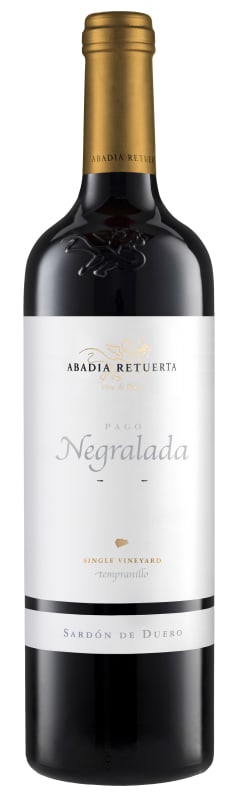


Winemaker Notes
Pago Negralada comes from a vineyard of Tempranillo, the noblest Spanish grape variety. The vines have been planted on deep gravel and sandy soils, which give this wine a firm and tannic character.
It is a wine with great aging potential, rooted in the past and destined to triumph in the future.
Professional Ratings
-
Vinous
The 2019 Tempranillo Pago de Negralada from Abadía Retuerta was aged for 18 months in French oak, half of which was new. Aromas of blackberry, blueberry and forest herbs mingle over polished oak. The wine balances ripeness and energy with smooth, rolling tannins and a juicy texture. Fresh, flavorful and complete.
-
James Suckling
A brooding profile with notes of espresso, walnuts and subtle dark fruit. The palate is medium- to full-bodied, built around a precise structure and firm, fine-grained tannins. There's depth and restraint here, suggesting plenty of potential. Better after 2026.
-
Robert Parker's Wine Advocate
2019 was a warm and dry year when the 2019 Pago Negralada, a single-vineyard Tempranillo from the lower part of the estate, a cooler place adequate for this short-cycle variety, showed good ripeness and a very good homogeneous vintage. The grapes fermented with their own isolated yeasts for 12 days, as extraction is quick, and the wine matured for 17 months in oak barrels, 66% of them new. The oak is neatly integrated, and the wine is medium to full-bodied and has a soft texture and the mellow mouthfeel from a warm and ripe vintage.




The rebirth of a historic vineyard and of a whole winemaking tradition, the excellence of which remains intact, laid the foundations for today’s Abadía Retuerta winery. It now has over 30 years of history, as expert hands manage the vineyard by carefully looking after it and creating unique wines with their own Protected Designation of Origin.
Abadía Retuerta is a unique place where time stands still and feelings run high. Here, the past lives on in the present, and centuries of tradition and culture remain intact. It sits within an enclave bathed by the river Duero, which defines the traits of the surrounding terroir. Experts with great patience, know-how and anticipation really get the best out of the terrain: they respect the natural cycles and help the vines adapt to the austere climate of the region, in order to produce one of the estate’s most prized assets: its first-rate wine.

Spanish red wine is known for being bold, heady, rustic and age-worthy, Spain is truly a one-of-a-kind wine-producing nation. A great majority of the country is hot, arid and drought-ridden, and since irrigation has only been recently introduced and (controversially) accepted, viticulture has sustained—and flourished—only through a great understanding of Spain’s particular conditions. Large spacing between vines allows each enough resources to survive and as a result, the country has the most acreage under vine compared to any other country, but is usually third in production.
Of the Spanish red wines, the most planted and respected grape variety is Tempranillo, the star of Spain’s Rioja and Ribera del Duero regions. Priorat specializes in bold red blends, Jumilla has gained global recognition for its single varietal Monastrell and Utiel-Requena has garnered recent attention for its reds made of Bobal.