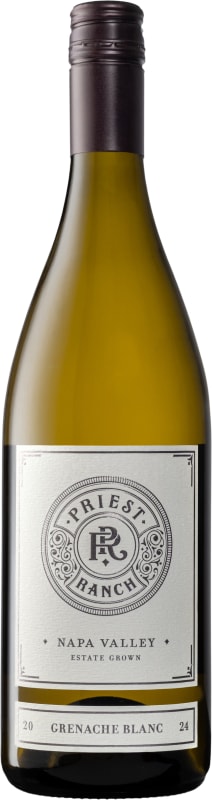


Winemaker Notes
The 2024 Grenache Blanc is a vibrant, crisp white wine with beautifully balanced acidity. The nose bursts with bright citrus, pear, and honeysuckle aromas, leading to a palate layered with green apple, white peach, and a hint of minerality.
A refreshing, clean finish makes it perfect to enjoy with triple cream cheese, spicy dishes, or simply on its own.
Professional Ratings
-
James Suckling
Textural, floral and generous. Layers of citrus confit, orchard fruit and pie crust lead to a rounded, layered mouthfeel cut with balanced acidity and phenolic grip.
-
Tasting Panel
Fermented in stainless steel with native yeasts, this Grenache Blanc is indeed steely yet possesses an enticing richness layered and fleshy pome fruit and peppered with lemon zest and lychee. The dense, concentrated finish sings with lime candy.
-
Wine Enthusiast
Crisp, focused, and lengthy, this Grenache Blanc (an unusual find for Napa Valley) delivers refreshing citrus and zest, orange blossom and a kiss of honey. An almost saline finish persists.



Priest Ranch is a Napa Valley wine brand driven by a passion for bold flavors, unforgettable experiences, and a deep connection to the land. Crafted from 100% estate-grown fruit, every Priest Ranch wine is produced and bottled to express the distinctive character of its origin. From powerful Cabernet Sauvignon and the iconic Snake Oil blend to vibrant Sauvignon Blanc, the wines embody an adventurous spirit and a commitment to exceptional quality from vine to bottle.
Blending culinary curiosity, craftsmanship, and Napa Valley hospitality, Priest Ranch invites wine lovers to experience wine through a more flavorful and inspired lens. Rich textures, layered complexity, and approachable elegance make these wines equally suited for celebratory dinners, casual gatherings, and memorable food pairings. Each bottle reflects a philosophy that great wine is best enjoyed as part of a shared experience around the table.
Located in the heart of Napa Valley in Yountville, California, the Priest Ranch tasting room offers guests an immersive introduction to the brand's distinctive style and sense of place. Visitors can explore estate-grown wines through thoughtfully curated tastings that combine bold wines with creative culinary elements. Whether discovering Priest Ranch for the first time or returning to a favorite vintage, guests are welcomed into a world where adventurous wines, elevated food experiences, and warm hospitality come together in memorable ways.

Producing full-bodied white wines, Grenache Blanc can be unctuous and soft or floral and fresh. Some of the finest examples are terroir-driven, age-worthy wines. It is a key ingredient in white Châteauneuf-du-Pape and many white blends across southern France and NE Spain. Somm Secret—Grenache Blanc plays a key role in the vins doux naturels of Rivesaltes and a subsidiary role in those of Banyuls and Maury.

One of the world's most highly regarded regions for wine production as well as tourism, the Napa Valley was responsible for bringing worldwide recognition to California winemaking. In the 1960s, a few key wine families settled the area and hedged their bets on the valley's world-class winemaking potential—and they were right.
The Napa wine industry really took off in the 1980s, when producers scooped up vineyard lands and planted vines throughout the county. A number of wineries emerged, and today Napa is home to hundreds of producers ranging from boutique to corporate. Cabernet Sauvignon is definitely the grape of choice here, with many winemakers also focusing on Bordeaux blends. White wines from Napa Valley are usually Chardonnay and Sauvignon Blanc.
Within the Napa Valley lie many smaller sub-AVAs that claim specific wine characteristics based on situation, slope and soil. Farthest south and coolest from the influence of the San Pablo Bay is Carneros, followed by Coombsville to its northeast and then Yountville, Oakville and Rutherford. Above those are the warm St. Helena and the valley's newest and hottest AVA, Calistoga. These areas follow the valley floor and are known generally for creating rich, dense, complex and smooth red wines with good aging potential. The mountain sub appellations, nestled on the slopes overlooking the valley AVAs, include Stags Leap District, Atlas Peak, Chiles Valley (farther east), Howell Mountain, Mt. Veeder, Spring Mountain District and Diamond Mountain District. Napa Valley wines from the mountain regions are often more structured and firm, benefiting from a lot of time in the bottle to evolve and soften.