


Winemaker Notes
Dark and deep color. Red fruits, cherry and strawberry with delicate oak aromas. A structured tannic wine. Aromas of blackcurrant buds and vanilla. Remarkable freshness with notable and refined tannins to due long oak ageing.
Professional Ratings
-
Wine Enthusiast
A classic and rustic expression, this wine showcases rich red cherries and currants, with subtle notes of cedar, fine herbs, and violet aromas. Fruit-forward yet alluringly savory, it offers youthful tannins that coat the mouth, supporting a midpalate of lush black plum, charcuterie, and light black tea. The finish is defined by a fine granitic edge. Enjoy now with a proper decant, or cellar through 2035+.
-
James Suckling
A prototypical Crozes-Hermitage, at the lighter end of the scale for this appellation, but with the juicy briar character we expect from this appellation. Supple tannins underline all this very nicely. Plenty of dried herbs in the finish.
-
Wine Spectator
Earthy and savory, offering delicate red fruit merged with bolts of iron, warm soil and white pepper. There's a gentleness to this red, with forest floor accents adding charm, along with a savory, tangy beam of acidity. Retains a juicy edge through the finish. Drink now through 2026. 2,100 cases imported.
-
Robert Parker's Wine Advocate
Notes of lilac, iris and dark cherries introduce the 2021 Crozes-Hermitage from Maison E. Guigal, a medium- to full-bodied, round and sappy wine built around a juicy core of fruit and concluding with a long, charming finish.



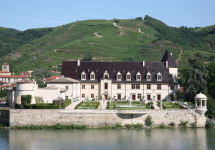
The Guigal domain was founded in 1946 by Etienne Guigal in the ancient village of Ampuis, home of the wines of the Côte-Rôtie. In these vineyards that are over 2400 years old, you can still see the small terraced walls characteristic of the Roman period. Etienne Guigal arrived in this region in 1923 at the age of 14. He made wine for over 67 vintages and, at the beginning of his career, participated in the development of the Vidal-Fleury establishment.
Despite his young age, Marcel Guigal took over from his father in 1961 when the latter was victim to a brutal illness rendering him blind. Marcel's hard work and perseverance enabled the Guigals to buy out Vidal-Fleury in 1984, although the establishment retains its own identity and commercial autonomy. In 2000, the Guigals purchased the Jean-Louis Grippat estate in Saint-Joseph and Hermitage, as well as the Domaine de Vallouit in Côte-Rôtie, Hermitage, Saint-Joseph and Crozes-Hermitage.
In the cellars of the Guigal estate in Ampuis, the northern appellations of the Rhône Valley are produced and aged. These are the appellations of Côte-Rôtie, Condrieu, Hermitage, Saint-Joseph and Crozes-Hermitage. The great appellations of the Southern Rhône, Chateauneuf-du-Pape, Gigondas, Tavel and Côtes-du-Rhône, are also aged in the Ampuis cellars.

Marked by an unmistakable deep purple hue and savory aromatics, Syrah makes an intense, powerful and often age-worthy red. Native to the Northern Rhône, Syrah achieves its maximum potential in the steep village of Hermitage and plays an important component in the Red Rhône Blends of the south, adding color and structure to Grenache and Mourvèdre. Syrah is the most widely planted grape of Australia and is important in California and Washington. Sommelier Secret—Such a synergy these three create together, the Grenache, Syrah, Mourvedre trio often takes on the shorthand term, “GSM.”

Crozes-Hermitage is Northern Rhone’s largest appellation, surrounding the steep granite faces of Hermitage to its north and south. Here the rolling vineyards are less extreme and its soils, rich in clay-limestone and alluvial matter, produce Syrahs that range from fruity and charming to lush and seductive. The Syrahs of Crozes-Hermitage have more mass than those from St. Joseph but are less intense than those from Hermitage. While many are intended for early consumption, some of the best Syrahs from Crozes-Hermitage will age beautifully for 5-10 years.
Up to 15% of white grapes may theoretically be added to red Crozes at the time of fermentation but whether this is done or not depends on the decision of the winemaker. The best Crozes-Hermitage Syrahs will be fleshy with black fruit (currant, blackberry and black cherry) and bay leaf qualities, notes of tar and stone, and a well-concentrated finish of smooth tannins.
About a tenth of the wine produced in Crozes-Hermitage is white, primarily composed of Marsanne supplemented by smaller amounts of Roussanne.