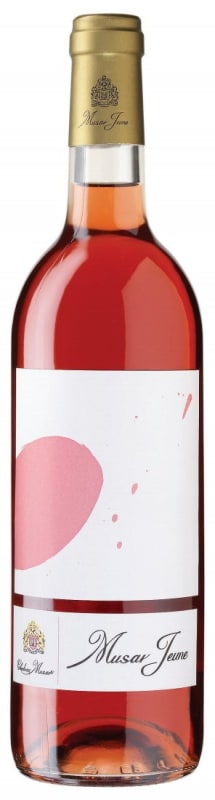


Winemaker Notes

Whether it’s playful and fun or savory and serious, most rosé today is not your grandmother’s White Zinfandel, though that category remains strong. Pink wine has recently become quite trendy, and this time around it’s commonly quite dry. Since the pigment in red wines comes from keeping fermenting juice in contact with the grape skins for an extended period, it follows that a pink wine can be made using just a brief period of skin contact—usually just a couple of days. The resulting color depends on grape variety and winemaking style, ranging from pale salmon to deep magenta.

Home of the actual, historical temple of Bacchus, which dates back to the middle of the 2nd century AD, the Bekaa Valley today continues to represent the center of Lebanese winemaking. Here summers are dry, nights cool and consistent rainfall provides an excellent environment for viticulture.
What today is known geographically as Lebanon, was the original home of the Phoenicians (approximately 1550 to 300 BC), who were sea-faring merchants and the first to trade wine as a commodity. Jumping to the Middle Ages (476 to 1453 AD), Lebanese wine continued to be of high value for Venice merchants, who sold it to the eager European buyers. But in 1517, when the Ottoman Empire took command in Lebanon, winemaking came to a halt. Christians were the only ones allowed to make it, and only for religious purposes.
The foundations of the modern Lebanese wine industry come from the mid-19th century Jesuit missionaries of Ksara, who introduced new varieties and production methods from the then French-dominated Algeria. Today French varieties still prevail with Cinsault, Carignan, Cabernet Sauvignon, Merlot and Syrah as the main red grape varieties and Ugni blanc, Chardonnay, Sauvignon blanc and Viognier as the main whites.
While Chateau Musar was the only producer to survive the Lebanese 15 year-long civil war, the 1990s saw an emergence of new producers such as Chateau Kefraya, Chateau Ksara and new investment from major French producers.