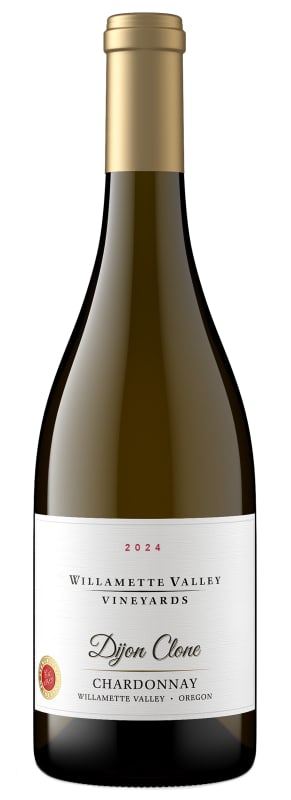


Winemaker Notes
This wine pairs well with seafood, salads and creamy dishes, such as garlic scallops in cream sauce, arugula salad with Asian pear and goat cheese, lobster bisque or spring rolls.
Professional Ratings
-
James Suckling
Toasty and nutty aromas of vanilla, spiced pears and yellow roses. Medium-bodied with lemon, peach and green apple flavors and gentle creaminess across the palate. A clean finish with lingering spice notes. Drink now.
-
Vinous
The 2024 Chardonnay Dijon Clone mixes tropical melon with minty herbs and sweet spice. It splashes across the palate with ripe orchard fruit elevated by a wave of sweet spice. A cooling sensation lingers on the finish as the 2024 tapers off airy and fresh, with nuances of chamomile fading.




A combination of determination and extraordinary people has brought Willamette Valley Vineyards from a bold idea to one of the region's leading wineries, earning the title "One of America's Great Pinot Noir Producers," from Wine Enthusiast Magazine.
The “budwood” of Willamette Valley Vineyards began long before its founding in 1983 by vintner Jim Bernau. His Dad was hired by a California winemaker to secure the first winery license in Oregon since Prohibition. Jim’s Dad allowed him small tastes of Richard Sommer’s wine, lighting a path that led Jim from home winemaking to studies at UC Davis and eventually Beaune, France.
In 1983, Jim cleared away an old pioneer plum orchard in the Salem Hills and hand-watered his first plantings using 17 lengths of 75’ garden hose.
Jim's vision of organizing the support of wine enthusiasts to build a winery that would produce world-class wines through shared ownership has resulted in more than 16,000 owners. The winery's Common (WVVI) and Preferred (WVVIP) are traded on the NASDAQ.
The winery sources all of its barrel-aged Pinot Noir from its estate vineyards and practices environmentally sustainable farming. All of the vineyards have been certified sustainable through LIVE (Low Impact Viticulture and Enology) and Salmon-Safe programs since 1997.
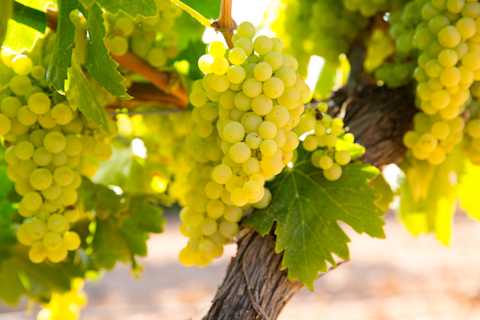
One of the most popular and versatile white wine grapes, Chardonnay offers a wide range of flavors and styles depending on where it is grown and how it is made. While it tends to flourish in most environments, Chardonnay from its Burgundian homeland produces some of the most remarkable and longest lived examples. California produces both oaky, buttery styles and leaner, European-inspired wines. Somm Secret—The Burgundian subregion of Chablis, while typically using older oak barrels, produces a bright style similar to the unoaked style. Anyone who doesn't like oaky Chardonnay would likely enjoy Chablis.
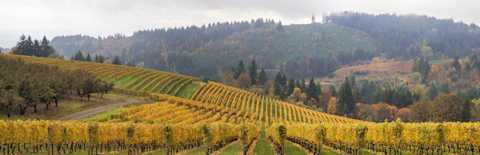
One of Pinot Noir's most successful New World outposts, the Willamette Valley is the largest and most important AVA in Oregon. With a continental climate moderated by the influence of the Pacific Ocean, it is perfect for cool-climate viticulture and the production of elegant wines.
Mountain ranges bordering three sides of the valley, particularly the Chehalem Mountains, provide the option for higher-elevation vineyard sites.
The valley's three prominent soil types (volcanic, sedimentary and silty, loess) make it unique and create significant differences in wine styles among its vineyards and sub-AVAs. The iron-rich, basalt-based, Jory volcanic soils found commonly in the Dundee Hills are rich in clay and hold water well; the chalky, sedimentary soils of Ribbon Ridge, Yamhill-Carlton and McMinnville encourage complex root systems as vines struggle to search for water and minerals. In the most southern stretch of the Willamette, the Eola-Amity Hills sub-AVA soils are mixed, shallow and well-drained. The Hills' close proximity to the Van Duzer Corridor (which became its own appellation as of 2019) also creates grapes with great concentration and firm acidity, leading to wines that perfectly express both power and grace.
Though Pinot noir enjoys the limelight here, Pinot Gris, Pinot Blanc and Chardonnay also thrive in the Willamette. Increasing curiosity has risen recently in the potential of others like Grüner Veltliner, Chenin Blanc and Gamay.