

Winemaker Notes





The idea for Two Hands was born in September 1999 when founders Michael Twelftree and Richard Mintz sat at a friend’s engagement party and decided it was time to make their own wine and market it on the world stage.
The original aim was, and still is, to make the best possible Shiraz-based wines from prized growing regions throughout Australia. With so much Australian wine being sold around the globe under multi-region labels in a formulaic style, the intention was to break the mold and showcase the diversity of Australian Shiraz by highlighting regional and vineyard characteristics by allowing the fruit to be the primary feature of the wines.
Quality without compromise is central to the Two Hands philosophy, driving all the decisions from fruit and oak selection to packaging and promotion. From the outset, Two Hands set out to be unique and innovative, this approach is reflected in everything from the names of the wines through to, not least, the wines themselves. From small beginnings, the winery has been able to manage its growth organically whilst maintaining an absolute quality focus. Premium fruit is sourced from the finest Shiraz growing regions in Australia, and Two Hands works closely with its estate vineyards and band of growers to ensure the full potential of each vineyard is reached. They handle every parcel of fruit, however small, separately from crushing through to fermentation and oak maturation to ensure complexity and personality in the finished wines.
In its simplest form, it could be said that they squeeze the grapes and put them in a bottle. However, in practice there are many different steps and countless hours involved, from vineyard, through to winemaking, tasting, blending and maturation in order to make consistent, quality wines.
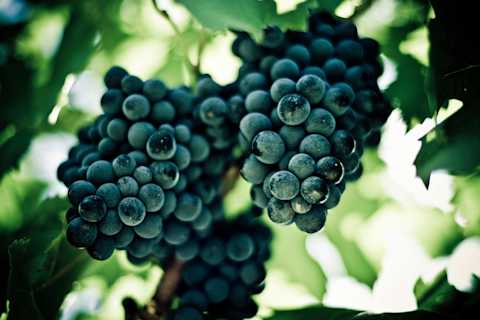
Marked by an unmistakable deep purple hue and savory aromatics, Syrah makes an intense, powerful and often age-worthy red. Native to the Northern Rhône, Syrah achieves its maximum potential in the steep village of Hermitage and plays an important component in the Red Rhône Blends of the south, adding color and structure to Grenache and Mourvèdre. Syrah is the most widely planted grape of Australia and is important in California and Washington. Sommelier Secret—Such a synergy these three create together, the Grenache, Syrah, Mourvedre trio often takes on the shorthand term, “GSM.”
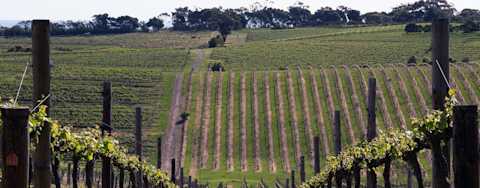
Higher in elevation and topographically more dramatic than the Barossa Valley floor, Eden Valley abuts it to its south and east. While it is a bit of an extension of Barossa, Eden Valley is topographically different than the pastoral Barossa Valley, and is composed of rocky hills and eucalyptus groves.
Recognizing Eden Valley’s potential with Riesling in the 1960s and 70s, producers started to move their Riesling production from Barossa to these better sites where schist soils on hilltops would produce more steely, tart and age-worthy examples. A most famous site, planted by Colin Gramp, called Steingarten, today produces one of the most outstanding Australian Rieslings. Youthful Eden Valley Rieslings express floral, grapefruit and mineral, while with time in the bottle, they become increasingly toasty and complex.
Riesling isn’t the only grape the region can grow; undeniably at lower altitudes Shiraz does very well. Mount Edelstone is a notable vineyard as well as the Hill of Grace, which boasts healthy Shiraz vines well over 100 years old. This is the only Australian region where Merlot has a made a name for itself and Chardonnay can be spectacular, particularly from the High Eden subregion in the southern valley.