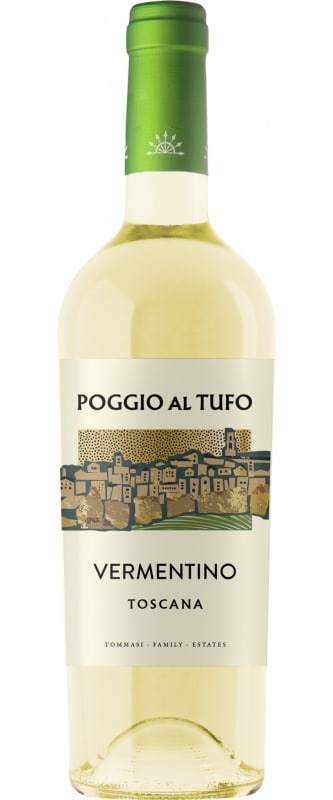


Winemaker Notes
Intense, fruity aromas with typical characteristics of this grape variety. On the palate it is full and balanced and has a long finish. Recommended with light appetizers, soups and fish.
Perfect for aperitivo oysters or cheese, while holding enough tension and body to work alongside pastas with pesto and margarita pizzas.
Professional Ratings
-
James Suckling
Fruity and floral, showing ripe citrus, orchard fruit and blossoms. Medium-bodied and lively with crunchy acidity and a refreshing, easygoing finish.


Tommasi Viticoltori (Tommasi Vintners) is a family viticultural company founded in 1902. Tommasi is located in Pedemonte village in the heart of Valpolicella Classico region, on a small piece of land in the northwest part of Verona, between the Lessini mountains and their plains near Lake Garda.
From grandfather Giacomo's tiny vineyard, the Tommasi estate has grown steadily over the course of years and today extends over 135 hectares of vineyards blessed by mother nature not only by a magnificent landscape, but more importantly, by its perfect suitability for grapes. The estate is run by the 4th generation of the Tommasi family, 6 members working together in complete harmony

A fantastic, aromatic white grape that grows with great success in Sardinia, Tuscany and in lesser proportions on the island of Corsica. Somm Secret—Vermentino is thought to be genetically identical to Liguria’s Pigato grape and Peidmont’s Favorita. It comprises a large proportion of the whites in southern France where it is called Rolle.

One of the most iconic Italian regions for wine, scenery and history, Tuscany is the world’s most important outpost for the Sangiovese grape. Tuscan wine ranges in style from fruity and simple to complex and age-worthy, Sangiovese makes up a significant percentage of plantings here, with the white Trebbiano Toscano coming in second.
Within Tuscany, many esteemed wines have their own respective sub-zones, including Chianti, Brunello di Montalcino and Vino Nobile di Montepulciano. The climate is Mediterranean and the topography consists mostly of picturesque rolling hills, scattered with vineyards.
Sangiovese at its simplest produces straightforward pizza-friendly Tuscan wines with bright and juicy red fruit, but at its best it shows remarkable complexity and ageability. Top-quality Sangiovese-based wines can be expressive of a range of characteristics such as sour cherry, balsamic, dried herbs, leather, fresh earth, dried flowers, anise and tobacco. Brunello, an exceptionally bold Tuscan wine, expresses well the particularities of vintage variations and is thus popular among collectors. Chianti is associated with tangy and food-friendly dry wines at various price points. A more recent phenomenon as of the 1970s is the “Super Tuscan”—a red wine made from international grape varieties like Cabernet Sauvignon, Merlot, Cabernet Franc and Syrah, with or without Sangiovese. These are common in Tuscany’s coastal regions like Bolgheri, Val di Cornia, Carmignano and the island of Elba.