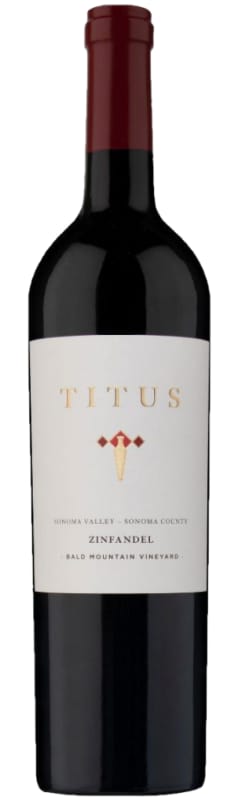


Winemaker Notes
Bald Mountain Zinfandel is the first Titus single vineyard Zinfandel and is comprised of 100% fruit from the Bald Mountain Vineyard. This old vine Zinfandel is grown in the mountain vineyard off of Wall Rd and is one of the most stunning vineyards in the North Coast. The old vines produce a concentrated and ripe Zinfandel that will age for years.
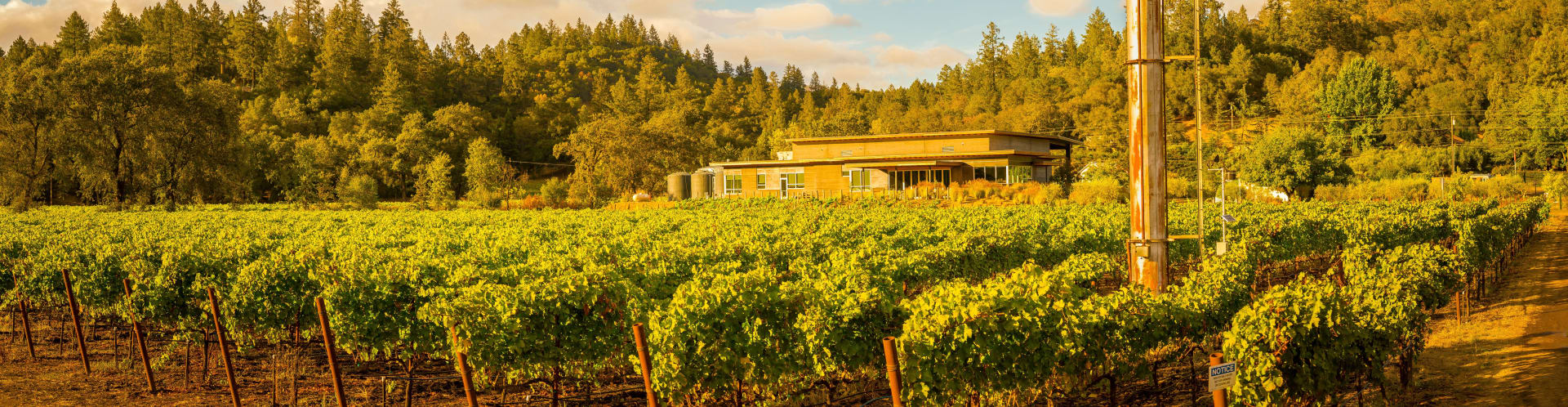




The documented history of the property extends back to 1841 and includes General Mariano Vallejo, Dr. Edward Bale, Charles Krug, and Eli York, just to name a few. The land has been continuously farmed for over 150 years, with the Titus family's first harvest in 1969. Dr. Lee Titus, a Radiologist, practicing in Sonoma at the time, purchased the land in 1968 and soon after, took over farming the vineyard. The evolution of wine production in Napa was moving towards those varietals - Cabernet Sauvignon, Merlot - and to further emulate the Bordeaux region, Lee oversaw planting all five of the classic varietals as the old vineyards were being replanted. And so, Titus Vineyards began; bringing together the traditional grapes of Bordeaux in a New World site marked the beginning of the family wine venture.
Dr. Titus and his family came to California from Minnesota during the Great Depression. After graduating from Fresno State and serving in World War II, Lee attended medical school and became a radiologist. Meanwhile, Ruth Traverso was growing up in San Francisco's North Beach, where her parents, immigrants from the Piemonte region of Italy, were involved in the family's bakery business. During family vacations in Calistoga, Ruth helped friends harvest their grapes, giving her a love for Napa Valley and a kinship with grape farming.
Years later, having fallen in love, married and settled in the town of Sonoma with their four sons, Lee and Ruth began acquiring fifty acres in three separate parcels just north of St. Helena on the valley floor. Life in 1960's Napa Valley was much simpler than it is today. California's wine industry had yet to achieve its enormous potential, and the land was still affordable for the right purchaser. The vineyard Lee and Ruth Titus acquired in 1968 were originally planted to long-forgotten varietals like Mondeuce, Burger, and Golden Chasselas; alongside were well-known varietals like Pinot Noir, which was poorly suited to the warm, up-valley microclimate. The vineyard needed a change.
In 1972 the Titus' were able to acquire another small, 10-acre vineyard on Ehlers Lane just a half-mile north of their Ranch vineyard. Replanted to Cabernet Sauvignon and Petite Verdot on dense, rocky volcanic soils, the vines of the Ehlers Estate Vineyard yield a different expression of Cabernet fruit. Eventually, the brothers were able to produce two distinctly different Cabernets from their Ranch and Ehlers Estate vineyards.
It would be more than twenty years before their sons crushed fruit for the production of the first Titus Vineyards wines in 1990. Although they hoped to one day build a family operated winery, Lee and Ruth spent those interim years raising their sons and growing grapes for other wineries, including Charles Krug, Beaulieu Vineyards, Cuvaison, Quail Ridge, and Pine Ridge. Ultimately, they left the creation of Titus Vineyards wines up to their sons: Phillip now works as Director of Winemaking for Titus Vineyards, while Eric manages the winery and vineyards

Unapologetically bold, spice-driven and jammy, Zinfandel has secured its title as the darling of California vintners by adapting well to the state's diverse microclimates and landscapes. Born in Croatia, it later made its way to southern Italy where it was named Primitivo. Fortunately, the imperial nursery of Vienna catalogued specimens of the vine, and it later made its way to New England in 1829. Parading the true American spirit, Zinfandel found a new home in California during the Gold Rush of 1849. Somm Secret—California's ancient vines of Zinfandel are those that survived the neglect of Prohibition; today these vines produce the most concentrated, ethereal and complex examples.
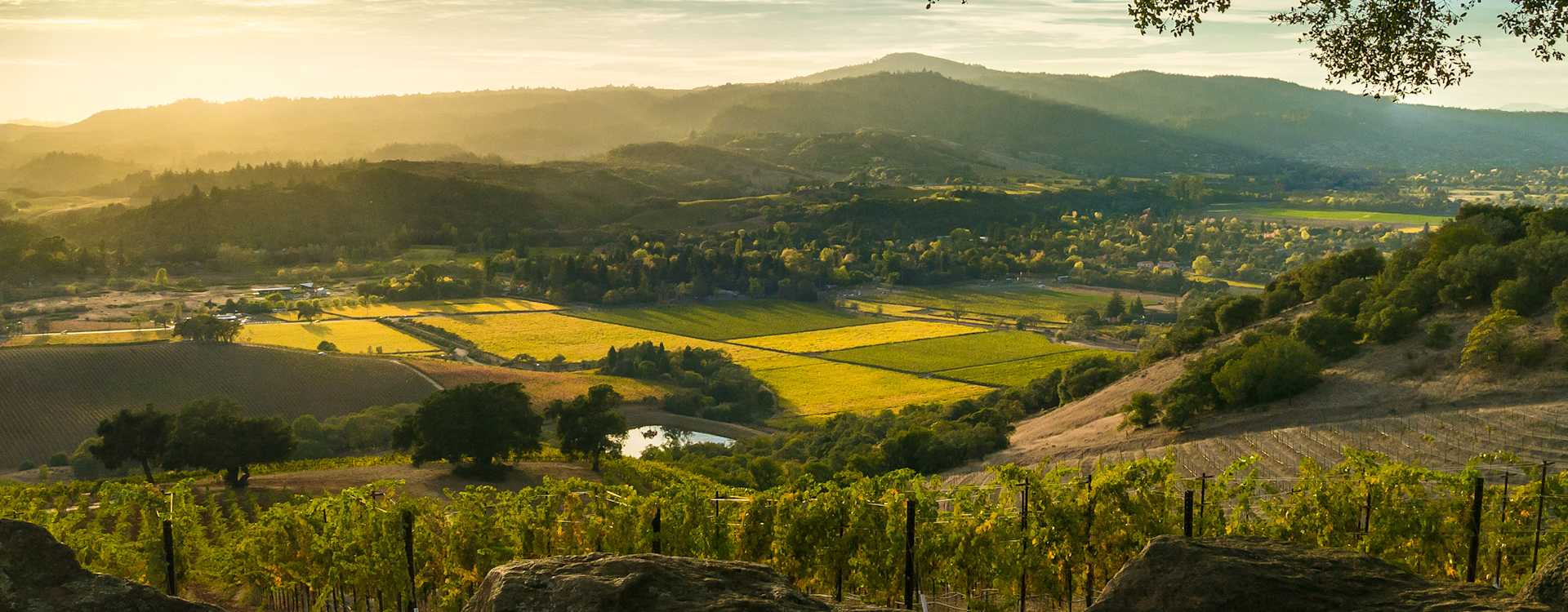
Perhaps the most historically significant appellation in Sonoma County, the Sonoma Valley is home to both Buena Vista winery, California's oldest commercial winery, and Gundlach Bundschu winery, California's oldest family-run winery.
It is also one of the more geologically and climactically diverse districts. The valley includes and overlaps four distinct Sonoma County sub-appellations, including Carneros, Moon Mountain District, Sonoma Mountain and Bennett Valley. With mountains, benchlands, plains, abundant sunshine and the cooling effects of the nearby Pacific, this appellation can successfully produce a wide range of grape varieties. Pinot Noir, Chardonnay, Cabernet Sauvignon, Gewürztraminer, and most notably, Zinfandel all thrive here. Ancient Zinfandel vines over 100 years old produce small crops of concentrated, spicy fruit, which in turn make some of the Valley's most unique wines. These can also be made as “field blends” (wines made from a mix of grape varieties grown in the same vineyard) along with Petite Sirah, Carignan and Alicante Bouschet.