

Winemaker Notes
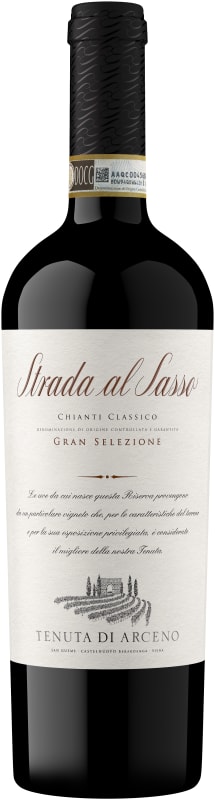
Considered a legendary vintage for its small yields, 2017 produced intense, concentrated wines with vibrant acidity. The wine has powerful fruit and incredible depth. On the nose, the wine demonstrates a playful banter between fruit and herbal tones with aromas of ripe cherry, violets, cedar and herbs jumping out of the glass; it shows a wine that is savory with soft fruit around a twisting chain of acidity. The palate follows with flavors of blueberry, vanilla bean and sweet mint, with bright acidity still carrying the tasting experience. Soft tannins bring the finish to tones of white pepper, black licorice and Tenuta di Arceno’s signature orange peel.
Pair this wine alongside wild boar pappardelle, Asiago, Manchego, roasted chicken and tortellini with Bolognese.
Professional Ratings
-
James Suckling
A creamy, polished red with blueberry, fresh-plum and some floral character. Medium body, fine tannins and a fruity finish. Reserved and refined. Linear freshness to this.
-
Robert Parker's Wine Advocate
The Tenuta di Arceno 2017 Chianti Classico Gran Selezione Strada al Sasso is a beautifully velvety and rich expression from one of the warmest and driest vintages in recent memory. Dark fruit, blackberry and dried cherry segue to leather, spice and tar. You also get hints of earthy potting soil and blue flower that come naturally to the Sangiovese grape. The finish ends with medium freshness and soft tannin's. This is a solid Tuscan red to serve with grilled streak.


Among Italy's elite red grape varieties, Sangiovese has the perfect intersection of bright red fruit and savory earthiness and is responsible for the best red wines of Tuscany. While it is best known as the chief component of Chianti, it is also the main grape in Vino Nobile di Montepulciano and reaches the height of its power and intensity in the complex, long-lived Brunello di Montalcino. Somm Secret—Sangiovese doubles under the alias, Nielluccio, on the French island of Corsica where it produces distinctly floral and refreshing reds and rosés.

One of the first wine regions anywhere to be officially recognized and delimited, Chianti Classico is today what was originally defined simply as Chianti. Already identified by the early 18th century as a superior zone, the official name of Chianti was proclaimed upon the area surrounding the townships of Castellina, Radda and Gaiole, just north of Siena, by Cosimo III, Grand Duke of Tuscany in an official decree in 1716.
However, by the 1930s the Italian government had appended this historic zone with additonal land in order to capitalize on the Chianti name. It wasn’t until 1996 that Chianti Classico became autonomous once again when the government granted a separate DOCG (Denominazione di Origine Controllata e Garantita) to its borders. Ever since, Chianti Classico considers itself no longer a subzone of Chianti.
Many Classicos are today made of 100% Sangiovese but can include up to 20% of other approved varieties grown within the Classico borders. The best Classicos will have a bright acidity, supple tannins and be full-bodied with plenty of ripe fruit (plums, black cherry, blackberry). Also common among the best Classicos are expressive notes of cedar, dried herbs, fennel, balsamic or tobacco.