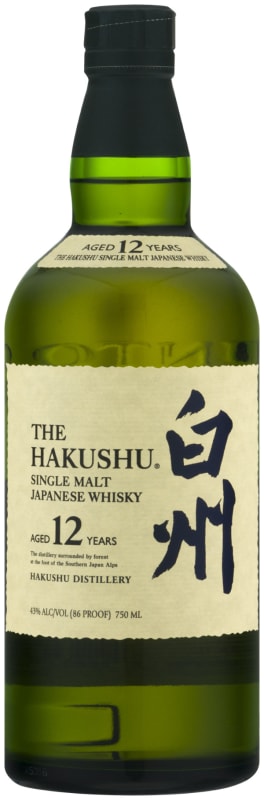


Distiller Notes
Champagne gold color, basil, pine needle, green apple on the nose. Sweet pear, mint, kiwi on the palate and a green tea, subtle smoke finish.
Proof: 86


Sharing a great deal with Scotch in terms of production methods and ingredients, today’s hugely successful commercial market of Japanese Whisky owes much to the research of Masataka Taketsuru. In 1918, this Japanese national travelled to Scotland with the intention of studying organic chemistry but instead became fascinated with Scotch Whisky production. Similar to Scotch Whisky, Japanese Whisky also uses malted barley as the fermentation base and long-term aging in wooden barrels. However, the often-used Mizunara oak, rather than French or American oak, imparts uniquely spicy and citrus-like characteristics to a Japanese Whisky.