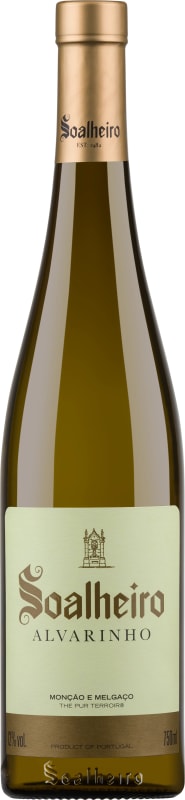


Winemaker Notes
Professional Ratings
-
Robert Parker's Wine Advocate
The first wine they produced in 1982, the 2025 Alvarinho is a classical unoaked wine, produced by pressing the full clusters to obtain cleaner musts with less phenolic compounds and a purer nose. It fermented without malolactic and was kept with the fine lees for at least two months with two bâtonnages before the final blend. It has a pale and bright yellow color and a faintly reductive nose, which happens with the Albariño from Spain, and was released very early in a slightly green/reductive style. It comes in at 12.5% alcohol, with a pH of 3.09 and 6.3 grams of acidity and has an austere and stony mouthfeel, with the granite sensation in the finish.


Bright and aromatic with distinctive floral and fruity characteristics, Albariño has enjoyed a surge in popularity and an increase in plantings over the last couple of decades. Thick skins allow it to withstand the humid conditions of its homeland, Rías Baixas, Spain, free of malady, and produce a weighty but fresh white. Somm Secret—Albariño claims dual citizenship in Spain and Portugal. Under the name Alvarinho, it thrives in Portugal’s northwestern Vinho Verde region, which predictably, borders part of Spain’s Rías Baixas.

A cheerful, translucid, lemon-yellow and slightly pétillant white wine, Vinho Verde literally means ‘green wine’ and is named after the northwest Portugese region from which it originates. The ‘green’ in the name refers to the youthful state in which the wines are customarily released and consumed, not the color of the wine.
It is typically a blend of various percentages of Alvarinho, Loureiro, Trajadura, and Pedernã (Arinto). Following initial alcoholic fermentation, a natural, secondary malolactic conversion in cask produces carbon dioxide, giving Vinho Verde its charmingly light sparkle.