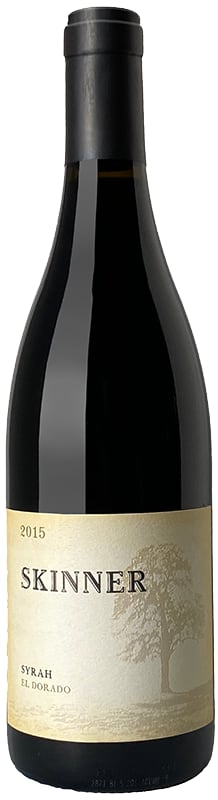


Winemaker Notes
This wine is always rustic in nature, however the introduction of the Grenache coupled with fruit from loamier soils makes this wine more elegant, refined and approachable compared to past efforts. Additionally, we age the wine for about 2 years in barrel to fully integrate the tannins. The resulting wine has aromatics of blackberry, blueberry, dark cherry, wet concrete, and wild sage, coupled with hints of vanilla bean, pipe tobacco, and white flowers. This unfined and unfiltered wine has modest tannins with fresh acidity and a crunchy minerality on the finish.
Professional Ratings
-
Wine Enthusiast
This wine tastes bold and assertive, pushing smoky oak and vanilla flavors close to the edge but rescuing them with attractive ripe flavors of blackberry and black cherry. The wine is full bodied, layered and mouthcoating, supported by moderate tannins that melt into the bold flavors. Editors' Choice.


Marked by an unmistakable deep purple hue and savory aromatics, Syrah makes an intense, powerful and often age-worthy red. Native to the Northern Rhône, Syrah achieves its maximum potential in the steep village of Hermitage and plays an important component in the Red Rhône Blends of the south, adding color and structure to Grenache and Mourvèdre. Syrah is the most widely planted grape of Australia and is important in California and Washington. Sommelier Secret—Such a synergy these three create together, the Grenache, Syrah, Mourvedre trio often takes on the shorthand term, “GSM.”

As home to California’s highest altitude vineyards, El Dorado is also one of its oldest wine growing regions. When gold miners settled here in the late 1800s, many also planted vineyards and made wine to quench its local demand.
By 1870, El Dorado County, as part of the greater Sierra Foothills growing area, was among the largest wine producers in the state, behind only Los Angeles and Sonoma counties. The local wine industry enjoyed great success until just after the turn of the century when fortune-seekers moved elsewhere and its population diminished. With Prohibition, winemaking and grape growing was totally abandoned. But some of these vines still exist today and are the treasure chest of the Sierra Foothills as we know them.
El Dorado has a diverse terrain with elevations ranging from 1,200 to 3,500 feet, creating countless mesoclimates for its vineyards. This diversity allows success with a wide range of grapes including whites like Gewurztraminer and Sauvignon Blanc, as well as for reds, Grenache, Syrah, Tempranillo, Barbera and especially, Zinfandel.
Soils tend to be fine-grained volcanic rock, shale and decomposed granite. Summer days are hot but nights are cool and the area typically gets ample precipitation in the form or rain or snow in the winter.