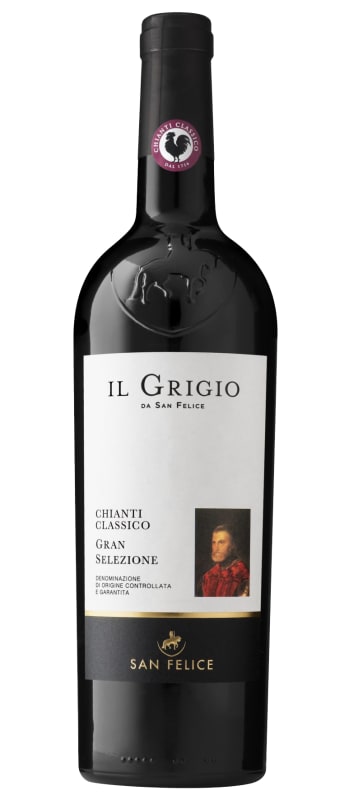


Winemaker Notes
Deep ruby red. The round bouquet releases fragrances that linger beautifully, with scents of sweet violets that meld into smooth, spicy hints of tobacco leaf. This is a full-bodied red, velvety smooth marked by ripe, succulent tannins harmoniously integrated with the acidity.
Perfect with wild game, roasted and grilled meats, as well as aged cheeses.
Professional Ratings
-
James Suckling
Deep nose of black cherries and plums, together with hints of truffle, black earth, stone and walnut. Juicy and seamless on the medium to full body, with a bright core of red and black fruit. Racy finish.
-
Robert Parker's Wine Advocate
The 2018 Chianti Classico Gran Selezione Il Grigio offers a solid medium-term drinking window, and the wine should continue to evolve over the next few years. There is a rusty mineral note of red brick or iron ore at the start, and the bouquet eventually reverts to black fruit, spice and crushed flowers. This vintage shows more tannic firmness and structure to hold it together, imparting an elegant and polished impression to the palate. Best After 2024
-
Wine Spectator
Firmly built, this red delivers a combination of fruity and savory elements, with black cherry and blackberry allied to beef bouillon, earth and mint flavors. Compact on the finish, where dusty tannins reign. Best from 2025 through 2040.
-
Jeb Dunnuck
Lush, with a squarely modern-leaning style, the 2018 Chianti Classico Gran Selezione Il Grigio pours an inky and opaque ruby hue and reveals compact aromas of baked plum, vanilla bean, toasted cedar, and crushed violets. The oak influence cloaks the wine all the way through the palate, which is ripe up front before falling off, and unfolds savory dried herbs, cherry pit, and amaro. A ripe and more densely packed wine, this could work as a steppingstone into these wines for lovers of New World wines with generous wood spice.
-
Wine Enthusiast
The alluringly reduced nose on this wine conveys fresh tar and the sulfuric warmth of natural hot-spring waters. This mellows into leather, soil, Luxardo cherry and sugar plum. The palate contrasts juicy bright fruit with meaty, chocolaty tones reminiscent of roast pork with balsamic glaze. Tannins forgive—but not too easily.


Among Italy's elite red grape varieties, Sangiovese has the perfect intersection of bright red fruit and savory earthiness and is responsible for the best red wines of Tuscany. While it is best known as the chief component of Chianti, it is also the main grape in Vino Nobile di Montepulciano and reaches the height of its power and intensity in the complex, long-lived Brunello di Montalcino. Somm Secret—Sangiovese doubles under the alias, Nielluccio, on the French island of Corsica where it produces distinctly floral and refreshing reds and rosés.

One of the first wine regions anywhere to be officially recognized and delimited, Chianti Classico is today what was originally defined simply as Chianti. Already identified by the early 18th century as a superior zone, the official name of Chianti was proclaimed upon the area surrounding the townships of Castellina, Radda and Gaiole, just north of Siena, by Cosimo III, Grand Duke of Tuscany in an official decree in 1716.
However, by the 1930s the Italian government had appended this historic zone with additonal land in order to capitalize on the Chianti name. It wasn’t until 1996 that Chianti Classico became autonomous once again when the government granted a separate DOCG (Denominazione di Origine Controllata e Garantita) to its borders. Ever since, Chianti Classico considers itself no longer a subzone of Chianti.
Many Classicos are today made of 100% Sangiovese but can include up to 20% of other approved varieties grown within the Classico borders. The best Classicos will have a bright acidity, supple tannins and be full-bodied with plenty of ripe fruit (plums, black cherry, blackberry). Also common among the best Classicos are expressive notes of cedar, dried herbs, fennel, balsamic or tobacco.