Winemaker Notes
Professional Ratings
-
James Suckling
This really smells like Montrachet. Aromas of cooked apples, chalk and hints of white flowers like jasmine and honeysuckle. Full-bodied and fresh for a warm vintage, with finesse and a silky texture. Very fine bubbles and hints of sophisticated brioche and croissant in the finish. From Mesnil. Great at the end. Stunning for 2015. Marvelous is the word. You can't stop drinking it. 5 g/L dosage. Drink or hold.
-
Robert Parker's Wine Advocate
Released ahead of the 2014 rendition and originating from a dry, sunny growing season, Salon’s 2015 Brut Blanc de Blancs Le Mesnil, disgorged in spring 2025 with a dosage of six grams per liter, follows in the footsteps of 2013, continuing a run of releases that are friendly from the start, without the austere edge that has often characterized this cuvée in the past. It expresses itself from the glass with a deep bouquet of orange peel, linden and freshly baked bread mingled with notes of lemon confit and subtle hints of lychee and mango. Full-bodied, concentrated and broad, it is fleshy and charming, with a generous core of fruit underpinned by ripe yet racy acidity and enlivened by a pillowy mousse, before concluding with a long, saline finish. This is a structured, open-knit Salon that carries a similar substance to its two immediate predecessors and will not disappoint those who choose to open it in its youth, despite my strong recommendation to cellar it for at least a decade—if not longer—as I anticipate it will follow a comparable evolutionary trajectory to the 1990 rendition.
-
Wine Spectator
Initially reduced on the nose, this opens with air to reveal rich notes of toasted brioche and smoked hazelnut layered with white peach, baked pineapple and tangerine sorbet flavors, plus a minerally underpinning of oyster shell and chalk. The plush mousse offers a luxe, cashmerelike feel while carrying the rich range of flavors, trimmed nicely by chiseled, lemony acidity. Drink now through 2040. 150 cases imported.
Representing the topmost expression of a Champagne house, a vintage Champagne is one made from the produce of a single, superior harvest year. Vintage Champagnes account for a mere 5% of total Champagne production and are produced about three times in a decade. Champagne is typically made as a blend of multiple years in order to preserve the house style; these will have non-vintage, or simply, NV on the label. The term, "vintage," as it applies to all wine, simply means a single harvest year.

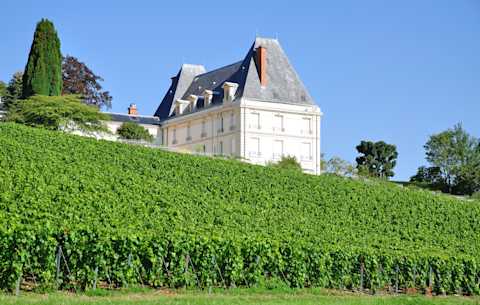
Associated with luxury, celebration, and romance, the region, Champagne, is home to the world’s most prized sparkling wine. In order to bear the label, ‘Champagne’, a sparkling wine must originate from this northeastern region of France—called Champagne—and adhere to strict quality standards. Made up of the three towns Reims, Épernay, and Aÿ, it was here that the traditional method of sparkling wine production was both invented and perfected, birthing a winemaking technique as well as a flavor profile that is now emulated worldwide.
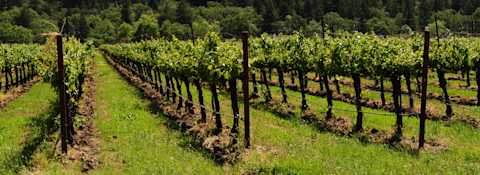
Well-drained, limestone and chalky soil defines much of the region, which lend a mineral component to its wines. Champagne’s cold, continental climate promotes ample acidity in its grapes but weather differences from year to year can create significant variation between vintages. While vintage Champagnes are produced in exceptional years, non-vintage cuvées are produced annually from a blend of several years in order to produce Champagnes that maintain a consistent house style.
With nearly negligible exceptions, . These can be blended together or bottled as individual varietal Champagnes, depending on the final style of wine desired. Chardonnay, the only white variety, contributes freshness, elegance, lively acidity and notes of citrus, orchard fruit and white flowers. Pinot Noir and its relative Pinot Meunier, provide the backbone to many blends, adding structure, body and supple red fruit flavors. Wines with a large proportion of Pinot Meunier will be ready to drink earlier, while Pinot Noir contributes to longevity. Whether it is white or rosé, most Champagne is made from a blend of red and white grapes—and uniquely, rosé is often produce by blending together red and white wine. A Champagne made exclusively from Chardonnay will be labeled as ‘blanc de blancs,’ while ones comprised of only red grapes are called ‘blanc de noirs.’