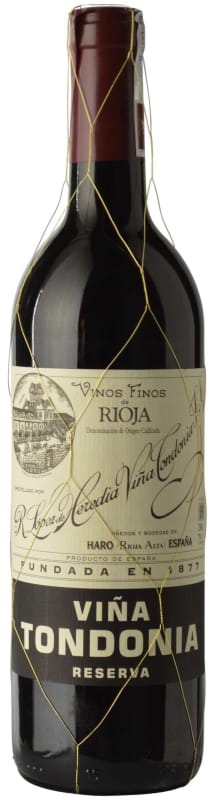


Winemaker Notes
Goes well with all meat dishes however prepared. A perfect partner to a Leg of New Season Welsh Lamb stuffed with wild garlic, rosemary and anchovies.
Blend: 70% Tempranillo, 20% Garnacho, 10 Mazuelo and Graciano
Professional Ratings
-
James Suckling
Leather, earth, subtle chocolate and bark on the nose. The palate is precise, with a light expression of fruit. Medium-bodied with subtle tannins, showing a nervy, linear profile and a fresh, lightly framed finish. Approachable now, but will continue to age.
-
Robert Parker's Wine Advocate
The red flagship 2006 Viña Tondonia Reserva was inspired by the vineyards of the Médoc but produced with local grapes, 70% Tempranillo, 20% Garnacho, 5% Graciano and 5% Mazuelo, which achieved 13% alcohol in 2006. It always matures in used American oak barriques for some six years. The oldest of all the reds I tasted, it was also the one with more freshness, which speaks to the quality of the vineyard. This takes the lion's share of the 400,000 bottles the winery produces, with some 220,000 bottles filled over a period of 12 consecutive days in May 2014
-
Wine Spectator
This red remains fresh and juicy, featuring cherry, berry and licorice flavors mingling with smoke, coffee and mineral notes. Light, firm tannins and orange peel acidity keep this balanced. Drink now through 2021. 18,333 cases made, 4,800 cases imported.
-
Wine & Spirits
This vintage of Tondonia is elegant and fully developed, its cool dill scents and zesty flavors of wild strawberry and pomegranate still firm but beginning to yield to the touch. Lovely to drink now, this is the kind of versatile Rioja that can match most anything, from sautéed hake cheeks to wintry roasts, and even the cheese course.


Hailed as the star red variety in Spain’s most celebrated wine region, Tempranillo from Rioja, or simply labeled, “Rioja,” produces elegant wines with complex notes of red and black fruit, crushed rock, leather, toast and tobacco, whose best examples are fully capable of decades of improvement in the cellar.
Rioja wines are typically a blend of fruit from its three sub-regions: Rioja Alta, Rioja Alavesa and Rioja Oriental, although specific sub-region (zonas), village (municipios) and vineyard (viñedo singular) wines can now be labeled. Rioja Alta and Alavesa, at the highest elevations, are considered to be the source of the brightest, most elegant fruit, while grapes from the warmer and drier, Rioja Oriental, produce wines with deep color, great body and richness.