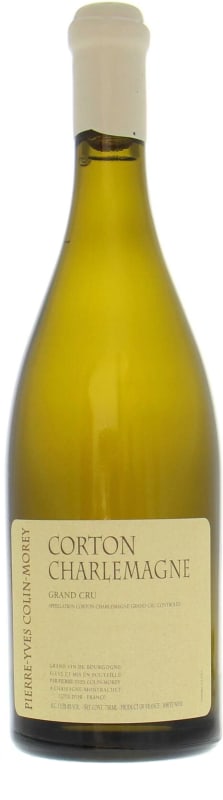


Winemaker Notes
Professional Ratings
-
Decanter
From grapes purchased from a parcel located at the top of the hill in Les Languettes. The PYCM team does most of the work in the vineyard and the results are lovely, with fairly forward aromas of ripe pear and floral notes. The texture is lively despite a pretty significant amount of extract, and the wine never loses its crisp, dynamic edge. This is due in part to the lees work, since the wine was not racked during the elevage.
-
Jasper Morris
From Les Languettes, still in barrel, neither racked nor sulphured. A light yellow-green in colour. Warm, but not too ripe fruit, from a cooler site here. This is more of a sensual than a stony Corton-but I do like the persistence of flavour at the finish.
Barrel Sample: 92-95 -
Robert Parker's Wine Advocate
Pierre-Yves Colin explained that he has lost his source in Pernand-Vergelesses, so his cuvée of 2019 Corton-Charlemagne Grand Cru is derived entirely from climat Les Languettes in the commune of Aloxe-Corton—and is consequently two-thirds smaller than usual, as well as a touch more dramatic in personality. Offering up aromas of clear honey, citrus oil, fresh peach, pear and warm bread, it's full-bodied, layered and textural, with a deep, multidimensional core, lively acids and a long, expansive finish.
Barrel Sample: 93-95


One of the most popular and versatile white wine grapes, Chardonnay offers a wide range of flavors and styles depending on where it is grown and how it is made. While it tends to flourish in most environments, Chardonnay from its Burgundian homeland produces some of the most remarkable and longest lived examples. California produces both oaky, buttery styles and leaner, European-inspired wines. Somm Secret—The Burgundian subregion of Chablis, while typically using older oak barrels, produces a bright style similar to the unoaked style. Anyone who doesn't like oaky Chardonnay would likely enjoy Chablis.

Prevailing over the charming village of Aloxe, the hill of Corton actually commands the entire appellation. Corton is the only Grand Cru for Pinot Noir in the entire Côte de Beaune. Its Grand Crus red wines can be described simply as “Corton” or Corton hyphenated with other names. These vineyards cover the southeast face of the hill of Corton where soils are rich in red chalk, clay and marl.
Dense and austere when young, the best Corton Pinot Noir will peak in complexity and flavor after about a decade, offering some of the best rewards in cellaring among Côte de Beaune reds. Pommard and Volnay offer similar potential.
The great whites of the village are made within Corton-Charlemagne, a cooler, narrow band of vineyards at the top of the hill that descends west towards the village of Pernand-Vergelesses. Here the thin and white stony soils produce Chardonnay of exceptional character, power and finesse. A minimum of five years in bottle is suggested but some can be amazing long after. Fully half of Aloxe-Corton is considered Grand Cru.