
Winemaker Notes
Professional Ratings
-
Robert Parker's Wine Advocate
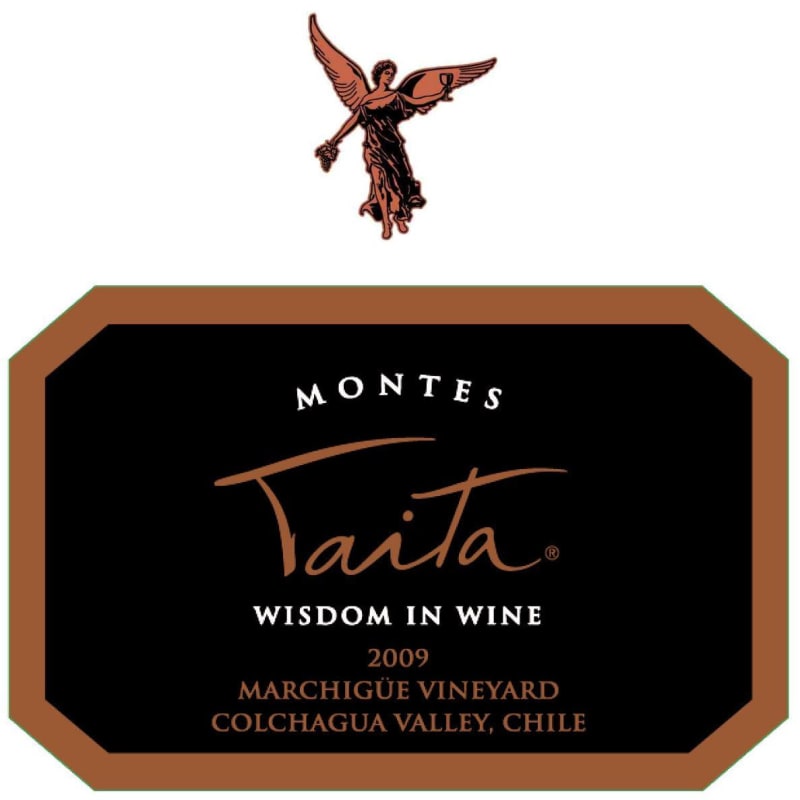
I tasted no less than three vintages of the top of the range, rare Cabernet-based blend, starting with the 2009 Taita. There is always some 15% of other grapes, not necessarily the same every year (usually Syrah), but the grapes always come from a special three-hectare vineyard in Marchigüe on granite soils that allow for dry farming. The grapes underwent a one-week cold soak and then fermented, trying to avoid excessive extraction. It matured in new French barriques for two years and for four years in bottle before its release. It's a powerful and ripe red, with 15% alcohol and moderate acidity. There are salty sensations of cured meat and ripe black fruit, very balsamic, with notes of cigar ash and spices, quite influenced by the élevage. The palate is full-bodied with abundant, grainy tannins that are still at the forefront. They didn't produce a 2008 or 2012 of this bottling. 5,000 bottles produced.


A noble variety bestowed with both power and concentration, Cabernet Sauvignon enjoys success all over the globe, its best examples showing potential to age beautifully for decades. Cabernet Sauvignon flourishes in Bordeaux's Medoc where it is often blended with Merlot and smaller amounts of some combination of Cabernet Franc, Malbecand Petit Verdot. In the Napa Valley, ‘Cab’ is responsible for some of the world’s most prestigious, age-worthy and sought-after “cult” wines. Somm Secret—DNA profiling in 1997 revealed that Cabernet Sauvignon was born from a spontaneous crossing of Cabernet Franc and Sauvignon Blanc in 17th century southwest France.

Well-regarded for intense and exceptionally high quality red wines, the Colchagua Valley is situated in the southern part of Chile’s Rapel Valley, with many of the best vineyards lying in the foothills of the Coastal Range.
Heavy French investment and cutting-edge technology in both the vineyard and the winery has been a boon to the local viticultural industry, which already laid claim to ancient vines and a textbook Mediterranean climate.
The warm, dry growing season in the Colchagua Valley favors robust reds made from Cabernet Sauvignon, Carmenère, Malbec and Syrah—in fact, some of Chile’s very best are made here. A small amount of good white wine is produced from Chardonnay and Sauvignon Blanc.