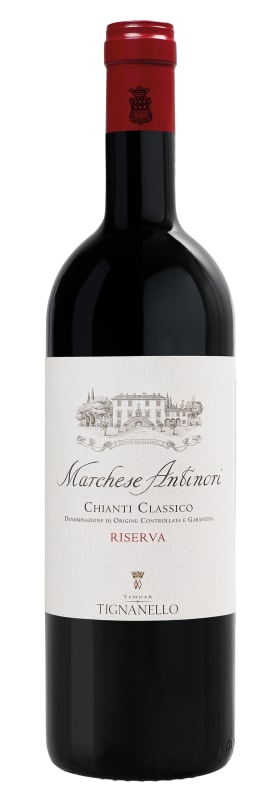


Winemaker Notes
The 2021 Marchese Antinori Chianti Classico Riserva is an intense ruby red color. The nose delivers notes of red fruit, in particular black cherries, light hints of flowers and sweet impressions of powdered sugar. The bouquet is completed by hints of cinnamon and dill that impart pleasantly spicy nuances. The vertical palate is taut, pleasantly mouth-filling with supple tannins and closes with a lengthy, sapid, and full finish.
Professional Ratings
-
Wine Spectator
This ripe style is fresh and harmonious, delivering plum, cherry and boysenberry fruit, with accents of earth, iron and eucalyptus. Supple in texture, with a beautifully integrated structure and long, complex aftertaste. Sangiovese, Cabernet Sauvignon and Merlot. Best from 2026 through 2043.
-
Robert Parker's Wine Advocate
This is one of the big surprises of this tasting and ultimately represents one of the best buys in the entire extended Marchesi Antinori portfolio. The 2021 Chianti Classico Riserva Tenuta Tignanello Marchese Antinori shares the DNA of Tignanello. It is Sangiovese kissed with small parts of Cabernet Sauvignon and Merlot. Of course, the wine is more accessible and open compared to Tignanello, and spiritually, this wine is a Chianti Classico. By that I mean that the elegant minerality of these soils and the sunny flavors of its environs are the determining characteristics. You get wildflower, iris, tart fruit and plum. The wine's enhanced mineral character, with dusty white rock, is what adds lasting complexity and depth.
Rating: 94+ -
James Suckling
A racy and refined wine that’s firm and bright, with berries with hints of walnuts and cedar. Sangiovese with cabernet sauvignon and merlot. Shows structure, but drink it now and enjoy.





The Antinori family has been committed to the art of winemaking for over six centuries since 1385 when Giovanni di Piero Antinori became a member of the "Arte Fiorentina dei Vinattieri," the Florentine Winemaker’s Guild. All throughout its history, twenty-six generations long, the Antinori family has managed the business directly making innovative and sometimes bold decisions while upholding the utmost respect for traditions and the environment.
Today, Albiera Antinori is the president of Marchesi Antinori with the continuous close support of her two sisters, Allegra and Alessia, all actively involved in first person in the business. Their father, Marchese Piero Antinori, is the current Honorary President of the company. Tradition, passion, and intuition are the three driving forces that led Marchesi Antinori to establish itself as one of the most important winemakers of elite Italian wine. The company is one of the Founding Members of the "Associazione Marchi Storici d’Italia," an association for the protection, support and promotion of Italian historical brands.
The family’s historical heritage lies in their estates in Tuscany and Umbria, however over the years they have invested in many other areas, both in Italy and abroad, well known for producing high quality wine, opening new opportunities to appreciate and develop unique new terroirs with great winemaking potential. Each vintage, each plot of land, each new idea to be advanced is a new beginning, a new pursuit for achieving higher quality standards. As Marchese Piero loves to say "Ancient family roots play an important part in our philosophy but they have never hindered our innovative spirit."

Among Italy's elite red grape varieties, Sangiovese has the perfect intersection of bright red fruit and savory earthiness and is responsible for the best red wines of Tuscany. While it is best known as the chief component of Chianti, it is also the main grape in Vino Nobile di Montepulciano and reaches the height of its power and intensity in the complex, long-lived Brunello di Montalcino. Somm Secret—Sangiovese doubles under the alias, Nielluccio, on the French island of Corsica where it produces distinctly floral and refreshing reds and rosés.

One of the first wine regions anywhere to be officially recognized and delimited, Chianti Classico is today what was originally defined simply as Chianti. Already identified by the early 18th century as a superior zone, the official name of Chianti was proclaimed upon the area surrounding the townships of Castellina, Radda and Gaiole, just north of Siena, by Cosimo III, Grand Duke of Tuscany in an official decree in 1716.
However, by the 1930s the Italian government had appended this historic zone with additonal land in order to capitalize on the Chianti name. It wasn’t until 1996 that Chianti Classico became autonomous once again when the government granted a separate DOCG (Denominazione di Origine Controllata e Garantita) to its borders. Ever since, Chianti Classico considers itself no longer a subzone of Chianti.
Many Classicos are today made of 100% Sangiovese but can include up to 20% of other approved varieties grown within the Classico borders. The best Classicos will have a bright acidity, supple tannins and be full-bodied with plenty of ripe fruit (plums, black cherry, blackberry). Also common among the best Classicos are expressive notes of cedar, dried herbs, fennel, balsamic or tobacco.