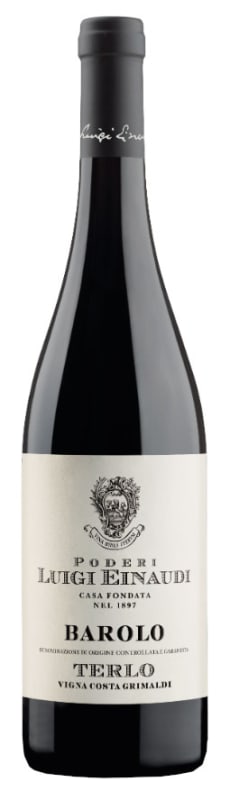


Winemaker Notes
Professional Ratings
-
James Suckling
This wine is more restrained than fruity, with aromas of dried flowers, cinnamon, youthful red cherries, balsamic, earth and minerals. Full-bodied on the graceful and powerful palate, with super-polished tannins and refreshing acidity in the finish. Drinkable now, but best from 2027.
-
Robert Parker's Wine Advocate
The Poderi Luigi Einaudi 2021 Barolo Terlo Vigna Costa Grimaldi is already silky and glossy in texture with a beautiful entry to the palate. There is a long slide of cassis and wild cherry followed by soft violet, sweet almond and licorice. Those Terlo tannins are firm but not excessively so, and the wine's texture is poised to become ever-more silky in time. Production is 5,053 bottles and some larger formats too.
-
Wine Spectator
Rich and fleshy, this red boasts cherry, strawberry, earth and eucalyptus aromas and flavors. There's density but also vibrant acidity driving the lingering conclusion. Shows fine overall balance, with refined tannins. Best from 2029 through 2048. 445 cases made, 50 cases imported.
-
Decanter
On Terlo’s lower slope, right by the Barolo village, Costa Grimaldi was Einaudi’s first purchase in the denomination in the 1950s. Evoking small red berries, aromas take on darker tones of forest floor as well as spicy ginger and ginseng accents. This is elegantly weighted with just ripe, pleasantly astringent, tactile tannins merging with persistent flavours of raspberry seeds and pomegranate. Frisky and crunchy with plenty of energy, the finish lingers with touches of rosehip tea.
-
Jeb Dunnuck
The 2021 Barolo Terlo Vigna Costa Grimaldi has a youthful saturated red/garnet color and an elegant and seductive profile, with delicate notes of sandalwood, cranberries, and incense, a hint of fresh leather coaxing as it opens. The palate comes to life with fantastic clarity to its ripe red fruit, with a medium-bodied frame, ripe tannins, and a rounded midpalate. It’s even through the finish and is likely going to improve with another year as it comes out of its shell. Drink 2026-2040.
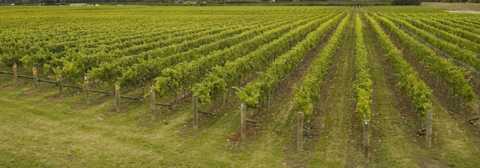
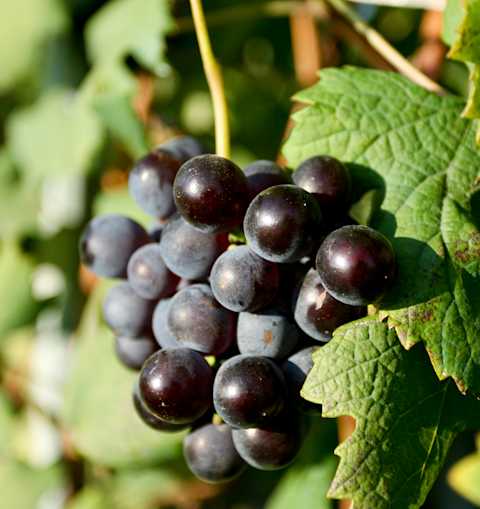
Responsible for some of the most elegant and age-worthy wines in the world, Nebbiolo, named for the ubiquitous autumnal fog (called nebbia in Italian), is the star variety of northern Italy’s Piedmont region. Grown throughout the area, as well as in the neighboring Valle d’Aosta and Valtellina, it reaches its highest potential in the Piedmontese villages of Barolo, Barbaresco and Roero. Outside of Italy, growers are still very much in the experimentation stage but some success has been achieved in parts of California. Somm Secret—If you’re new to Nebbiolo, start with a charming, wallet-friendly, early-drinking Langhe Nebbiolo or Nebbiolo d'Alba.

The center of the production of the world’s most exclusive and age-worthy red wines made from Nebbiolo, the Barolo wine region includes five core townships: La Morra, Monforte d’Alba, Serralunga d’Alba, Castiglione Falletto and the Barolo village itself, as well as a few outlying villages. The landscape of Barolo, characterized by prominent and castle-topped hills, is full of history and romance centered on the Nebbiolo grape. Its wines, with the signature “tar and roses” aromas, have a deceptively light garnet color but full presence on the palate and plenty of tannins and acidity. In a well-made Barolo wine, one can expect to find complexity and good evolution with notes of, for example, strawberry, cherry, plum, leather, truffle, anise, fresh and dried herbs, tobacco and violets.
There are two predominant soil types here, which distinguish Barolo from the lesser surrounding areas. Compact and fertile Tortonian sandy marls define the vineyards farthest west and at higher elevations. Typically the Barolo wines coming from this side, from La Morra and Barolo, can be approachable relatively early on in their evolution and represent the “feminine” side of Barolo, often closer in style to Barbaresco with elegant perfume and fresh fruit.
On the eastern side of the Barolo wine region, Helvetian soils of compressed sandstone and chalks are less fertile, producing wines with intense body, power and structured tannins. This more “masculine” style comes from Monforte d’Alba and Serralunga d’Alba. The township of Castiglione Falletto covers a spine with both soil types.
The best Barolo wines need 10-15 years before they are ready to drink, and can further age for several decades.