


Winemaker Notes
Bright color with amber-yellow highlights. A steady stream of slow-moving, fine bubbles. An intense, concentrated bouquet of fresh yellow fruit (nectarine), citrus (citron) and floral notes (pollen, orange blossom), interwoven with subtle smoky notes and hints of vanilla. The Chardonnay takes the lead, exuding a chalky freshness and a confident energy. Soft hints of cedar and menthol, bergamot and white chocolate also add to the sensation of freshness. On the palate, it is the Pinot that takes the lead – concentrated and wonderfully enveloping, with a viscosity balanced by a fine-grained tannic structure. The bubbles are perfectly incorporated into the wine’s juicy, enveloping body. The white soils show through on the mid-palate, bringing a saline note (oyster shells) that creates a delicious umami character and a mouthwatering finish. A child of the chalk, Cristal 2018 radiates remarkable freshness despite the very sunny vintage. It unfolds smoothly and gracefully, like a great perfume: Chardonnay sets the top notes with lemony, saline freshness, while Pinot Noir provides the base notes with a captivating, powdery texture.
Blend: 57% Pinot Noir, 43% Chardonnay
Professional Ratings
-
Vinous
The 2018 Cristal opens a new chapter for Roederer. The Cristal estate is composed of 45 parcels. In better vintages, most of the 45 parcels are used for the blend. The 2018 vintage brought with it elevated ripeness and generally low acids. Longtime Chef de Caves Jean-Baptiste Lécaillon was forced to cast his gaze wider, to look for parcels that offered a touch of freshness. Lécaillon expanded his palette to 57 parcels. The result is a Cristal unlike any other I have tasted. Orchard fruit, dried flowers, spice, chalk and herbs are some of the many notes that take shape in the glass. Floral and savory overtones are quite distinctive. Lécaillon reduced oak ferments, racked very quickly after fermentation and used all his best Chardonnay lots for Cristal, so much so that there is no Blanc de Blancs. He bottled earlier than normal and chose a crown capsule with a liner that allows less oxygen transfer than the norm here. Taken together, those choices paid off handsomely. In tasting, the 2018 is positively stunning. Its linear energy and brilliance are a bit reminiscent of the 2014, but its flavor profile is completely different from any Cristal I can remember tasting. Dosage is 7 grams per liter.
-
James Suckling
A very structured Cristal with aromas of white pepper, bread dough, pie crust, pear tart and a hint of flint. Full-bodied with bitter grapefruit, apricot and lemon flavors. The bubbles turn fine and driving, giving it length and intensity. From organically grown grapes. Will age nicely. Drink or hold.
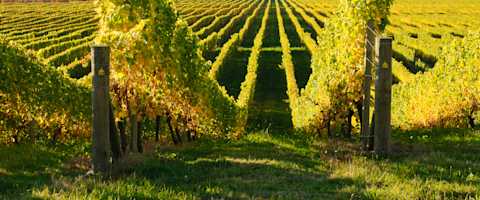




Uncompromising Quality
Champagne Louis Roederer was founded in 1776 in Reims, France and is one of the rare family owned companies, which is still managed by the Roederer family. In 1833, Louis Roederer inherited the company from his uncle and renamed the company under his namesake. Under his leadership, the company rapidly grew while remaining true to their philosophy of uncompromising quality. Today, the company is under the helm of Jean-Claude Rouzaud and his son Frédéric who continue to place quality before quantity.
First-Rate Vineyards
Champagne Louis Roederer is one of the only French champagne producers to own nearly 75 percent of the grapes in the most desirable vineyards in the Champagne. The property is located on 450 acres in the finest villages of Montagne de Reims, Côtes des Blancs, and Valleé de la Marne. Each region is selected to produce Chardonnay and Pinot Noir with the elegance needed for perfectly balanced champagne. The Louis Roederer vineyards rate an average 98 percent based on France’s statutory 100-point classification scale.
The reserve wine is then tasted and graded by a team of Roederer specialists. They choose as many as 40 different wines from several lots for the blend. For the final touch, the wine is then added in order to enhance the cuvee and guarantee consistency while retaining the champagne's characteristics.
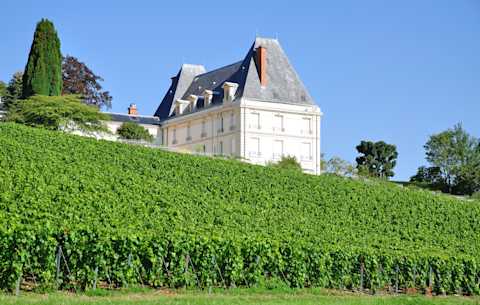
Representing the topmost expression of a Champagne house, a vintage Champagne is one made from the produce of a single, superior harvest year. Vintage Champagnes account for a mere 5% of total Champagne production and are produced about three times in a decade. Champagne is typically made as a blend of multiple years in order to preserve the house style; these will have non-vintage, or simply, NV on the label. The term, "vintage," as it applies to all wine, simply means a single harvest year.

Associated with luxury, celebration, and romance, the region, Champagne, is home to the world’s most prized sparkling wine. In order to bear the label, ‘Champagne’, a sparkling wine must originate from this northeastern region of France—called Champagne—and adhere to strict quality standards. Made up of the three towns Reims, Épernay, and Aÿ, it was here that the traditional method of sparkling wine production was both invented and perfected, birthing a winemaking technique as well as a flavor profile that is now emulated worldwide.
Well-drained, limestone and chalky soil defines much of the region, which lend a mineral component to its wines. Champagne’s cold, continental climate promotes ample acidity in its grapes but weather differences from year to year can create significant variation between vintages. While vintage Champagnes are produced in exceptional years, non-vintage cuvées are produced annually from a blend of several years in order to produce Champagnes that maintain a consistent house style.
With nearly negligible exceptions, . These can be blended together or bottled as individual varietal Champagnes, depending on the final style of wine desired. Chardonnay, the only white variety, contributes freshness, elegance, lively acidity and notes of citrus, orchard fruit and white flowers. Pinot Noir and its relative Pinot Meunier, provide the backbone to many blends, adding structure, body and supple red fruit flavors. Wines with a large proportion of Pinot Meunier will be ready to drink earlier, while Pinot Noir contributes to longevity. Whether it is white or rosé, most Champagne is made from a blend of red and white grapes—and uniquely, rosé is often produce by blending together red and white wine. A Champagne made exclusively from Chardonnay will be labeled as ‘blanc de blancs,’ while ones comprised of only red grapes are called ‘blanc de noirs.’