

Winemaker Notes
Professional Ratings
-
Robert Parker's Wine Advocate
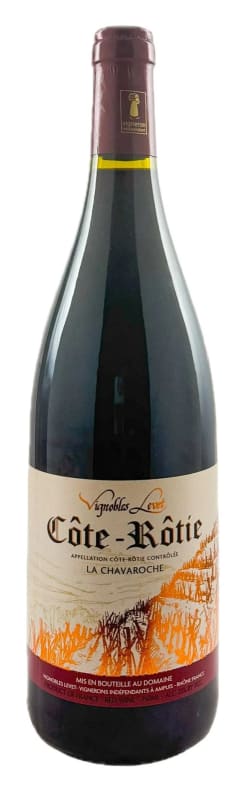
Vinified with 100% whole clusters from a southwest-facing parcel exposed to the setting sun, the 2023 Côte-Rôtie La Chavaroche reveals aromas of dark berries, fresh licorice and crushed stones, underpinned by a striking concentration of black fruit. Full-bodied, dense and structured yet beautifully enveloping, it’s deep and multidimensional, framed by remarkably velvety, refined tannins and displaying impressive length and precision. One would scarcely suspect the presence of whole clusters, so seamless is the integration. All the subtlety of submerged-cap fermentation translates here into a racy, powerful and irresistibly seductive Côte-Rôtie. It's one of my favorites in the appellation.
-
Jeb Dunnuck
Coming from a single lieu-dit just beside the Côte-Brune of pure schist soils and not destemmed, the 2023 Côte Rôtie La Chavaroche will spend two years in foudre and demi-muids, with 20% being new. Smoky red and black fruits intermixed with violets, ground pepper, and woodsmoke all emerge from the aromatics, and it's medium to full-bodied, with a pure, layered mouthfeel, ample structure, and depth. This gamey, floral, wild, incredibly impressive Côte-Rôtie has beautiful balance, ample tannins, and a great finish. It will keep for 20-25 years. This cuvée is released as the Peroline cuvée in Europe.
Barrel Sample: 95-97 -
Vinous
Sourced from old vines on the Chavaroche lieu-dit, rooted in mica schist soils with a southwest exposure, the outstanding 2023 Côte-Rôtie La Chavaroche / La Péroline opens with pronounced orange rind, dried violets, hints of forest floor and raspberry scents. Medium-bodied with a muscular undertone, it is a beautifully crafted rendition, finishing with striking freshness, clarity and a lifted floral nuance on the notably long and utterly refined conclusion.


Marked by an unmistakable deep purple hue and savory aromatics, Syrah makes an intense, powerful and often age-worthy red. Native to the Northern Rhône, Syrah achieves its maximum potential in the steep village of Hermitage and plays an important component in the Red Rhône Blends of the south, adding color and structure to Grenache and Mourvèdre. Syrah is the most widely planted grape of Australia and is important in California and Washington. Sommelier Secret—Such a synergy these three create together, the Grenache, Syrah, Mourvedre trio often takes on the shorthand term, “GSM.”

The cultivation of vines here began with Greek settlers who arrived in 600 BC. Its proximity to Vienne was important then and also when that city became a Roman settlement but its situation, far from the negociants of Tain, led to its decline in more modern history. However the 1990s brought with it a revival fueled by one producer, Marcel Guigal, who believed in the zone’s potential. He, along with the critic, Robert Parker, are said to be responsible for the zone’s later 20th century renaissance.
Where the Rhone River turns, there is a build up of schist rock and a remarkable angle that produces slopes to maximize the rays of the sun. Cote Rotie remains one of the steepest in viticultural France. Its varied slopes have two designations. Some are dedicated as Côte Blonde and others as Côte Brune. Syrahs coming from Côte Blonde are lighter, more floral, and ready for earlier consumption—they can also include up to 20% of the highly scented Viognier. Those from Côte Brune are more sturdy, age-worthy and are typically nearly 100% Syrah. Either way, a Cote Rotie is going to have a particularly haunting and savory perfume, expressing a more feminine side of the northern Rhone.