

Winemaker Notes
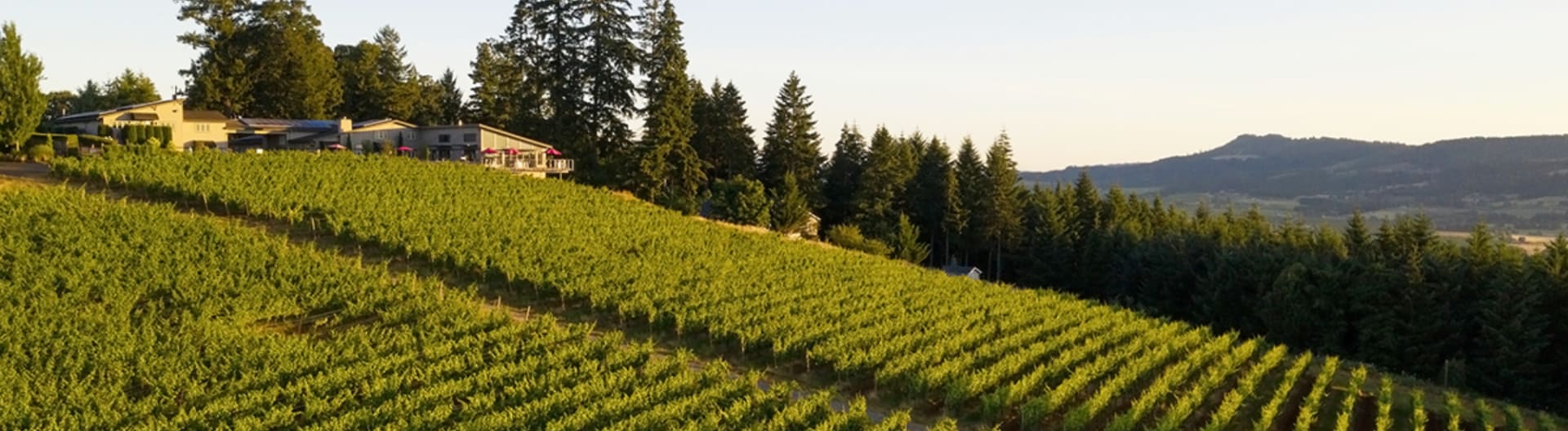


More than thirty years ago, Don and Wendy Lange founded their winery in the Dundee Hills of Oregon's northern Willamette Valley. The year 1987 marked the Langes' first vintage and consisted of the three varietals they embrace today: Pinot Noir, Pinot Gris, and Chardonnay.
New-world pioneers in the production of Pinot Gris, Lange Estate was the first to release a barrel-fermented reserve–an effort Matt Kramer of the WINE SPECTATOR calls "a bench-mark bottling." Don Lange's work as a winemaker has been termed "brilliant "by Hugh Johnson, and the WINE ENTHUSIAST proclaimed Lange Estate to be "one of the great Pinot Noir producers in the United States."
Lange Estate is known for crafting beautifully balanced wines from fruit grown on the winery Estate, located in the heart of the prestigious Dundee Hills appellation. To further supplement our case production, the Langes purchase additional fruit from the best vineyards in the surrounding area. Long-standing relationships with these blue-ribbon sites have helped the winery establish a well-deserved reputation for consistency and complexity in the wines.

Thin-skinned, finicky and temperamental, Pinot Noir is also one of the most rewarding grapes to grow and remains a labor of love for some of the greatest vignerons in Burgundy. Fairly adaptable but highly reflective of the environment in which it is grown, Pinot Noir prefers a cool climate and requires low yields to achieve high quality. Outside of France, outstanding examples come from in Oregon, California and throughout specific locations in wine-producing world. Somm Secret—André Tchelistcheff, California’s most influential post-Prohibition winemaker decidedly stayed away from the grape, claiming “God made Cabernet. The Devil made Pinot Noir.”

Home of the first Pinot noir vineyard of the Willamette Valley, planted by David Lett of Eyrie Vineyard in 1966, today the Dundee Hills AVA remains the most densely planted AVA in the valley (and state). To its north sits the Chehalem Valley and to its south, runs the Willamette River. Within the region’s 12,500 acres, about 1,700 are planted to vine on predominantly basalt-based, volcanic, Jory soil.