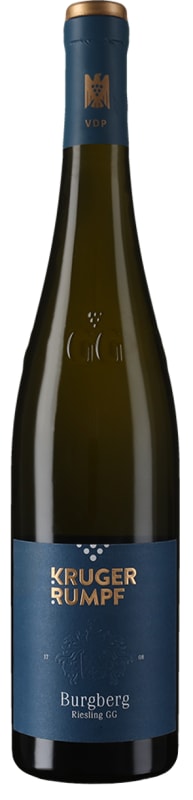


Winemaker Notes
In a side valley between Münster-Sarmsheim and Layen Castle is the less than five hectare steep hill Burgberg – one of the most exciting terroirs in the Nahe. Burgberg is a steep slope with a 20 to 60 percent gradient that faces south and southeast. Its convex form is surrounded by rock faces that protect it from winds coming from the north, west and east thus capturing the warmth of the day in the vineyard. The soil of this four-hectare Grand Cru is comprised of iron-rich loam with a high share of Taunus quartzite, slate, and pebbles. Because cold air is trapped here on frosty winter nights, the foot of the slope is ideally suited for the production of ice wine. The name, which gives reference to the Burg Layen fortress, has existed since the 14th and appeared for the first time in the land cadastre in 1819.
Professional Ratings
-
Robert Parker's Wine Advocate
From vines planted in the 1950/1960s, Rumpf's Dorsheimer 2021 Burgberg Riesling GG opens with a deep, intense, complex and dusty rather than fruity but very elegant and mysterious bouquet. The wine is full-bodied, dense and textured on the palate and more round than crystalline, and texturally it is from another world compared to the siblings from Münster. There are fine bitters and (oak) tannins on the tonic finish, and the texture is almost silky and very generous as is the well-structured and saline finish. Another promising 2021 Riesling grand cru from Georg Rumpf.
Rating:93+


Riesling possesses a remarkable ability to reflect the character of wherever it is grown while still maintaining its identity. A regal variety of incredible purity and precision, this versatile grape can be just as enjoyable dry or sweet, young or old, still or sparkling and can age longer than nearly any other white variety. Somm Secret—Given how difficult it is to discern the level of sweetness in a Riesling from the label, here are some clues to find the dry ones. First, look for the world “trocken.” (“Halbtrocken” or “feinherb” mean off-dry.) Also a higher abv usually indicates a drier Riesling.
