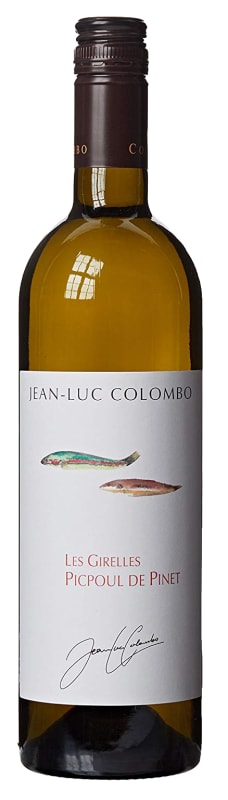


Winemaker Notes
Lovely as an aperitif or with any seafood appetizers and or seafood main courses. Great with salads, chicken dishes and crab cakes.



Jean-Luc Colombo: Give the best from each of the most beautiful terroirs
Jean-Luc Colombo's childhood dream of becoming a winemaker and viticulturist came to fruition in the early 1980s with the acquisition of his first vineyard, a small plot of old Syrah vines perched on a granite hill overlooking the village of Cornas. From there was born the first vintage of Cornas "Les Ruchets." Early success led to the quick acquisition of more vineyards in the Northern Rhône and Provence. Throughout his journey Jean-Luc has remained true to his passion for winemaking and committed to his guiding principle: respecting nature and the unique qualities of each terroir.
Cornas is the heart and soul of Jean-Luc Colombo. A small appellation spanning 120 hectares of craggy terraces overlooking the Rhone river. It is where Syrah has found its most profound and pure expression of character, and it remains the sole grape variety cultivated throughout the appellation. A unique terroir, well-preserved in the midst of a forest of green oaks and junipers, lends depth and minerality to the wines. Not forgetting his origins Jean-Luc returned to his home region of Provence in the early 2000s. Near the Gulf of Marseille, in the limestone hills facing the Mediterranean Sea in an area locally known as Cote Bleue (Blue Coast), he purchased parcels of land from various proprietors which allowed him to create a new vineyard.
Living amidst their vineyards in Cornas, Jean-Luc and Anne have always been committed to preserving their environment by working in harmony with nature's abundance. Maintaining an ecosystem where insects, animals and vines coexist and thrive is paramount to them. As such, organic methods have been employed in their vineyards for many years. Additionally, Jean-Luc is a firm believer of dry farming. Irrigation is strictly prohibited in the vineyards, encouraging deep rooting of the vines, allowing for the full and pure expression of the terroir in accordance with the unique characteristics of each vintage.

Picpoul remains one of the few wines in France named for the grape more than the place; Picpoul de Pinet refers to the white wines made exclusively from the grape called Piquepoul Blanc in the Languedoc communes of Pinet, Mèze, Florensac, Castelnau-de-Guers, Montagnac and Pomérols. Confusingly, the spelling, Piquepoul, can be used for the variety in all other appellations except for those named above. The grape is ubiquitous throughout the Languedoc. Somm Secret—Pomérols is a commune in the Languedoc-Rousillon region in the south of France and has nothing to do with the Bordeaux village of virtually the same name, Pomerol.

Sipping a glass of crisp white wine in the Mediterranean heat is an instinctive reflex, one which the inhabitants of Languedoc have met with the Picpoul grape since Roman times. The grape, widely planted until the late 19th century, became bound to the sandy soils around the Étang de Thau coastal lagoon during the phylloxera epidemic, where the root-sucking American louse cannot thrive. Picpoul de Pinet is one of the few AOCs in the Languedoc where only one grape is allowed, but the refreshing, mouthwatering quality of the wines makes clear why.
Late to ripen and high in acid, Picpoul (whose name means “lip-stinger”) does well in the coastal heat where aridity reduces the threat of downy mildew and the sea-scented breeze imbues the wine with seafood-friendly salinity. Made to be drunk young, with a fresh floral, citrus and herbal character, it will go down equally well by itself or in the company of brandade, octopus, or ceviche!