Winemaker Notes
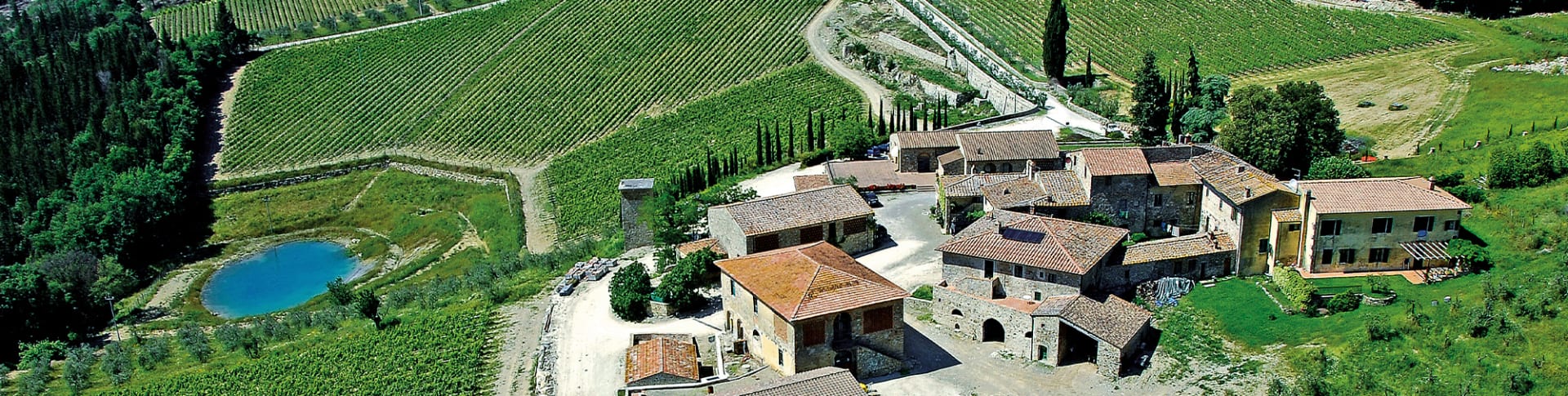


Founded in 1956 by Francesco De Marchi, this historic Chianti Classico estate is located in the western part of the denomination, near Castellina in Chianti, in the commune of Barberina Val d’Elsa. Isole e Olena’s 56 hectares (138 acres) of vineyards sit at 350-450 meters (1,148 – 1,476 feet) above sea level on soils of galestro and marly schist.
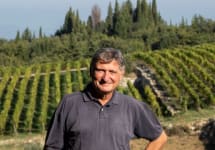
In 1975, Francesco’s son, Paolo De Marchi, ushered in a new era at Isole e Olena by taking over the estate. With his background in agricultural studies, Paolo started to revolutionize the winery beginning in the vineyards. He began experiments with the clear goal of enhancing the quality of the region, improving the performance of the local grape varieties (mainly Sangiovese) through massal selection, and mapping his galestro-driven soils. Thanks to the philosophy of Paolo De Marchi, Isole e Olena is considered among the pioneer estates who led the quality renaissance of Chianti Classico starting in the 1970s and becoming a reference for the area.
1980 saw the first bottling of Cepparello, a pure Sangiovese from old vines, aged in barrique, which in time has become an emblem of Isole e Olena. First classified as “vino da tavola” (table wine) it went on to become one of the first Supertuscan wines, showing the character and longevity of Sangiovese from this high-altitude corner of Chianti Classico. Cepparello is the result of Paolo’s extensive study of the Sangiovese grape and his belief in the potential of its expression.
Today Isole e Olena is recognized for the leading role it played in the emergence of the Chianti Classico region and respected for its authentic style of Chianti Classico – fragrant and well-balanced with purity of fruit – which is representative of its high-altitude territory. In addition to Chianti Classico and Cepparello, Isole e Olena also produces a series of single varietal wines: Chardonnay, Syrah, and Cabernet Sauvignon, as well as an acclaimed Vin Santo.

Apart from the classics, we find many regional gems of different styles.
Late harvest wines are probably the easiest to understand. Grapes are picked so late that the sugars build up and residual sugar remains after the fermentation process. Ice wine, a style founded in Germany and there referred to as eiswein, is an extreme late harvest wine, produced from grapes frozen on the vine, and pressed while still frozen, resulting in a higher concentration of sugar. It is becoming a specialty of Canada as well, where it takes on the English name of ice wine.
Vin Santo, literally “holy wine,” is a Tuscan sweet wine made from drying the local white grapes Trebbiano Toscano and Malvasia in the winery and not pressing until somewhere between November and March.
Rutherglen is an historic wine region in northeast Victoria, Australia, famous for its fortified Topaque and Muscat with complex tawny characteristics.

One of the most iconic Italian regions for wine, scenery and history, Tuscany is the world’s most important outpost for the Sangiovese grape. Tuscan wine ranges in style from fruity and simple to complex and age-worthy, Sangiovese makes up a significant percentage of plantings here, with the white Trebbiano Toscano coming in second.
Within Tuscany, many esteemed wines have their own respective sub-zones, including Chianti, Brunello di Montalcino and Vino Nobile di Montepulciano. The climate is Mediterranean and the topography consists mostly of picturesque rolling hills, scattered with vineyards.
Sangiovese at its simplest produces straightforward pizza-friendly Tuscan wines with bright and juicy red fruit, but at its best it shows remarkable complexity and ageability. Top-quality Sangiovese-based wines can be expressive of a range of characteristics such as sour cherry, balsamic, dried herbs, leather, fresh earth, dried flowers, anise and tobacco. Brunello, an exceptionally bold Tuscan wine, expresses well the particularities of vintage variations and is thus popular among collectors. Chianti is associated with tangy and food-friendly dry wines at various price points. A more recent phenomenon as of the 1970s is the “Super Tuscan”—a red wine made from international grape varieties like Cabernet Sauvignon, Merlot, Cabernet Franc and Syrah, with or without Sangiovese. These are common in Tuscany’s coastal regions like Bolgheri, Val di Cornia, Carmignano and the island of Elba.