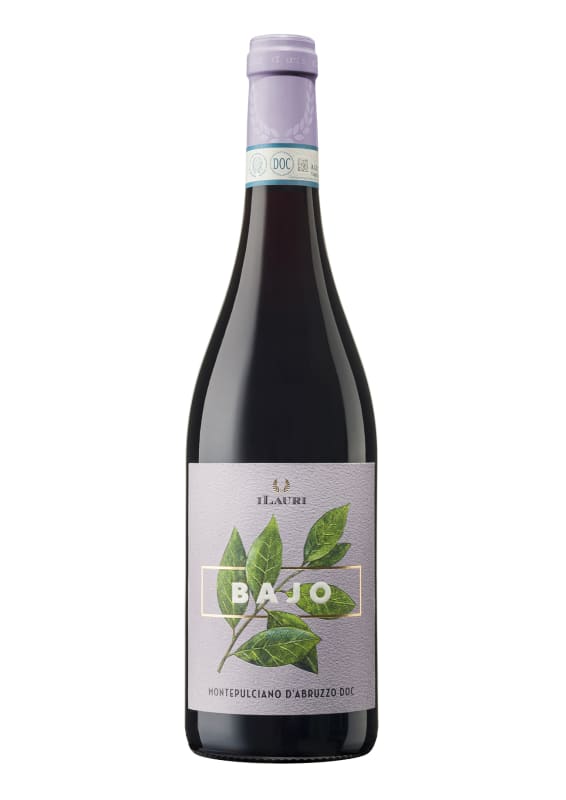


Winemaker Notes
I Lauri's estate grapes produce this fine example of Montepulciano d’Abruzzo every vintage. The name Bajo (Bay) given to their town’s most important street comes from the hair color of some horses. Select vineyards with stony and calcareous soil are carefully managed to produce this classic wine. This vibrant red from Abruzzo displays a violet color and an intense bouquet of ripe red fruit, finely framed with spices.
Pair this wine with Italian specialties such as lasagna, barbecued meats and baccalà.


Montepulciano is the second most planted red variety in Italy after Sangiovese, though it is achieves its highest potential in the region of Abruzzo. Consistently enticing and enjoyable, Montepulciano enjoys great popularity throughout central and southern Italy as well. A tiny bit grows with success in California, Argentina and Australia. Somm Secret—Montepulciano is also the name of a village in Tuscany where, confusingly, they don’t grow the Montepulciano grape at all! Sangiovese shines in yet another Tuscan village, here making the reputable wine called Vino Nobile di Montepulciano.

A warm, Mediterranean vine-growing paradise, in Abruzzo, the distance from mountains to seaside is relatively short. The Apenniness, which run through the center of Italy, rise up on its western side while the Adriatic Sea defines its eastern border.
Wine composition tends to two varieties: Abruzzo’s red grape, Montepulciano and its white, Trebbiano. Montepulciano d’Abruzzo can come in a quaffable, rustic and fruity style that generally drinks best young. It is also capable of making a more serious style, where oak aging tames its purely wild fruit.
Trebbiano in Abruzzo also comes in a couple of varieties. Trebbiano Toscana makes a simple and fruity white. However when meticulously tended, the specific Trebbiano d’Abruzzo-based white wines can be complex and long-lived.
In the region’s efforts to focus on better sites and lower yields, vine acreage has decreased in recent years while quality has increased.