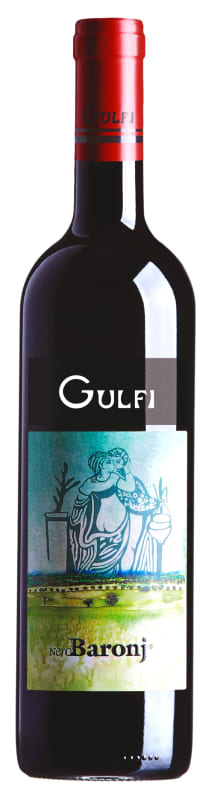


Winemaker Notes
Intense ruby red with hints of violet. This wine has strong red fruit notes with a hint of vanilla. The wine is fruit forward, structured and has a very long lingering finish. Pair with red meats, game and matured cheeses
Professional Ratings
-
Vinous
Depths of black cherry, plum sauce, sage and clove are grounded by animal musk as the 2019 NeroBaronj smolders up from the glass. It flows across the palate like pure silk, refined and seamless in feel, with ripe wild berry fruits and exotic citrus tones that add contrast toward the close. The 2019 finishes long yet closes in upon itself with youthful poise, allowing fine tannins to resonate. Sour cherry notes stick around for a bit. This is elegance personified.
-
James Suckling
Smoke, balsamic blackberries and baked black cherries on the nose. Rich and medium- to full-bodied on the palate with supportive, fine tannins and a lengthy, coated finish. Really fine-grained.


Boldly opulent and robust, Nero d’Avola is Sicily’s most widely planted red grape. Nero d’Avola performs well both as a single varietal bottling and in blends. It loves hot, arid climates and Sicily's old vines are aptly head-trained close to the ground, making them resistant to strong winds. A few pioneering producers in California as well as Australia farm Nero d’Avola in the same way. Somm Secret—Nero d’Avola's other name, Calabrese, suggests origins from the mainland region of Calabria.

A large, geographically and climatically diverse island, just off the toe of Italy, Sicily has long been recognized for its fortified Marsala wines. But it is also a wonderful source of diverse, high quality red and white wines. Steadily increasing in popularity over the past few decades, Italy’s fourth largest wine-producing region is finally receiving the accolades it deserves and shining in today's global market.
Though most think of the climate here as simply hot and dry, variations on this sun-drenched island range from cool Mediterranean along the coastlines to more extreme in its inland zones. Of particular note are the various microclimates of Europe's largest volcano, Mount Etna, where vineyards grow on drastically steep hillsides and varying aspects to the Ionian Sea. The more noteworthy red and white Sicilian wines that come from the volcanic soils of Mount Etna include Nerello Mascalese and Nerello Cappuccio (reds) and Carricante (whites). All share a racy streak of minerality and, at their best, bear resemblance to their respective red and white Burgundies.
Nero d’Avola is the most widely planted red variety, and is great either as single varietal bottling or in blends with other indigenous varieties or even with international ones. For example, Nero d'Avola is blended with the lighter and floral, Frappato grape, to create the elegant, Cerasuolo di Vittoria, one of the more traditional and respected Sicilian wines of the island.
Grillo and Inzolia, the grapes of Marsala, are also used to produce aromatic, crisp dry Sicilian white. Pantelleria, a subtropical island belonging to the province of Sicily, specializes in Moscato di Pantelleria, made from the variety locally known as Zibibbo.