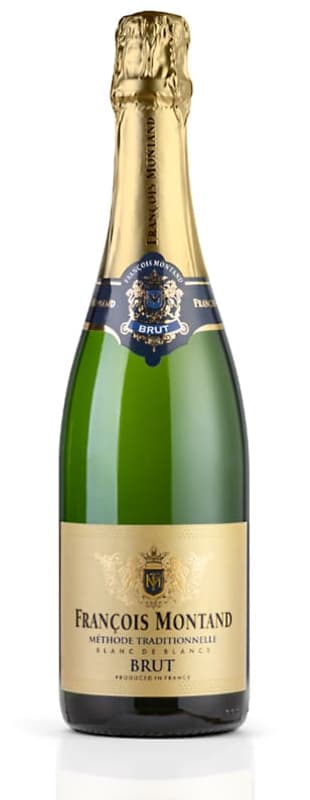


Winemaker Notes
A great way to start any meal, and it's a fine accompaniment for ceviche, salads, white fish in white sauce or simply for dessert.
Professional Ratings
-
Tasting Panel
This traditional-method blend of Colombard, Ugni Blanc, and Chardon-nay provides plenty of polish for the price. Aro-mas of lime and pear-apple crisp converge with hints of hazelnut skin and wet stone before appearing with lemon curd on the airily creamy palate, where a slight suggestion of green olive gives the finish a surprise twist.
Appreciated worldwide as an iconic token of celebration and luxury, sparkling wines from France come in more forms than just Champagne. In order to bear the label, ‘Champagne’, a sparkling wine must originate from the northeastern region of France—called Champagne—and adhere to strict quality standards. Champagne’s chalky, limestone and soils and cold, continental climate create grapes with ample acidity and concentration. Chardonnay, Pinot Noir, and Pinot Meunier are permitted for use in Champagne.
French sparkling wines made outside of Champagne take the name Crémant. Crémant de Bourgogne, Alsace, Loire and Limoux are the best known. These are made using the same technique as that of Champagne, called méthode traditionelle, but typically are composed of the regional grape variety. Usually dry to off-dry with bright acidity, these are often characterized by qualities of lemon, peach, marzipan and white flowers.