


Winemaker Notes
Morei means 'moro' or 'dark' in the Trentino dialect and the grapes cultivated in this vineyard are a firm echo of this. Their roots rest among the pebbles and the sand in the earth carried by the Noce River, cultivating wines with a texture of minerality and density. Morei Teroldego resumes form and is reborn amplified and transformed.
Professional Ratings
-
James Suckling
So much forest-floor character on the nose, showing blackberries, walnuts, dried thyme and lead-pencil undertones. It’s medium- to full-bodied with a long, flavorful finish. The polish, depth and balance of rich and fresh fruit is so enticing. From biodynamically grown grapes with Demeter certification. Drink or hold.
-
Vinous
The 2024 Teroldego Morei wafts up with crushed violets and blackberries, spiced orange peels, rosemary and wet stone. Hints of citrus elevate textures of pure silk and ripe wildberry fruits, while a crisp mineral saturation builds toward the close. A sweet-and-sour resonance, inner rose tones and primary fruit mark the incredibly long finish. There is so much balanced pleasure within this complex yet only lightly structured rendition of Morie. Brilliant.
-
Wine Spectator
There’s a velvety, textural richness to this deeply hued red, which is brightened and buoyed by a zesty touch of cracked pink peppercorn and mouthwatering acidity. Flavors of baked black raspberry, lingonberry, wild thyme, sage, violet, paprika, cinnamon and pepper are effortlessly integrated with supple, silky tannins. Salty finish. Drink now through 2040.


Unique to the Trentino region of NE Italy, Teroldego produces a deeply purple-hued wine with an assertive black fruit character and intriguing aromatics. The best quality Teroldego comes from the Campo Rotaliano, a sandy and gravelly plain between the tall mountains of the area. Somm Secret—Dating back to the 15th century in Rotaliano, Teroldego has created a well-connected anthology for itself. As a parent to Lagrein, a variety native to nearby Alto Adige, it is also closely related to Syrah.
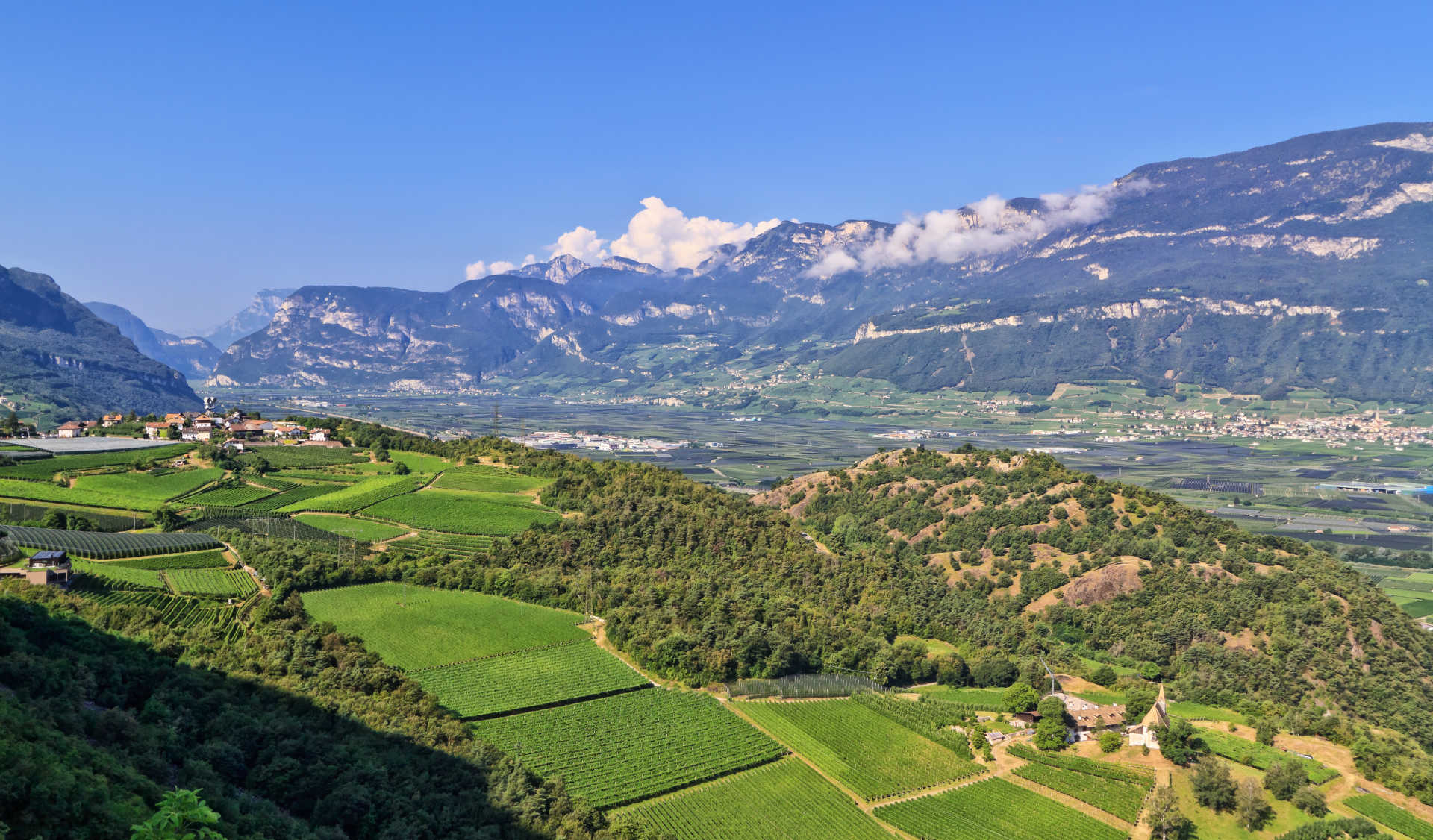
A mountainous northern Italian region heavily influenced by German culture, Trentino-Alto Adige is actually made up of two separate but similar regions: Alto Adige and Trentino.
Trentino, the southern half, is primarily Italian-speaking and largely responsible for the production of non-native, international grapes. There is a significant quantity of Chardonnay, Pinot Grigio and Merlot produced. But Trentino's native and most unique red variety, Teroldego, while still rare, is gaining popularity. It produces a deeply colored red wine rich in wild blackberry, herb, coffee and cocoa.
The rugged terrain of German-speaking Alto Adige (also referred to as Südtirol) focuses on small-scale viticulture, with great value placed on local varieties—though international varieties have been widely planted since the 1800s. Sheltered by the Alps from harsh northerly winds, many of the best vineyards are at extreme altitude but on steep slopes to increase sunlight exposure.
Dominant red varieties include the bold, herbaceous Lagrein and delicate, strawberry-kissed, Schiava, in addition to some Pinot Nero.
The primary white grapes are Pinot grigio, Gewürztraminer, Chardonnay and Pinot blanc, as well as smaller plantings of Sauvignon blanc, Müller Thurgau. These tend to be bright and refreshing with crisp acidity and just the right amount of texture. Some of the highest quality Pinot grigio in Italy is made here.