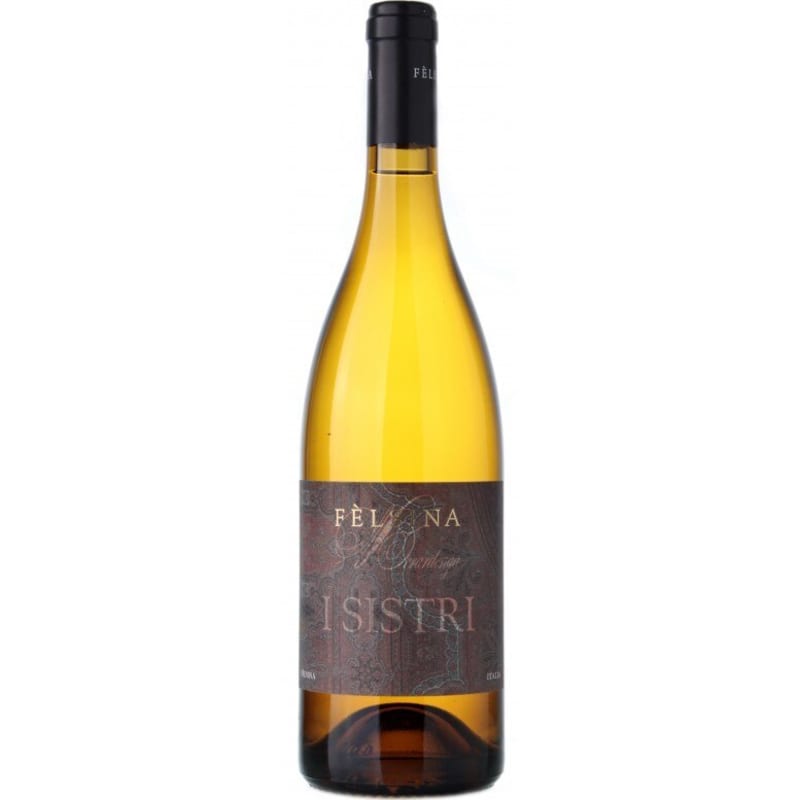


Winemaker Notes
This wine is named (I Sistri) after an ancient instrument from ancient Mesopotamia and Egypt. The instrument and its music was dedicated to the worship of Isis, the godess of agriculture and birth.
Professional Ratings
-
James Suckling
A serious white with sliced cooked apples and cream with some pie crust. It’s medium-to full-bodied with delicious fruit and a very enticing finish. Drink or hold.
-
Robert Parker's Wine Advocate
The Fèlsina 2018 Chardonnay I Sistri (with 28,000 bottles made) very much reflects the mild vintage and represents a slight departure from some of the past editions we have seen. This is a silky and more delicate rendition of barrique-aged Chardonnay with soft tones of yellow rose, honeysuckle and sweet almond. The wine hits a moderate intensity threshold in which the smaller details are given more prominence. Ash, aniseed and crushed mineral appear. This is balanced, mid-weight Tuscan Chardonnay with lots of cooling freshness on the finish.


One of the most popular and versatile white wine grapes, Chardonnay offers a wide range of flavors and styles depending on where it is grown and how it is made. While it tends to flourish in most environments, Chardonnay from its Burgundian homeland produces some of the most remarkable and longest lived examples. California produces both oaky, buttery styles and leaner, European-inspired wines. Somm Secret—The Burgundian subregion of Chablis, while typically using older oak barrels, produces a bright style similar to the unoaked style. Anyone who doesn't like oaky Chardonnay would likely enjoy Chablis.

One of the most iconic Italian regions for wine, scenery and history, Tuscany is the world’s most important outpost for the Sangiovese grape. Tuscan wine ranges in style from fruity and simple to complex and age-worthy, Sangiovese makes up a significant percentage of plantings here, with the white Trebbiano Toscano coming in second.
Within Tuscany, many esteemed wines have their own respective sub-zones, including Chianti, Brunello di Montalcino and Vino Nobile di Montepulciano. The climate is Mediterranean and the topography consists mostly of picturesque rolling hills, scattered with vineyards.
Sangiovese at its simplest produces straightforward pizza-friendly Tuscan wines with bright and juicy red fruit, but at its best it shows remarkable complexity and ageability. Top-quality Sangiovese-based wines can be expressive of a range of characteristics such as sour cherry, balsamic, dried herbs, leather, fresh earth, dried flowers, anise and tobacco. Brunello, an exceptionally bold Tuscan wine, expresses well the particularities of vintage variations and is thus popular among collectors. Chianti is associated with tangy and food-friendly dry wines at various price points. A more recent phenomenon as of the 1970s is the “Super Tuscan”—a red wine made from international grape varieties like Cabernet Sauvignon, Merlot, Cabernet Franc and Syrah, with or without Sangiovese. These are common in Tuscany’s coastal regions like Bolgheri, Val di Cornia, Carmignano and the island of Elba.