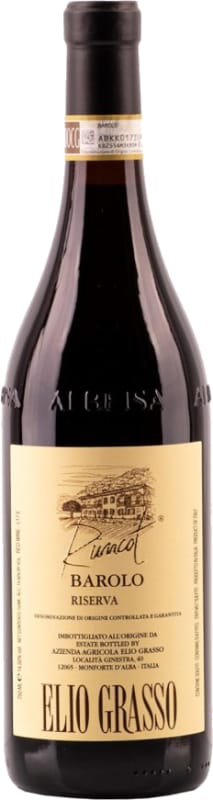


Winemaker Notes
The nose opens slowly but intensely with aromas of dried cherry, licorice, mint, smoky wood, and stony minerality, giving a restrained yet deeply complex impression. On the palate the wine is finessed rather than massive, with mid-weight structure, silky but authoritative tannins, and red fruits accented by savory spice and balsamic hints. Exceptional balance and delineation lead to a long, focused finish that promises decades of positive evolution in bottle.
Professional Ratings
-
Jeb Dunnuck
Pouring a deeper ruby color, the 2020 Barolo Riserva Rüncot is a powerful yet contemplative wine. Aromas of black raspberries, cedar, citrus oils, and dark stones unfold gradually from the glass. Medium- to full-bodied, it shows remarkable clarity and concentration without weight, with mineral depth and persistent energy across the palate. The oak spice is present yet beautifully integrated, adding complexity rather than dominance. Built for long aging, this exceptional Riserva will reward patience. Around 5,000 bottles were produced. Drink 2027-2057.
Rating: -
Vinous
Pouring a deeper ruby color, the 2020 Barolo Riserva Rüncot is a powerful yet contemplative wine. Aromas of black raspberries, cedar, citrus oils, and dark stones unfold gradually from the glass. Medium- to full-bodied, it shows remarkable clarity and concentration without weight, with mineral depth and persistent energy across the palate. The oak spice is present yet beautifully integrated, adding complexity rather than dominance. Built for long aging, this exceptional Riserva will reward patience. Rating: 98+
-
James Suckling
Restrained and complex, showing licorice, mint, stony minerality, smoky wood and dried cherries. Full-bodied and round on the palate with a smooth attack, slightly dusty yet ripe tannins, prunes and black truffles. A graceful style with a savory finish. Deep and harmonious. Best after 2027.
-
Robert Parker's Wine Advocate
The Elio Grasso 2020 Barolo Riserva Rüncot offers a generous and layered profile with sweetness of fruit, rose, iris root, licorice and a distinctly solar character that makes it immediately engaging. There is notable volume and textural richness on the palate, where minerality and clay-driven power coexist, giving the wine both charm and depth. Drawn from a vineyard straddling Marne di Diano sandstone and Sant’Agata marl and fermented with two months of submerged-cap maceration followed by four years of aging in small oak and new barrique, this Riserva reflects extremely low yields and a deliberate choice to prioritize the charm of the vintage.
-
Wine Spectator
Broad, rich and open, this expressive red displays plum, cherry, iron, tobacco and spice aromas and flavors. Firms up, yet the flavors remain focused and present through the long, gripping aftertaste. Impressive. Best from 2027 through 2045.
-
Decanter
The 2ha Rüncot vineyard yields an uber-concentrated, massively structured wine in need of taming. To that end, Gianluca Grasso gives it a slow, gentle, 55-day maceration followed by long ageing in new French oak barriques. It is as deeply coloured as it is intense. Oak spice, mocha, cedar and mint ooze from the glass. The palate is densely packed with dark red cherry. An array of accents includes liquorice root, tobacco and iron. There is power and force, yet tannins are remarkably velvety. Admirably balanced in its proportions but best to allow its youthful exuberance to subside.


Responsible for some of the most elegant and age-worthy wines in the world, Nebbiolo, named for the ubiquitous autumnal fog (called nebbia in Italian), is the star variety of northern Italy’s Piedmont region. Grown throughout the area, as well as in the neighboring Valle d’Aosta and Valtellina, it reaches its highest potential in the Piedmontese villages of Barolo, Barbaresco and Roero. Outside of Italy, growers are still very much in the experimentation stage but some success has been achieved in parts of California. Somm Secret—If you’re new to Nebbiolo, start with a charming, wallet-friendly, early-drinking Langhe Nebbiolo or Nebbiolo d'Alba.

The center of the production of the world’s most exclusive and age-worthy red wines made from Nebbiolo, the Barolo wine region includes five core townships: La Morra, Monforte d’Alba, Serralunga d’Alba, Castiglione Falletto and the Barolo village itself, as well as a few outlying villages. The landscape of Barolo, characterized by prominent and castle-topped hills, is full of history and romance centered on the Nebbiolo grape. Its wines, with the signature “tar and roses” aromas, have a deceptively light garnet color but full presence on the palate and plenty of tannins and acidity. In a well-made Barolo wine, one can expect to find complexity and good evolution with notes of, for example, strawberry, cherry, plum, leather, truffle, anise, fresh and dried herbs, tobacco and violets.
There are two predominant soil types here, which distinguish Barolo from the lesser surrounding areas. Compact and fertile Tortonian sandy marls define the vineyards farthest west and at higher elevations. Typically the Barolo wines coming from this side, from La Morra and Barolo, can be approachable relatively early on in their evolution and represent the “feminine” side of Barolo, often closer in style to Barbaresco with elegant perfume and fresh fruit.
On the eastern side of the Barolo wine region, Helvetian soils of compressed sandstone and chalks are less fertile, producing wines with intense body, power and structured tannins. This more “masculine” style comes from Monforte d’Alba and Serralunga d’Alba. The township of Castiglione Falletto covers a spine with both soil types.
The best Barolo wines need 10-15 years before they are ready to drink, and can further age for several decades.