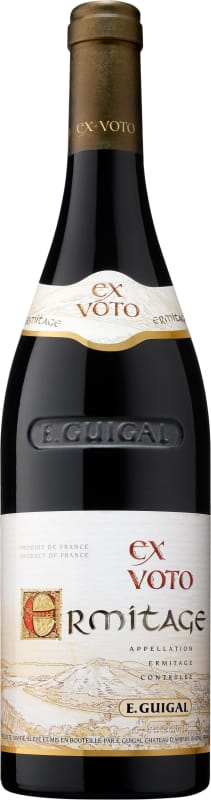


Winemaker Notes
L’Ermitage Ex-Voto is endowed with an impressive tannic structure. It is a concentrated, elegant wine. Produced only in exceptional vintages, it has great ageing potential.
Professional Ratings
-
Jeb Dunnuck
The 2022 Ermitage Ex Voto is another focused, structured wine from Guigal in 2022, and I wouldn't be surprised to see this soften and gain breadth and richness over its élevage. Cassis, black raspberries, new saddle leather, herbes de Provence, and graphite notes are just some of its nuances, and it's a full-bodied, inward Hermitage that's only for those with patience.
Range: 91-9396-98 -
Robert Parker's Wine Advocate
The 2022 Ermitage Ex Voto is riper and more solar than the La-La cuvées (La Turque, La Mouline and La Landonne), which is to be expected given the south-facing exposure of the Hermitage hill. Evoking aromas of baked dark berries, licorice, thyme, tobacco leaf and oak, it is full-bodied, deep and concentrated, with a structured, seamless mid-palate, a fleshy core of fruit and powerful tannins that carry it to a long, spicy finish. While unmistakably shaped by the warmth of the vintage, it retains impressive depth and authority and should evolve gracefully with time in the cellar.
-
James Suckling
A well-structured, dense and generous red with dark berries, warm spices, braised meat and some potpourri. Medium-bodied with fine, chewy tannins. There is concentration but it remains in control, with some fruit and a juicy texture at its core. Flavorful finish of excellent length. Drink or hold.
-
Vinous
The 2022 Ermitage Ex-Voto wafts up from the glass with expressive red and black fruits, wood smoke, pencil shavings and meaty elements. Marked by ripe, tightly knit tannins, the 2022 is outstandingly balanced and is shaping up to be a solid rendition of this cuvée. Readers should note that no 2021 was produced.
Range: 94-96



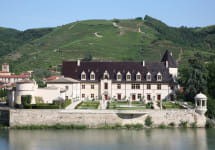
The Guigal domain was founded in 1946 by Etienne Guigal in the ancient village of Ampuis, home of the wines of the Côte-Rôtie. In these vineyards that are over 2400 years old, you can still see the small terraced walls characteristic of the Roman period. Etienne Guigal arrived in this region in 1923 at the age of 14. He made wine for over 67 vintages and, at the beginning of his career, participated in the development of the Vidal-Fleury establishment.
Despite his young age, Marcel Guigal took over from his father in 1961 when the latter was victim to a brutal illness rendering him blind. Marcel's hard work and perseverance enabled the Guigals to buy out Vidal-Fleury in 1984, although the establishment retains its own identity and commercial autonomy. In 2000, the Guigals purchased the Jean-Louis Grippat estate in Saint-Joseph and Hermitage, as well as the Domaine de Vallouit in Côte-Rôtie, Hermitage, Saint-Joseph and Crozes-Hermitage.
In the cellars of the Guigal estate in Ampuis, the northern appellations of the Rhône Valley are produced and aged. These are the appellations of Côte-Rôtie, Condrieu, Hermitage, Saint-Joseph and Crozes-Hermitage. The great appellations of the Southern Rhône, Chateauneuf-du-Pape, Gigondas, Tavel and Côtes-du-Rhône, are also aged in the Ampuis cellars.
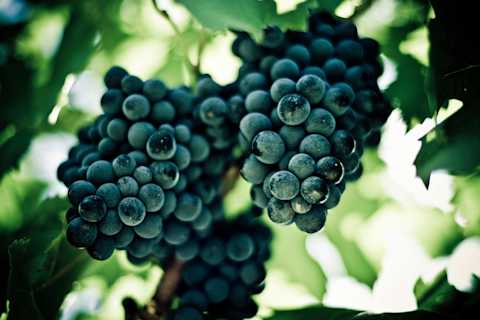
Marked by an unmistakable deep purple hue and savory aromatics, Syrah makes an intense, powerful and often age-worthy red. Native to the Northern Rhône, Syrah achieves its maximum potential in the steep village of Hermitage and plays an important component in the Red Rhône Blends of the south, adding color and structure to Grenache and Mourvèdre. Syrah is the most widely planted grape of Australia and is important in California and Washington. Sommelier Secret—Such a synergy these three create together, the Grenache, Syrah, Mourvedre trio often takes on the shorthand term, “GSM.”

One of the smallest and most important Syrah regions of northern Rhone, Hermitage is practically one single south-facing slope of crushed granite, thinly covered with varied, yet well-charted soil types. Many climats (well identified parcels) exist within Hermitage and while some smaller producers make single climat Syrahs, some larger ones blend to make one balanced expression of the appellation.
Though the AC regulations allow the addition of up to 15% white grapes to a red Hermitage, in practice it is usually made from Syrah alone. Winemaking is pretty traditional—or you might say historic—with hot fermentations and aging in older barrels of various sizes. The best wines, characterized by deep, dense and sexy flavors of black fruit, cocoa, licorice and tobacco, have massive textures and a solid 10-20 years aging potential.
The region of Hermitage is totally enclosed; the only place it could go really is to literally fall down its own hill into the city of Tain or the Rhone River. Soil erosion is a problem and terraces exist alongside the hill in order to keep the earth in place. Crozes-Hermitage encloses the region entirely to its north and south.
While Hermitage seems synonymous with some of the best Syrah on the planet, actually about one third of the wine produced here comes from white grapes. The full, lush and robust Marsanne or the less common, but almost more charming, Roussanne create wonderful whites in which the best have great potential for aging, like the reds.