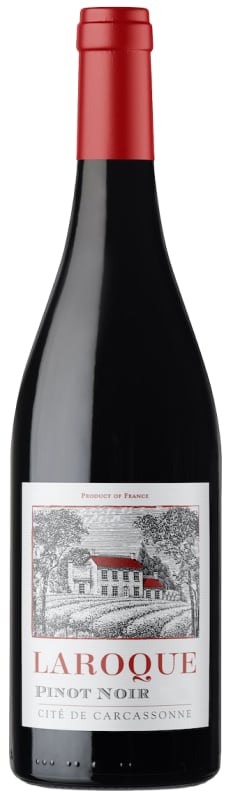


Winemaker Notes
Earth and fruit aromas with a fruity sweetness and dried spices on the nose. The mouth is charming, juicy and straightforward. Medium tannins linger on the finish alongside a hint of roasted cocoa nib. An excellent option for those who enjoy a more gentle and approachable style.
Professional Ratings
-
Wine Enthusiast
A light hue in the glass, this bottling offers pretty cherry and iron aromas on the nose. The palate's cherry and cranberry flavors are dusted in sagebrush and pepper, and set atop a lingering texture and acidity.
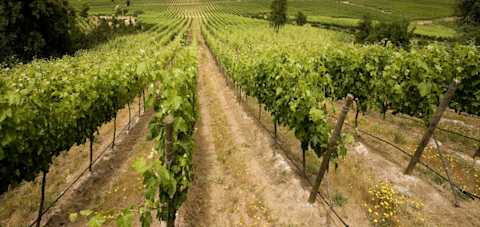


The Laroque vineyard is planted around the ancient region of Carcassonne, which is known for its famous medieval citadel (UNESCO listed). Laroque (from latin ‘roqua’) derives its name from the Menhirs (a single standing stone that dates back to the middle of the Bronze Age) which used to be found in the vineyards of Carsac and Limoux.
Located between the Pyrenees and the Black Mountains, Carcassonne enjoys a privileged climatic position where the excesses of the Mediterranean climate are tempered by the softness of the Atlantic climate. This results in sunny, hot, and dry days, but also in cool nights. This extraordinary harmony in nature creates wines that are fresh, elegant, and balanced.
The hillside vineyards have a double climatic influence with two alternating winds. One comes from the Mediterranean Sea bringing warmth and humidity and is softened by the “Cers” wind coming from the North West of Narbonne. The other one comes from Atlantic Ocean which is dry and temperate.
The vineyard is located around the villages of Carsac and Limoux. The average age of the vines is 25 years with a density of 4500 to 5000 vines/hectare. Grapes are picked up in September and fermented in temperature controlled tanks for 20 days. Wine is pumped over 3 times daily until the end of fermentation. It is then aged for few months and is bottled early Spring .
The property makes Cabernet Franc, Pinot Noir, Chardonnay and a limited release Rosé.
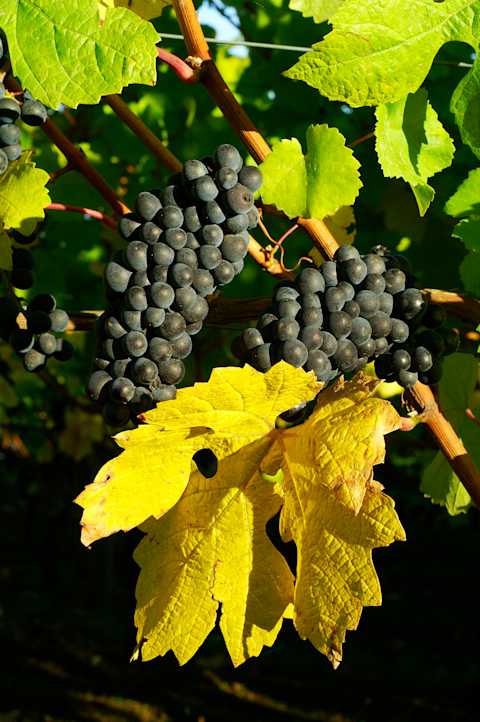
Thin-skinned, finicky and temperamental, Pinot Noir is also one of the most rewarding grapes to grow and remains a labor of love for some of the greatest vignerons in Burgundy. Fairly adaptable but highly reflective of the environment in which it is grown, Pinot Noir prefers a cool climate and requires low yields to achieve high quality. Outside of France, outstanding examples come from in Oregon, California and throughout specific locations in wine-producing world. Somm Secret—André Tchelistcheff, California’s most influential post-Prohibition winemaker decidedly stayed away from the grape, claiming “God made Cabernet. The Devil made Pinot Noir.”

An extensive appellation producing a diverse selection of good quality and great values, Languedoc spans the Mediterranean coast from the Pyrenees mountains of Roussillon all the way to the Rhône Valley. Languedoc’s terrain is generally flat coastal plains, with a warm Mediterranean climate and frequent risk of drought.
Virtually every style of wine is made in this expansive region. Most dry wines are blends with varietal choice strongly influenced by the neighboring Rhône Valley. For reds and rosés, the primary grapes include Grenache, Syrah, Carignan, Cinsault and Mourvèdre. White varieties include Grenache Blanc, Muscat, Ugni Blanc, Vermentino, Macabéo, Clairette, Piquepoul and Bourbelenc.
International varieties are also planted in large numbers here, in particular Chardonnay, Sauvignon Blanc and Cabernet Sauvignon.
The key region for sparkling wines here is Limoux, where Blanquette de Limoux is believed to have been the first sparkling wine made in France, even before Champagne. Crémant de Limoux is produced in a more modern style.