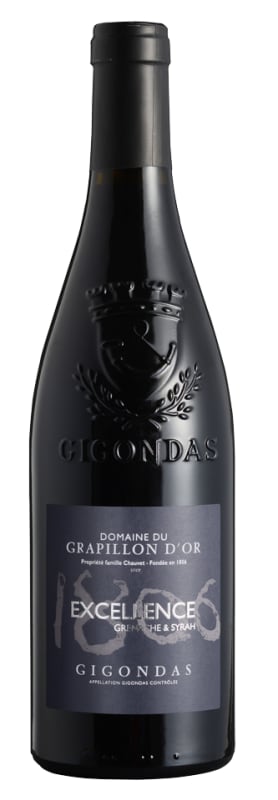


Winemaker Notes
Professional Ratings
-
Jeb Dunnuck
The 2022 Gigondas Excellence is slightly darker, with more meaty black fruits, pepper, game, and garrigue notes, yet it has the same expressive, round, seamless profile. A blend of 60% Grenache and 40% Syrah brought up in concrete, it's going to have a solid 10-12 years of prime drinking.
Barrel Sample: 92-94 -
Robert Parker's Wine Advocate
Revealing a complex, deep bouquet, the 2022 Gigondas Excellence offers up aromas of dark wild berries, licorice, flowers, lilac and garrigue, followed by a full-bodied, concentrated and rich palate with a seamless, layered texture framed by structured, velvety tannins that lead to a long, fresh and ethereal finish. This blend of 60% Grenache Noir and 40% Syrah could age gracefully over the next 20-25 years.
Barrel Sample: 92-94 -
Wine Spectator
A voluptuous red, with an earthy, meaty, incense-rich dimension to its ripe red fruit profile. Alder smoke, garrigue and bitter plum skin add to the textural intrigue, while a graphite vein and red tea tannins ground the finish. Texturally impressive, showing real depth but not heaviness. Grenache and Syrah.


With bold fruit flavors and accents of sweet spice, Grenache, Syrah and Mourvèdre form the base of the classic Rhône Red Blend, while Carignan, Cinsault and Counoise often come in to play. Though they originated from France’s southern Rhône Valley, with some creative interpretation, Rhône blends have also become popular in other countries. Somm Secret—Putting their own local spin on the Rhône Red Blend, those from Priorat often include Merlot and Cabernet Sauvignon. In California, it is not uncommon to see Petite Sirah make an appearance.

The Southern Rhône region of Gigondas extends northwest from the notably jagged wall of mountains called the Dentelles di Montmirail, whose highest point climbs to about 2,600 feet. The region and its wines have much in common with the neighboring Chateauneuf-du-Pape except that the vineyards of Gigondas exist at higher elevation and its soils, comprised mainly of crumbled limestone from the Dentelles, often produce a more dense and robust Grenache-based red wine.
The region has a history of fine winemaking, extending back to Roman times. But by the 20th century, Gigondas was merely lumped into the less distinct zone of Côtes du Rhône Villages. However, it was first among these satellite villages to earn its own appellation, which occurred in 1971.
Gigondas reds must be between 50 to 100% Grenache with Syrah and Mourvèdre comprising the bulk of the remainder of the blend. They tend express rustic flavors and aromas of wild blackberry, raspberry, fig, plum, as well as juniper, dried herbs, anise, smoke and river rock. The best are bold but balanced, and finish with impressively sexy and velvety tannins.
The Gigondas appellation also produces rosé but no white wines.