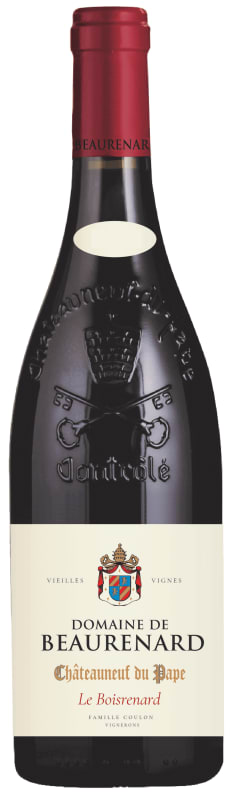


Winemaker Notes
Made from old vines of different varieties growing together, with moderate yields, Boisrenard is characterized by the silky weave of its tannins and its generous fruit. A wine of immense depth.
Professional Ratings
-
Decanter
A tasting of the pre-blended constituent parts. The first sample, taken from an old foudre, is a medium-bodied, fresh, tense and lively style, with grippy tannins. The second sample, from a concrete tank, shows darker fruits, is expressive, softer, deeper and more juicy. The overall impression is a Boisrenard that promises elegance, purity, freshness, and that will be open and ready relatively early. Boisrenard is an old-vine cuvée grown across a mix of different soils and aged in foudre and concrete. The grape blend changes each year depending on the plots, but is typically 70%-80% Grenache and always contains all the permitted varieties of Châteauneuf-du-Pape.
-
Jeb Dunnuck
The flagship cuvée, with roughly 1,100 cases produced, the 2023 Châteauneuf Du Pape Boisrenard is based on 80% Grenache with the rest a mix of all permitted varieties, fully destemmed and aged 12 months in 98% foudre with 2% new French oak. Its deeper ruby/opaque hue is followed by a truly stunning perfume of peppery darker berries, crushed stone, graphite, and liquid violets. Concentrated and medium to full-bodied, it has building structure and solid acidity, making it one of the most serious, age-worthy wines in the vintage that should be snatched up by savvy readers. Hide bottles for 2-4 years, and it will keep for over two decades. Drink 2029-2049.
Rating: 96+ -
James Suckling
A beautifully complete Chateauneuf, offering classic warmth and richness of fruit with a chocolaty layer on the nose. At the same time, it’s not heavy, showing a dry, almost savory edge through the structured palate. Lingers with stony minerality alongside floral, spicy notes. Long, very balanced and controlled. Will age well but offers plenty of charm today. Drink or hold.
-
Robert Parker's Wine Advocate
More in keeping with the house style, the 2023 Chateauneuf du Pape Boisrenard—principally composed of Grenache Noir (80%) complemented by all 13 authorized grape varieties—unfurls in the glass with a deep, brooding bouquet of dark berries, licorice, fresh thyme, spices and a subtle touch of oak. Medium- to full-bodied, rich and layered, it’s built around a serious chassis of powdery tannins and a concentrated core of fruit, concluding with a long, spicy, youthfully structured finish. This is a serious, age-worthy wine that will benefit from 3–4 years of cellaring to show all its cards.
-
Wine Spectator
Smoldering with smoky, graphite density, this offers a tightly coiled mix of lavender paste, dark cherry and charred garrigue. Large in scale, backed by salty density and firm yet well-sculpted tannins. Let this one mellow out in the cellar a bit; then this will really shine. Best from 2027 through 2038.
-
Vinous
The 2023 Châteauneuf-du-Pape Vieilles Vignes Le Boisrenard unwinds with intense licorice, blackberry, ripe black cherry and a whiff of wood smoke. Complex and deep, the 2023 is a beguiling Vieilles Vignes Le Boisrenard, neatly maintaining balance to keep all that Mediterranean power in check. It winds down with refinement on the long, complex high point.


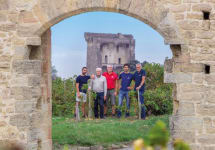
The Coulons have estate-bottled their wines since the early 1900’s. Paul Coulon's father and grandfather were instrumental in creating the regulations of the Appellation Contrôlée system (Chateauneuf du Pape was France's first appellation contrôlée, in 1929). Detail oriented, meticulous to the point of perfectionism, visitors can peruse not only the informative Musée du Vin below their Rasteau vineyard, but detailed volumes for each vintage with ground temperatures, rainfall, hours of sunlight, etc.
Domaine de Beaurenard portfolio includes: Cotes du Rhone Rouge & Rose, Cotes du Rhone Villages Rasteau, Chateauneuf du Pape Rouge & Blanc and Chateauneuf du Pape Cuvee Boisrenard which is consistently one of Robert Parker and Stephen Tanzer's most highly rated Rhone wines.

With bold fruit flavors and accents of sweet spice, Grenache, Syrah and Mourvèdre form the base of the classic Rhône Red Blend, while Carignan, Cinsault and Counoise often come in to play. Though they originated from France’s southern Rhône Valley, with some creative interpretation, Rhône blends have also become popular in other countries. Somm Secret—Putting their own local spin on the Rhône Red Blend, those from Priorat often include Merlot and Cabernet Sauvignon. In California, it is not uncommon to see Petite Sirah make an appearance.

Famous for its full-bodied, seductive and spicy reds with flavor and aroma characteristics reminiscent of black cherry, baked raspberry, garrigue, olive tapenade, lavender and baking spice, Châteauneuf-du-Pape is the leading sub-appellation of the southern Rhône River Valley. Large pebbles resembling river rocks, called "galets" in French, dominate most of the terrain. The stones hold heat and reflect it back up to the low-lying gobelet-trained vines. Though the galets are typical, they are not prominent in every vineyard. Chateau Rayas is the most obvious deviation with very sandy soil.
According to law, eighteen grape varieties are allowed in Châteauneuf-du-Pape and most wines are blends of some mix of these. For reds, Grenache is the star player with Mourvedre and Syrah coming typically second. Others used include Cinsault, Counoise and occasionally Muscardin, Vaccarèse, Picquepoul Noir and Terret Noir.
Only about 6-7% of wine from Châteauneuf-du-Pape is white wine. Blends and single-varietal bottlings are typically based on the soft and floral Grenache Blanc but Clairette, Bourboulenc and Roussanne are grown with some significance.
The wine of Chateauneuf-du-Pape takes its name from the relocation of the papal court to Avignon. The lore says that after moving in 1309, Pope Clément V (after whom Chateau Pape-Clément in Pessac-Léognan is named) ordered that vines were planted. But it was actually his successor, John XXII, who established the vineyards. The name however, Chateauneuf-du-Pape, translated as "the pope's new castle," didn’t really stick until the 19th century.