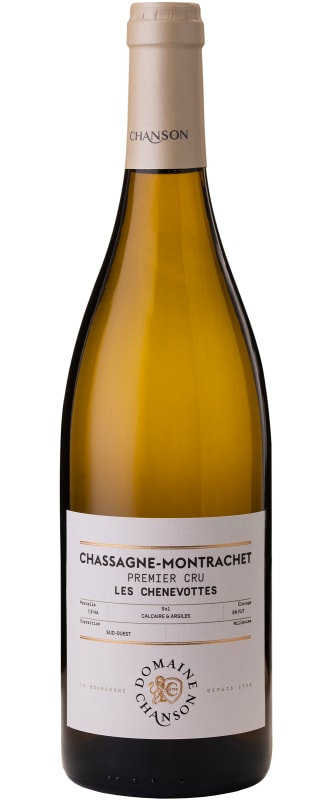


Winemaker Notes
Pale gold color. Complex aromas with floral fragrances mixed with a hint of citrus. Taut, voluminous with a sappy texture. Generous finish spicy with a refreshing aftertaste.
Professional Ratings
-
James Suckling
Precise aromas of minerals, persevered lemons, white flowers, orchard fruit and spices. The palate is tightly wound, supported by underlying power and tension. It finishes with steely purity and a creamy texture. Wonderfully balanced and focused. Drink or hold.
-
Jasper Morris
Mid yellow. A racy nose compared to the Folatières but still with weight. A future waxiness evident at the back, but this strikes me as very Chenevottes in style, with a fine acidity alongside a core of pure white fruit. Barrel Sample: 91-93
-
Wine Enthusiast
A con- centrated bouquet of orchard fruit, led by white peach and Anjou pear, underpined by lilac and limestone. Bright acidity intensifies its salinity, then highlights soft pear and a trace of chamomile. It finishes clean, with a lingering saline edge.
-
Wine Spectator
A ripe style, this displays peach and pineapple flavors wrapped in toasty oak. Theres fine, buried acidity driving the long aftertaste, where a briny, mineral element peeks through. Mouthwatering in the end. Drink now through 2033. 40 cases imported.



Founded in 1750, Chanson is one of the five grand "shippers" of Burgundy's Côte d'O r- an estate steeped in centuries-old tradition and rich in viticultural history. As a négociant (winemaker and merchant) and a domaine (vineyard estate), Chanson has represented the best of Burgundy for more than 250 years, growing its own grapes, partnering with other growers, bottling, selling, and shipping its own wines.
Chanson's holdings comprise some of Burgundy's most coveted vineyards. Located in the heart of the Côte de Beaune (the historical center of Burgundy) and surrounded by some of the greatest vineyards in the world, Chanson can count French philosophe Voltaire, romantic poet Lamartine, and the Bonaparte family among its clients.
Its celebrated bastion, a 15th-century fortress first rented and then acquired in 1794 to cellar the wines, is an internationally celebrated icon of Burgundy (the largest of six bastions that form part of the wall surrounding the city of Beaune).
To visit Chanson is to travel back in time and experience the magic of the 1000-year-old tradition of winemaking. Chanson still vinifies and cellars its wines in the bastion as it has for over 200 years. The 10-meter thick walls of this ancient fortress make it ideal for winemaking.

One of the most popular and versatile white wine grapes, Chardonnay offers a wide range of flavors and styles depending on where it is grown and how it is made. While it tends to flourish in most environments, Chardonnay from its Burgundian homeland produces some of the most remarkable and longest lived examples. California produces both oaky, buttery styles and leaner, European-inspired wines. Somm Secret—The Burgundian subregion of Chablis, while typically using older oak barrels, produces a bright style similar to the unoaked style. Anyone who doesn't like oaky Chardonnay would likely enjoy Chablis.

A Côte de Beaune village of Burgundy most famous for its beautifully textured and powerful whites, Chassagne-Montrachet reaches farthest south in the Côte d’Or, save for the village of Santenay. It has three Grands Crus vineyards: Le Montrachet, Bâtard-Montrachet and Criots-Bâtard-Montrachet. Le Montrachet and Bâtard-Montrachet overlap with and are (confusingly) shared with the village of Puligny-Montrachet. But Chassagne-Montrachet bears sole ownership of the Criots-Bâtard-Montrachet Grand Cru.
The beauty doesn’t stop there as the village has a great many outstanding Premiers Crus wines and village level wines. Most famous Premiers Crus vineyards include Les Chenevottes, Clos de la Maltroie, En Cailleret and Les Ruchottes. Also, village level wines offer many lovely examples of what Chassagne-Montrachet has to offer, but at more approachable price points and perhaps less demand of waiting.
The best sites in Chassagne-Montrachet have complex soils of sedimentary rock and limestone (with less marl). Whites, which are by law composed of 100% Chardonnay (as in all classified white Burgundy from Côte d’Or), have steely power, bright and concentrated citrus, stone or tropical fruit characteristics and attractive textures ranging from plush to tactile, grippy and mineral-driven.
There is some fine Pinot Noir produced from the village. These wines tend to be high-toned and earthy, with wild herb aromas and suave tannins.