


Winemaker Notes
Professional Ratings
-
Vinous
Inky magenta. Displays smoky, mineral-accented black and blue fruits, espresso, licorice and violet aromas that are complemented by cola, vanilla and black pepper suggestions. Offers palate-staining, spice-laced blueberry, cassis, kirsch and fruitcake flavors that show excellent depth and energy. The spice and floral notes echo a very long, penetrating, smoky finish shaped by steadily building but well-integrated tannins. Made with de-stemmed fruit and raised in one-third new oak.
Barrel Sample: 95-97 -
Wine Enthusiast
The wine presents enticing brambly aromatics framed by black olives, violets, saffron and peppercorn, and a subtle hint of bacon drippings. On the palate, experience a delightful interplay of these notes, with a midpalate of plums, cassis and a granitic finish. This wine is elegantly complex and, while decanting now is a tempting, cellaring through 2030+ will undoubtedly yield greater rewards.
-
Wine Spectator
Delivers dark plum and cherry fruit flavors that are juicy and compact in feel, with hints of cast iron, worn leather and bay leaf also flowing through. Reveals a tapenade note that filters through the finish. For fans of the old-school style. Best from 2024 through 2035. 158 cases made, 25 cases imported.
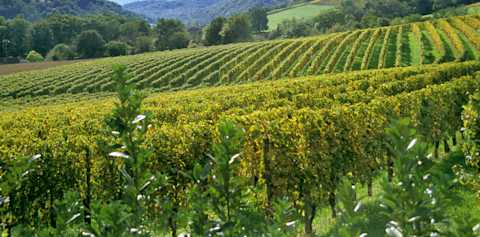
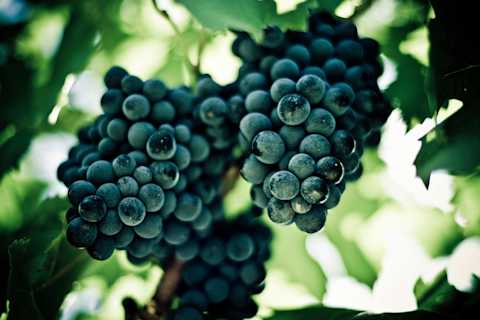
Marked by an unmistakable deep purple hue and savory aromatics, Syrah makes an intense, powerful and often age-worthy red. Native to the Northern Rhône, Syrah achieves its maximum potential in the steep village of Hermitage and plays an important component in the Red Rhône Blends of the south, adding color and structure to Grenache and Mourvèdre. Syrah is the most widely planted grape of Australia and is important in California and Washington. Sommelier Secret—Such a synergy these three create together, the Grenache, Syrah, Mourvedre trio often takes on the shorthand term, “GSM.”

The cultivation of vines here began with Greek settlers who arrived in 600 BC. Its proximity to Vienne was important then and also when that city became a Roman settlement but its situation, far from the negociants of Tain, led to its decline in more modern history. However the 1990s brought with it a revival fueled by one producer, Marcel Guigal, who believed in the zone’s potential. He, along with the critic, Robert Parker, are said to be responsible for the zone’s later 20th century renaissance.
Where the Rhone River turns, there is a build up of schist rock and a remarkable angle that produces slopes to maximize the rays of the sun. Cote Rotie remains one of the steepest in viticultural France. Its varied slopes have two designations. Some are dedicated as Côte Blonde and others as Côte Brune. Syrahs coming from Côte Blonde are lighter, more floral, and ready for earlier consumption—they can also include up to 20% of the highly scented Viognier. Those from Côte Brune are more sturdy, age-worthy and are typically nearly 100% Syrah. Either way, a Cote Rotie is going to have a particularly haunting and savory perfume, expressing a more feminine side of the northern Rhone.