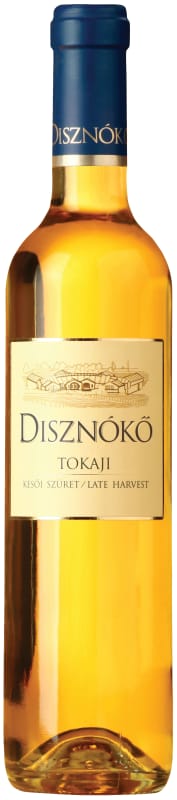


Winemaker Notes
Deep yellow-gold color. Intensely fruity nose with pear, tangerine and stone fruits aromas like nectarine. The palate is rich with honey and fruit flavors. It is mouth filling and structured with some tannins. A very pleasant wine.
Blend: 85% Furmint, 10% Hárslevelu, 5% Zéta
Professional Ratings
-
Wine & Spirits
Made solely from superripe, late-picked fruit rather than undergoing the complex winemaking pro-cess of Tokaji Aszú, this is sumptuous wine. It tastes like late fall, with notes of baked apples and burnt orange; its earthy gingerroot notes add savor, warm spice and complexity. And the acidity shines through it like autumn sun, cool and bright, cleansing the palate and set- ting the wine up as an excellent partner to cheese.
-
Wilfred Wong of Wine.com
COMMENTARY: The 2018 Disznoko Late Harvest Furmint shows excellent sweetness and fine balance. TASTING NOTES: This wine stars with aromas and flavors of honey and ripe citrus. Enjoy it with pecan pie and fresh whipped cream. (Tasted: January 1, 2022, San Francisco, CA)
-
Wine Spectator
An off-dry version, lightly sweet and mouthwatering, with pure peach, candied ginger and pie crust flavors. Silky and well-balanced, with fragrant hints of lemon wax and dried mint on the finish. Furmint, Harslevelu and Zeta. Drink now through 2027. 2,500 cases made, 500 cases imported.


Apart from the classics, we find many regional gems of different styles.
Late harvest wines are probably the easiest to understand. Grapes are picked so late that the sugars build up and residual sugar remains after the fermentation process. Ice wine, a style founded in Germany and there referred to as eiswein, is an extreme late harvest wine, produced from grapes frozen on the vine, and pressed while still frozen, resulting in a higher concentration of sugar. It is becoming a specialty of Canada as well, where it takes on the English name of ice wine.
Vin Santo, literally “holy wine,” is a Tuscan sweet wine made from drying the local white grapes Trebbiano Toscano and Malvasia in the winery and not pressing until somewhere between November and March.
Rutherglen is an historic wine region in northeast Victoria, Australia, famous for its fortified Topaque and Muscat with complex tawny characteristics.

Best known for lusciously sweet dessert wines but also home to distinctive dry whites and reds, Hungary is an exciting country at the crossroads of tradition and innovation. Mostly flat with a continental climate, Hungary is almost perfectly bisected by the Danube River (known here as the Duna), and contains central Europe’s largest lake, Balaton. Soil types vary throughout the country but some of the best vines, particularly in Tokaj, are planted on mineral-rich, volcanic soil.
Tokaj, Hungary’s most famous wine region, is home to the venerated botrytized sweet wine, Tokaji, produced from a blend of Furmint and Hárslevelű. Dry and semi-dry wines are also made in Tokaj, using the same varieties. Other native white varieties include the relatively aromatic and floral, Irsai Olivér, Cserszegi Fűszeres and Királyleányka, as well as the distinctively smoky and savory, Juhfark. Common red varieties include velvety, Pinot Noir-like Kadarka and juicy, easy-drinking Kékfrankos (known elsewhere as Blaufränkisch).