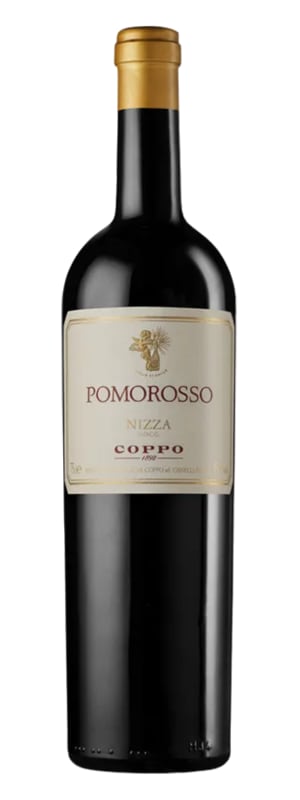


Winemaker Notes
Professional Ratings
-
Decanter
We've never welcomed a Barbera to our Best In Show selection before – and pow! Here it is. Fittingly it's a Nizza wine, this DOCG having come into being in 2014 to showcase a Barbera-only subzone formerly included in DOCG Barbera d'Asti Superiore and centred around the town of Nizza Monferrato. It's not a shy wine, and it left our judges excited: powerful black fruits with orange and blueberry scents layered into spicy, creamy oak. On the palate it's rich, deep and heady, with more orange and black fruit partnered with voluptuous tannins from both skins and oak. It has all the athleticism of the variety – but if you're one of those who have found Barbera's acidity to be almost too aggressive and attacking in the past, this wine may reassure; it's balanced and vivacious here, thanks to the overall richness and wealth of the whole.



Just after the loss of their father Luigi in 1984, the brothers decided to focus on Barbera, releasing their own interpretation of this local grape. The prestigious Pomorosso was born, emerging as the model of the "Modern Style" Barbera, aged in oak and with unmistakable personality. Barbera, a truly native varietal, soon became the pride of the entire region.
The four brothers Piero, Gianni, Paolo and Roberto have set an ambitious goal: to resurrect the traditional red varietals from the Asti region, and to produce serious white wines with aging potential. This is a new generation of winegrowers with a new way of viewing agriculture. Although they are considered to be "Barbera specialists", they also produce an outstanding Moscato d'Asti and an excellent Gavi.

Friendly and approachable, Barbera produces wines in a wide range of styles, from youthful, fresh and fruity to serious, structured and age-worthy. Piedmont is the most famous source of Barbera; those from Asti and Alba garner the most praise. Barbera actually can adapt to many climates and enjoys success in some New World regions. Somm Secret—In the past it wasn’t common or even accepted to age Barbera in oak but today both styles—oaked and unoaked—abound and in fact most Piedmontese producers today produce both styles.

Recognized as the source of the best Barbera in all of Italy, Asti is a province (as well as major city) in Piedmont, consisting of a gentle, rolling landscape with vineyards, farmland and forests alternating throughout.
Barbera d’Asti can be made in an array of styles from relatively straightforward, fruity and ready for consumption early, to the more concentrated, oak aged version with an ability to cellar impressively for 10-15 years and beyond. Some of the very best sites for Barbera in Asti are concentrated in the subzone of Nizza Monferrato. Other red varieties grown here include Freisa, Grignolino and Dolcetto, which can be bottled varietally or blended into Barbera.
Historically consumers commonly associated the Asti region with Asti Spumante and Moscato d’Asti, both playful, aromatic, sparkling wines made from the Muscat grape. Asti Spumante is less sweet, fully fizzy and more alcoholic (yet still clocking in at only around 9% alcohol) while Moscato d’Asti is sweeter, gently sparkling (“frizzante”) and closer to 5 or 6% alcohol. Each is produced in stainless steel tanks to preserve the fresh and fruity flavors of the grape, often including peach, apricot, lychee and rose petal. Asti is also the spot for the pink-hued Brachetto d'Acqui, a slightly sparkling wine ready to charm with its raspberry and rose flavors and aromas.