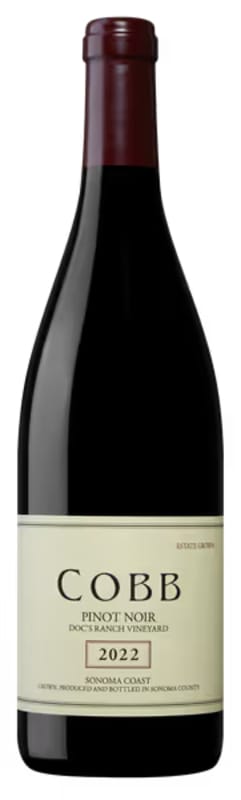


Winemaker Notes
Professional Ratings
-
Decanter
The Doc's Ranch is east-facing 1150-1200ft of elevation, and according to Cobb, it is pummeled with fog. The slope is southeast-facing, and Ross uses 50% whole cluster to make this wine; this Pinot includes Calera, Pommard,4 and 114. It shows a gorgeous, incredible violet opening accented by forest floor, pine bough and bright seaspray. The palate carries an intense minerality; white pepper and briny sea spray lift a beautiful core of raspberries and blueberries, with fresh mint brightening the finish.
-
Jeb Dunnuck
The 2022 Pinot Noir Doc's Ranch Vineyard is a jeweled ruby color and comes from estate-grown fruit. With more angular Nebbiolo-like structure, it reveals spicy notes of orange peel, clove, cranberries, and darker forest earth. Medium-bodied, with well-defined, angular tannins, refreshing acidity, and a more iron-rich, sanguine feel through the finish, allow some time with this one and drink over the following 15 or so years.
Rating: 95+ -
Robert Parker's Wine Advocate
Crafted with 50% whole clusters, the 2022 Pinot Noir Doc's Ranch has deep pomegranate aromas complemented by wafts of mossy bark, cinnamon and conifer. The medium-bodied palate is concentrated and nuanced, offering impressive depth of flavor for its modest weight. It’s structured by fine-grained tannins and vibrant acidity and has a very long, elegant finish.
-
James Suckling
There's a nice level of funk, with aromas of forest floor, cured meat, sour cherries, red licorice and red currants. The palate is medium-bodied with crunchy tannins and energetic acidity that carry nicely balanced, tightly wound red fruit with a savory edge. Drink or hold.
-
Wine Spectator
This shows good energy for the vintage, with a plump, juicy underlay to its black cherry and mulberry fruit core. Lightly singed apple wood, dried anise and iris accents add range from start to finish.


The Sonoma Coast AVA is large in area but, not counting overlapping regions like Russian River Valley, only has a few thousand acres of grapevines—and it’s no wonder. Much of the region is rugged and not easily accessible. Its proximity to the Pacific Ocean’s fog and cool breezes limits the varieties that can be cultivated, but it proves to be an ideal environment for high quality Pinot Noir.
Since fog is a frequent fact of life here, as are heavy marine layers that sometimes bring rain, the best vineyards are wisely planted above the fog line, on picturesque ridges that capture enough sun to provide even ripening. That, with the overnight drop in temperature that reliably preserves acidity, results in fine expressions of Pinot Noir that often receive tremendous critic and consumer praise alike, and are often in high demand.