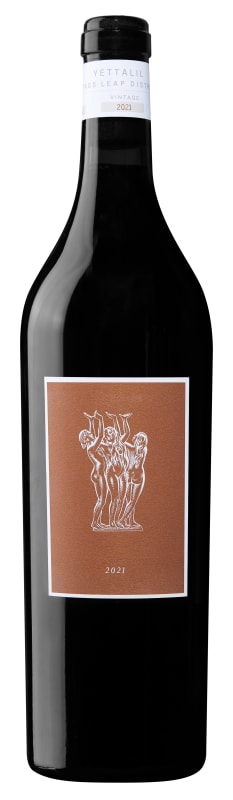


Winemaker Notes
A tribute to Clos Du Val's founding matriarch, Henrietta Goelet, Yettalil is the fullest expression of their Stags Leap District Estate.
This wine opens with fresh aromas of black cherry, cassis, fresh thyme, and spice. On the palate, lively acidity and polished tannins are joined by complex notes of dark chocolate, black tea, raspberry, and sweet tobacco.
Blend: 66% Cabernet Sauvignon, 12% Cabernet Franc, 10% Malbec, 7% Merlot, 5% Petit Verdot
Professional Ratings
-
Decanter
The dry yet measured 2021 season in the Napa Valley has produced some splendid wines, and everyone who tasted this wine was very excited both about the joy of its sensual profile as well as about its ageing potential – though it’s far from forbidding at present. It’s a saturated black red in colour, with melting, yielding black-fruit aromas on the nose (bramble, damson, elderberry). There are flowers, and a box- or privet-like freshness generating lift for those fruits. On the palate, the wine is ample and mouthfilling, packed with pure, fresh, floral fruits -- yet suggesting a little exotic spice, too. The diagnostically soft yet ample Napa tannins are much in evidence, both lending the wine seriousness and food-friendliness yet also ensuring that it will endure well in time. That freshness (early evening breezes cooling the Stag’s Leap Palisades, perhaps?), so intrinsic to this wine, will surely last well, too, and perhaps even carry the wine’s beguiling floral perfumes with it through time.
-
James Suckling
The aromas are really pretty, with a floral, currant and blackcurrant quality. Some lavender and hints of fresh spearmint. It’s medium- to full-bodied, and the polished and very refined tannins integrate nicely into the wine.
-
Tasting Panel
Celebrating 50 years of Clos du Val's history on the Hirondelle Estate in the Stags Leap District. proprietor Olav Goelet named this wine for his grandmother, who, in his words, "was always planning for the future." A blend of 66% Cabernet Sauvignon, 12% Cabernet Franc, 10% Malbec, 7% Merlot, and 5% Petit Verdot, it's absolutely luminous. The astonishing mouthfeel is silky and dramatic, revealing fresh boysenberry, vanilla, cassis, crème fraîche, and black-tea tannins as a garden of peony, hibiscus, sweet tobacco, Italian herbs, and dried rose sprouts on the nose and palate. In its youthful glory, Yettalil shows stature and elegance with a wisp of chalky minerality on the graceful finish.
-
Jeb Dunnuck
The 2021 Yettalil is a tiny production flagship cuv e (it's only made in top vintages) that's based on 66% Cabernet Sauvignon, 12% Cabernet Franc, 10% Malbec, 7% Merlot, and 5% Petit Verdot that was brought up in 40% new French oak. It's another brilliant 2021 displaying a vibrant ruby/purple hue as well as stunning aromatics of black raspberries, blackcurrants, spring flowers, lead pencil, and hints of damp earth, and you'd be excused if you called this a top Pauillac in a blind tasting. It has the vintage's focused, concentrated, structured style on the palate and is medium to full-bodied, with building yet ripe, polished tannins and a gorgeous finish. It's not for the instant gratification crowd and needs a solid 4-6 years of bottle age, but it's going to be a 30+-year wine.
Rating: 96+ -
Wine Enthusiast
Warm, chocolaty flavors and a broad texture give this wine a suave, drinkable texture based on velvety tannins baked into the mix. It's easy to love the cocoa, blackberry, graphite and boysenberry jam notes. Made from mostly Cabernet Sauvignon, with minor portions of Cabernet Franc, Malbec, Merlot and Petit Verdot. Best from 2026–2036.
-
Robert Parker's Wine Advocate
The 2021 Yettalil Red Wine is only 66% Cabernet Sauvignon, with the balance consisting of 12% Cabernet Franc, 10% Malbec, 7% Merlot and 5% Petit Verdot. It spent 17 months in 40% new French oak prior to bottling in June 2023. Raspberries and cherries are joined by hints of mint and dried herbs, plus some mocha shadings. Like any top Bordeaux, this medium to full-bodied wine is taut and firm, in need of time in the cellar.
Rating: 93+ -
Wine Spectator
An alluring version, with a creamy texture to its mix of boysenberry and black currant preserve flavors. This lets subtle accents of anise, black tea, alder and tobacco peek in through the stylish finish. Cabernet Sauvignon, Cabernet Franc, Malbec, Merlot and Petit Verdot. Drink now through 2034.



One of the world’s most classic and popular styles of red wine, Bordeaux-inspired blends have spread from their homeland in France to nearly every corner of the New World. Typically based on either Cabernet Sauvignon or Merlot and supported by Cabernet Franc, Malbec and Petit Verdot, the best of these are densely hued, fragrant, full of fruit and boast a structure that begs for cellar time. Somm Secret—Blends from Bordeaux are generally earthier compared to those from the New World, which tend to be fruit-dominant.
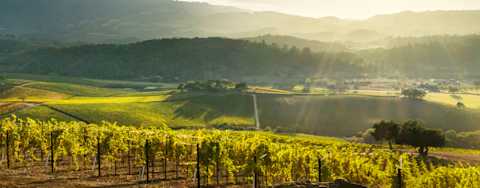
Legend has it that quick and nimble stags would escape the indigenous hunters of southern Napa Valley through the landmark palisades that sit just northeast of the current city of Napa. As a result, the area was given the name, Stags Leap. While its grape-growing history dates back to the mid-1800s, winemaking didn’t really take off until the mid-1970s after a small but pivotal blind tasting called the Judgement of Paris.
When a 1973 Stag’s Leap Wine Cellars Cabernet Sauvignon won first place against its high-profile Bordeaux contenders, like Chateau Mouton Rothschild and Chateau Haut-Brion, international attention to the Stags Leap District of Napa Valley escalated rapidly.
The vineyards in this one-of-a-kind wine growing region receive hot afternoon air reflecting off of its eastern palisade formation. In combination with the cool evening breezes from the San Pablo Bay just south, this becomes an optimal environment for grape growing. While many varieties could thrive here, Cabernet Sauvignon and Merlot dominate with virtually no others, save for a spot or two of Syrah.
Stags Leap soils—eroded volcanic and old river sediments—encourage well established root systems and result in complex, terroir-driven wines. Stags Leap District reds have a distinct sour cherry and black berry character with baking spice and dried earth aromas, and supple tannins.