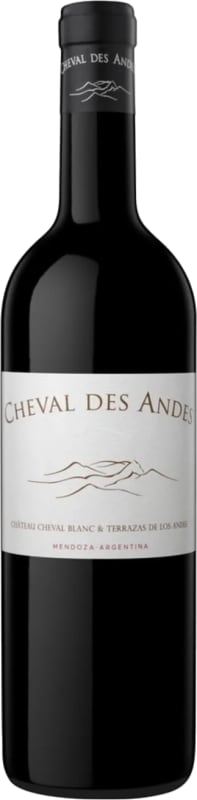


Winemaker Notes
The wine of Cheval des Andes combines the vibrant and intense expression of Argentinian Malbec with the rigour, elegance and savoir-faire of a great Bordeaux.
Professional Ratings
-
Jeb Dunnuck
As finely made as the 2021, the 2023 is 57% Cabernet Sauvignon, 40% Malbec, and 3% Petit Verdot from a massal selection taken from Bordeaux. Barrel-fermented and aged, it’s gorgeous, gorgeous, gorgeous, exceptionally well-made and precise in its grasp of rich mouthfeel, incredible structure, and intoxicating aromatics of cedarwood, tobacco, and wildflowers. The full-bodied concentration is supple and seamless, with layers of inky blue and black fruit as well as cacao nib lending a subtle richness complemented by graphite and dried herb. This is a cru of excellence that should be in its prime 2030-2043.
-
James Suckling
This vintage shows good precision as it zeroes in on balance and complexity with a Bordeaux-like sensibilty. Excellent complexity on the nose, showing currants, paprika, cedary blackberries, tobacco, grilled herbs and touches of cocoa powder and roasted sweet spices. Round and more effortless this year, with a positively fluid, precise mouth-feel, Medium body round off by silky, sweet tannins. Lightly creamy at the end but really integrated and elegant, with a long, supple finish. A blend of 57% cabernet sauvignon, 40% malbec and 3% petit verdot. Already approachable, but can hold for a decade, if not more.
-
Robert Parker's Wine Advocate
A very impressive rendition of a generally warm, dry vintage, the 2023 Cheval des Andes opens with a more red-fruited, brighter character than is typical, accented by dried herb, graphite, dried mint and lifted floral tones that come to the fore with aeration. Echoing the lifted nature of the nose, the palate delivers the soft, elegantly polished profile that one can routinely expect at this address, albeit with a slightly more slender core. It concludes with a persistent finish defined by understated richness and a notably refined tannin profile, the latter of which is particularly impressive, as it is often a shortcoming of this harvest. The blend is 57% Cabernet Sauvignon, 40% Malbec and 3% Petit Verdot.


One of the world’s most classic and popular styles of red wine, Bordeaux-inspired blends have spread from their homeland in France to nearly every corner of the New World. Typically based on either Cabernet Sauvignon or Merlot and supported by Cabernet Franc, Malbec and Petit Verdot, the best of these are densely hued, fragrant, full of fruit and boast a structure that begs for cellar time. Somm Secret—Blends from Bordeaux are generally earthier compared to those from the New World, which tend to be fruit-dominant.

By far the largest and best-known winemaking province in Argentina, Mendoza is responsible for over 70% of the country’s enological output. Set in the eastern foothills of the Andes Mountains, the climate is dry and continental, presenting relatively few challenges for viticulturists during the growing season. Mendoza, divided into several distinctive sub-regions, including Luján de Cuyo and the Uco Valley, is the source of some of the country’s finest wines.
For many wine lovers, Mendoza is practically synonymous with Malbec. Originally a Bordelaise variety brought to Argentina by the French in the mid-1800s, here it found success and renown that it never knew in its homeland where a finicky climate gives mixed results. Cabernet Sauvignon, Syrah, Merlot and Pinot Noir are all widely planted here as well (and sometimes even blended with each other or Malbec). Mendoza's main white varieties include Chardonnay, Torrontés, Sauvignon Blanc and Sémillon.