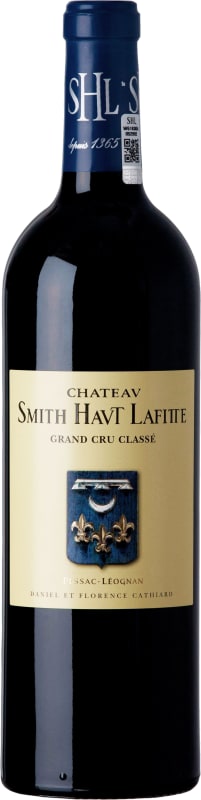


Winemaker Notes
The wine is straightforward and well-balanced on the palate, with good concentration and plenty of volume. Despite a substantial quantity of tannin, it remains smooth and rich, with excellent balance between substance, density and freshness. The texture is delicate and precise. The finish is very long and complex with fresh red fruit, liquorice and cinnamon, as well as more terroir-induced notes of smoke and flint. <p>
Blend: 60% Cabernet Sauvignon, 34% Merlot, 4% Cabernet Franc, 2% Petit Verdot
Professional Ratings
-
Decanter
One of the more notable successes in Pessac-Léognan is this 2018 thanks to its wonderful bouquet of red cherry, spring flowers, cedar and liquorice, graphite aromas and elegant earthy notes. With building tannins, a fresh, focused texture, and a great finish, it's not for those looking for instant gratification, and I suspect it will need a solid decade or more of cellaring, but it will evolve for 50 years or more.
-
Jeb Dunnuck
The 2018 Château Smith Haut Lafitte is based on 60% Cabernet Sauvignon, 34% Merlot, and the balance Cabernet Franc and Petit Verdot, all of which was brought up in 60% new French oak. Its dense purple color is followed by an incredible perfume of blackcurrants, blueberries, camphor, scorched earth, chocolate, and tobacco. It's young and unevolved, yet the purity is off the charts, and it slowly gives up more spice and floral notes with time in the glass. Hitting the palate with full-bodied richness, it's an incredibly concentrated, powerful wine that has plenty of baby fat covering serious amounts of underlying structure and tannins. It has some up-front appeal from an educational standpoint, yet really needs a decade of bottle age and is going to keep for 30-40 years in cold cellars. It comes closest in my mind to a mix of the 2010 and 2016.
-
James Suckling
Purity of fruit here with plum and cherry aromas, as well as wet earth and spice. Light stone. Very floral and vivid. Full-bodied with layers of ripe tannins that are balanced and polished. Savory finish. Incredibly polished and refined. Goes on for minutes. One of the finest Smith-Haut Lafittes I have tasted. Drink after 2024.
-
Robert Parker's Wine Advocate
A blend of 60% Cabernet Sauvignon, 34% Merlot, 4% Cabernet Franc and 2% Petit Verdot, aged in 60% new barriques, the very deep garnet-purple colored 2018 Smith Haut Lafitte bursts onto the scene with showy scents of crème de cassis, mocha, licorice and cedar chest, followed by suggestions of baked plums, smoked meats, tar and tobacco leaf. The medium to full-bodied palate brings sophistication to all that flamboyant fruit with a beautifully styled frame of finely grained tannins and bold freshness, finishing bright and fruity with loads of minerally sparks. This is a stunning, singular style that is sure to turn heads! Rating: 97+
-
Wine Enthusiast
This wine offers rich licorice and blackberry flavors as well as freshness. It has structure and power while also showing fruitiness and acidity that offer poise. The wine’s longterm future is assured. Drink from 2026. Organic and biodynamic. Cellar Selection
-
Wine Spectator
Ripe and seductive, with a caressing wave of cassis, plum puree and blackberry compote flavors that hold sway throughout, but not without support from enticing savory, licorice, warm loam and mineral accents along the way. Cashmere finish lets everything sail on and on. Gorgeous. Cabernet Sauvignon, Merlot, Cabernet Franc and Petit Verdot. Best from 2024 through 2040.


One of the world’s most classic and popular styles of red wine, Bordeaux-inspired blends have spread from their homeland in France to nearly every corner of the New World. Typically based on either Cabernet Sauvignon or Merlot and supported by Cabernet Franc, Malbec and Petit Verdot, the best of these are densely hued, fragrant, full of fruit and boast a structure that begs for cellar time. Somm Secret—Blends from Bordeaux are generally earthier compared to those from the New World, which tend to be fruit-dominant.

Recognized for its superior reds as well as whites, Pessac-Léognan on the Left Bank claims classified growths for both—making it quite unique in comparison to its neighboring Médoc properties.
Pessac’s Chateau Haut-Brion, the only first growth located outside of the Médoc, is said to have been the first to conceptualize fine red wine in Bordeaux back in the late 1600s. The estate, along with its high-esteemed neighbors, La Mission Haut-Brion, Les Carmes Haut-Brion, Pique-Caillou and Chateau Pape-Clément are today all but enveloped by the city of Bordeaux. The rest of the vineyards of Pessac-Léognan are in clearings of heavily forested area or abutting dense suburbs.
Arid sand and gravel on top of clay and limestone make the area unique and conducive to growing Sémillon and Sauvignon blanc as well as the grapes in the usual Left Bank red recipe: Cabernet Sauvignon, Merlot, Cabernet Franc and miniscule percentages of Petit Verdot and Malbec.
The best reds will show great force and finesse with inky blue and black fruit, mushroom, forest, tobacco, iodine and a smooth and intriguing texture.
Its best whites show complexity, longevity and no lack of exotic twists on citrus, tropical and stone fruit with pronounced floral and spice characteristics.