

Winemaker Notes
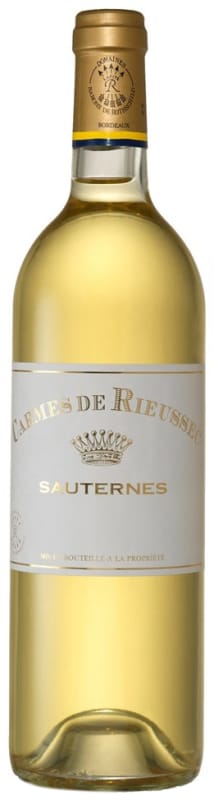
Château Rieussec’s second wine is selected according to the same standards as the first wine. Its character consistently reveals a beautiful aromatic range dominated by citrus flavors. Carmes de Rieussec’s name is a reference to the Carmelite monks in Langon, who owned the Rieussec estate in the 18th century.
Professional Ratings
-
Jeb Dunnuck
Bottled in a special bottle, the 2021 Château Rieussec checks in as 91% Sémillon and 9% Sauvignon Blanc. It has a killer bouquet of orange marmalade, grilled peach, brioche, and minty herbs, with more spice and toasty notes emerging with time in the glass. Rich, full-bodied, and concentrated, yet gorgeously balanced with good acidity, it's a sensational Sauternes that deserves 4-5 years in the cellar and will evolve for two decades.
-
James Suckling
Medium-bodied with spice and caramel. Dried mushroom and cloves. Orange peel and burnt orange. Medium-sweet.
Barrel Sample: 93-94 -
Robert Parker's Wine Advocate
Revealing a fruity, energetic bouquet, the 2021 Rieussec, a blend of 91% Sémillon and 9% Sauvignon Blanc, is a great performance in Sauternes. Medium to full-bodied, supple and enveloping, it’s perfectly balanced with a fleshy core of fruit and a mineral, saline finish.

Apart from the classics, we find many regional gems of different styles.
Late harvest wines are probably the easiest to understand. Grapes are picked so late that the sugars build up and residual sugar remains after the fermentation process. Ice wine, a style founded in Germany and there referred to as eiswein, is an extreme late harvest wine, produced from grapes frozen on the vine, and pressed while still frozen, resulting in a higher concentration of sugar. It is becoming a specialty of Canada as well, where it takes on the English name of ice wine.
Vin Santo, literally “holy wine,” is a Tuscan sweet wine made from drying the local white grapes Trebbiano Toscano and Malvasia in the winery and not pressing until somewhere between November and March.
Rutherglen is an historic wine region in northeast Victoria, Australia, famous for its fortified Topaque and Muscat with complex tawny characteristics.

Sweet and unctuous but delightfully charming, the finest Sauternes typically express flavors of exotic dried tropical fruit, candied apricot, dried citrus peel, honey or ginger and a zesty beam of acidity.
Sémillon, Sauvignon Blanc, Sauvignon Gris and Muscadelle are the grapes of Sauternes. But Sémillon's susceptibility to the requisite noble rot makes it the main variety and contributor to what makes Sauternes so unique. As a result, most Sauternes estates are planted to about 80% Sémillon. Sauvignon is prized for its balancing acidity and Muscadelle adds aromatic complexity to the blend with Sémillon.
Botrytis cinerea or “noble rot” is a fungus that grows on grapes only in specific conditions and its onset is crucial to the development of the most stunning of sweet wines.
In the fall, evening mists develop along the Garonne River, and settle into the small Sauternes district, creeping into the vineyards and sitting low until late morning. The next day, the sun has a chance to burn the moisture away, drying the grapes and concentrating their sugars and phenolic qualities. What distinguishes a fine Sauternes from a normal one is the producer’s willingness to wait and tend to the delicate botrytis-infected grapes through the end of the season.