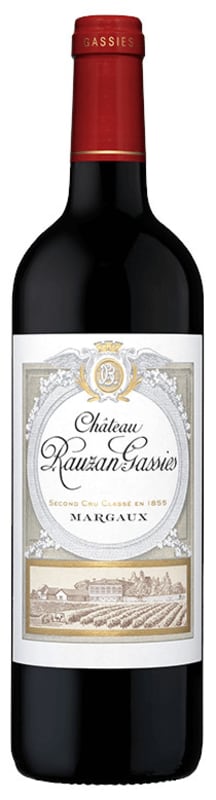


Winemaker Notes
Professional Ratings
-
James Suckling
Aromas of blueberries, blackcurrants, orange zest, black tea, praline and bitter chocolate. It’s medium-to full-bodied with firm, polished tannins. Silky and supple. Excellent balance and freshness.
-
Robert Parker's Wine Advocate
Sporting a deep garnet-purple color, the 2019 Rauzan-Gassies is redolent of baked black currants, blackberry preserves and cherry pie with suggestions of licorice, sandalwood and tilled soil. The medium-bodied palate features mouth-coating black fruit preserves, framed by bold freshness and a wonderfully plush texture, finishing with a spicy kick.Range: 91 - 93
-
Jeb Dunnuck
The 2019 Château Rauzan-Gassies is a Cabernet Sauvignon-dominated blend that includes 18% Merlot. It offers up a terrific bouquet of red and black currants as well as savory tobacco, spice box, and chocolaty oak nuances. Medium to full-bodied on the palate, it has a balanced, concentrated mouthfeel, lots of firm tannins, and a big finish. It's unquestionably an outstanding wine yet needs 5-6 years in the cellar and will impress over the following two decades. Rating : 92+
-
Decanter
An estate that has been producing consistently fruit-forward, medium-term drinking Margaux in recent vintages. This again is a classically-structured wine with austerity on the opening but softening to show raspberry puree, sage and rosemary aromatics and a fine tannic structure.

One of the world’s most classic and popular styles of red wine, Bordeaux-inspired blends have spread from their homeland in France to nearly every corner of the New World. Typically based on either Cabernet Sauvignon or Merlot and supported by Cabernet Franc, Malbec and Petit Verdot, the best of these are densely hued, fragrant, full of fruit and boast a structure that begs for cellar time. Somm Secret—Blends from Bordeaux are generally earthier compared to those from the New World, which tend to be fruit-dominant.

Silky, seductive and polished are the words that characterize the best wines from Margaux, the most inland appellation of the Médoc on the Left Bank of Bordeaux.
Margaux’s gravel soils are the thinnest of the Médoc, making them most penetrable by vine roots—some reaching down over 23 feet for water. The best sites are said to be on gentle outcrops, or croupes, where more gravel facilitates good drainage.
The Left Bank of Bordeaux subscribes to an arguably outdated method of classification but it is nonetheless important in regards to history of the area. In 1855 the finest chateaux were deemed on the basis of reputation and trading price—at that time. In 1855, Chateau Margaux achieved first growth status, yet it has been Chateau Palmer (officially third growth from the 1855 classification) that has consistently outperformed others throughout the 20th century.
Chateau Margaux in top vintages is capable of producing red Cabernet Sauvignon based wines described as pure, intense, spell-binding, refined and profound with flavors and aromas of black currant, violets, roses, orange peel, black tea and incense.
Other top producers worthy of noting include Chateau Rauzan-Ségla, Lascombes, Brane-Cantenac, and d’Issan, among others.
The best wines of Margaux combine a deep ruby color with a polished structure, concentration and an unrivaled elegance.